

+2 More

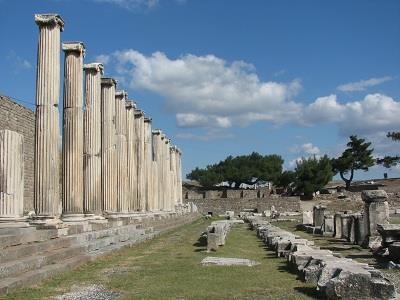
Ancient City of Pergamon
Location | Bergama Türkiye İzmir | ||||||||
|---|---|---|---|---|---|---|---|---|---|
Founder(s) | Philetairos | ||||||||
Foundation Date | 281 BCE | ||||||||
Significance | A center of culture; art and science | ||||||||
Notable Figures | Galen (129-216 CE) (Physician and philosopher) | ||||||||
Prominent Structures | Altar of Zeus, Temple of Athena, Pergamon Royal Library, Pergamon Theater, Gymnasium, Asklepion, Temple of Demeter | ||||||||
UNESCO Status | Inscribed on the UNESCO World Heritage List in 2014. | ||||||||
Pergamon (modern-day Bergama), one of the most important cultural and political centers of the Hellenistic Period, became a royal capital that made significant advancements in science, art, and architecture. Developing as the center of the Kingdom of Pergamon from the 3rd century BCE onward, the city remained one of the most powerful kingdoms in the region until it came under Roman rule in 133 BCE. As a representative of Hellenistic culture, Pergamon became one of the leading metropolises of its time with its advanced urban planning, monumental structures, library, and artistic works.
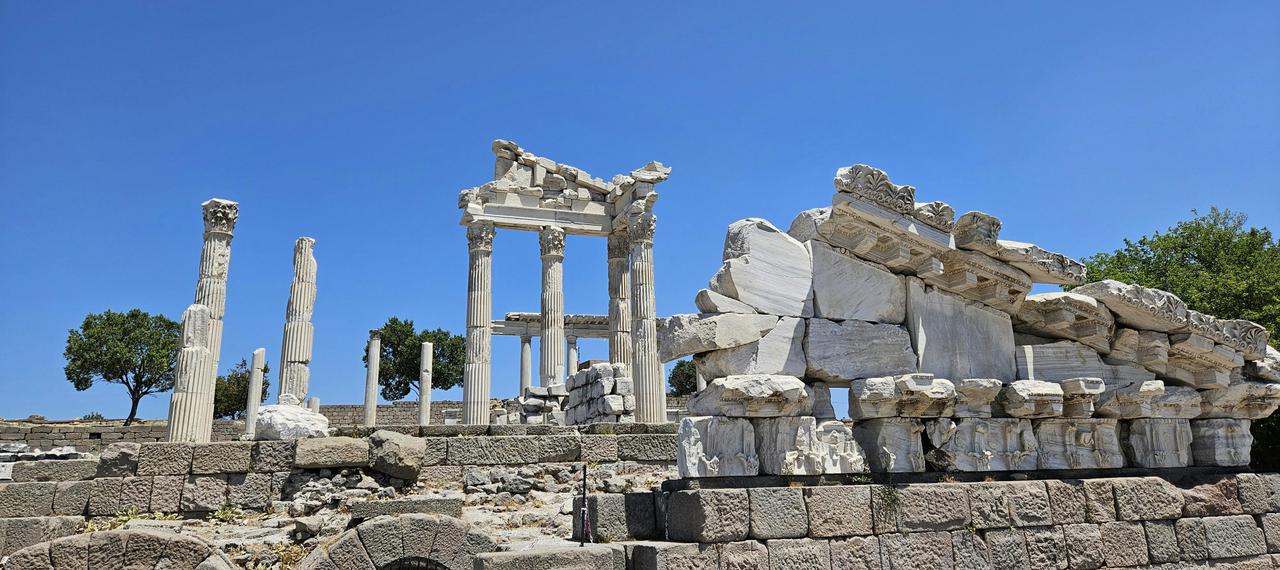
Pergamon (Photograph: Meryem Şentürk Çoban)
Pergamon is an ancient city established on the fertile lands of the Kaikos (Bakırçay) Valley in Western Anatolia. The city is located in the northwestern part of the Mysia region, approximately 15 km inland from the sea, on a mountain slope where the Keteios (Kestel Çayı) and Selinus (Bergama Çayı) rivers merge.
The elevation of ancient Pergamon is 63 meters above sea level, while the Acropolis reaches up to 335 meters. Its strategic location provided both defensive advantages and economic development due to its proximity to trade routes.
The city's borders extended north to the Adramytteion (Edremit) Gulf and east to Attaleia (the Lydia region northeast of Akhisar). Pergamon was neighboring cities such as Apollonia, Apollonis, Philadelphia, Eumenia, and Dionysopolis in the east. Additionally, the fertile lands of the Kaikos Plain and surrounding mining activities strengthened Pergamon’s economic power.
The city was built in two main sections:
The strategic and defensible position of Pergamon allowed it to develop as a strong fortress city during the Hellenistic period, supporting its role as the capital of the kingdom.
The earliest settlement traces of Pergamon date back to the 3rd millennium BCE. Proto-Corinthian ceramic findings in the region indicate that the city was inhabited as early as the 8th century BCE. However, excavations conducted in the 1960s revealed tombs dating back to the Early Bronze Age, pushing the history of Pergamon even further into antiquity.
According to mythological accounts, Pergamon was named after a colonist leader named Pergamos, who came from Arcadia. Philological studies suggest that the word "Pergamos" means fortress, tower, or small settlement, and is of Anatolian origin.
During the Persian Empire period, Pergamon became an important fortress city from the 6th century BCE onward. It is known that Persian King Darius and his son Xerxes resettled exiled Greek populations in the Kaikos Valley. In 547 BCE, after the Persians defeated the Lydian Kingdom, Pergamon came under Persian rule.
By the 4th century BCE, as Persian dominance weakened, Pergamon was governed by a leader named Gongylos of Eretria. Gongylos had been exiled from Greece for supporting the Persians but was later appointed as the ruler of Pergamon by the Persian administration.
The rise of Pergamon during the Hellenistic period began with Alexander the Great (356-323 BCE) conquering the Persian Empire. In 334 BCE, at the Battle of Granicus, Alexander defeated the Persians and took control of a large part of Anatolia. However, Alexander’s sudden death in 323 BCE led to a power struggle among his generals, during which Pergamon came under the rule of Lysimachus.
After the Battle of Ipsus (301 BCE), Lysimachus took control of the Mysia region and appointed Philetairos of Tieion as the commander of the Pergamon Fortress. However, in 282 BCE, Philetairos betrayed Lysimachus, seized his treasury, and allied with Seleucus I Nicator, laying the foundations for Pergamon’s independence.
In 281 BCE, following the death of Seleucus I Nicator, Pergamon became a fully independent state under the leadership of Philetairos. However, Philetairos never claimed the title of king, instead governing as a ruler nominally loyal to the Seleucid dynasty.
After Philetairos, the rule of Pergamon passed to his nephew Eumenes I (263-241 BCE). Eumenes I declared independence from the Seleucid Empire and established Pergamon as an independent kingdom.
During the reign of Attalos I (241-197 BCE), Pergamon experienced its greatest territorial expansion:
Under Eumenes II (197-159 BCE), Pergamon formed a strong alliance with Rome, establishing itself as a major power in the Hellenistic world:
The last king of Pergamon, Attalos III (138-133 BCE), bequeathed the kingdom to Rome. However, Aristonikos, claiming to be the rightful heir, led a rebellion against Roman rule.
After coming under Roman rule, Pergamon continued to be an important center as the capital of the Roman province of Asia.
Today, Pergamon is a major archaeological site protected through excavations and restoration projects.
During the Hellenistic and Roman periods, Pergamon had an advanced urban plan, incorporating numerous monumental structures. Initially built as a fortress city for defense, it later developed into a major administrative, cultural, educational, and religious center. The city was divided into two main sections: the Acropolis (Upper City) and the Lower City, featuring key public structures such as a theater, temples, a library, and a gymnasium, making it one of the best examples of Hellenistic urbanization.
The most remarkable architectural structures of Pergamon are concentrated in the Acropolis, situated at the city's highest point. This area held great significance both administratively and religiously, housing major landmarks such as the Temple of Athena, the Pergamon Royal Library, the Altar of Zeus, the Theater, royal palaces, and various stoas.
These architectural and archaeological remains demonstrate Pergamon’s prominence in Hellenistic and Roman times, emphasizing its cultural, scientific, and artistic contributions.
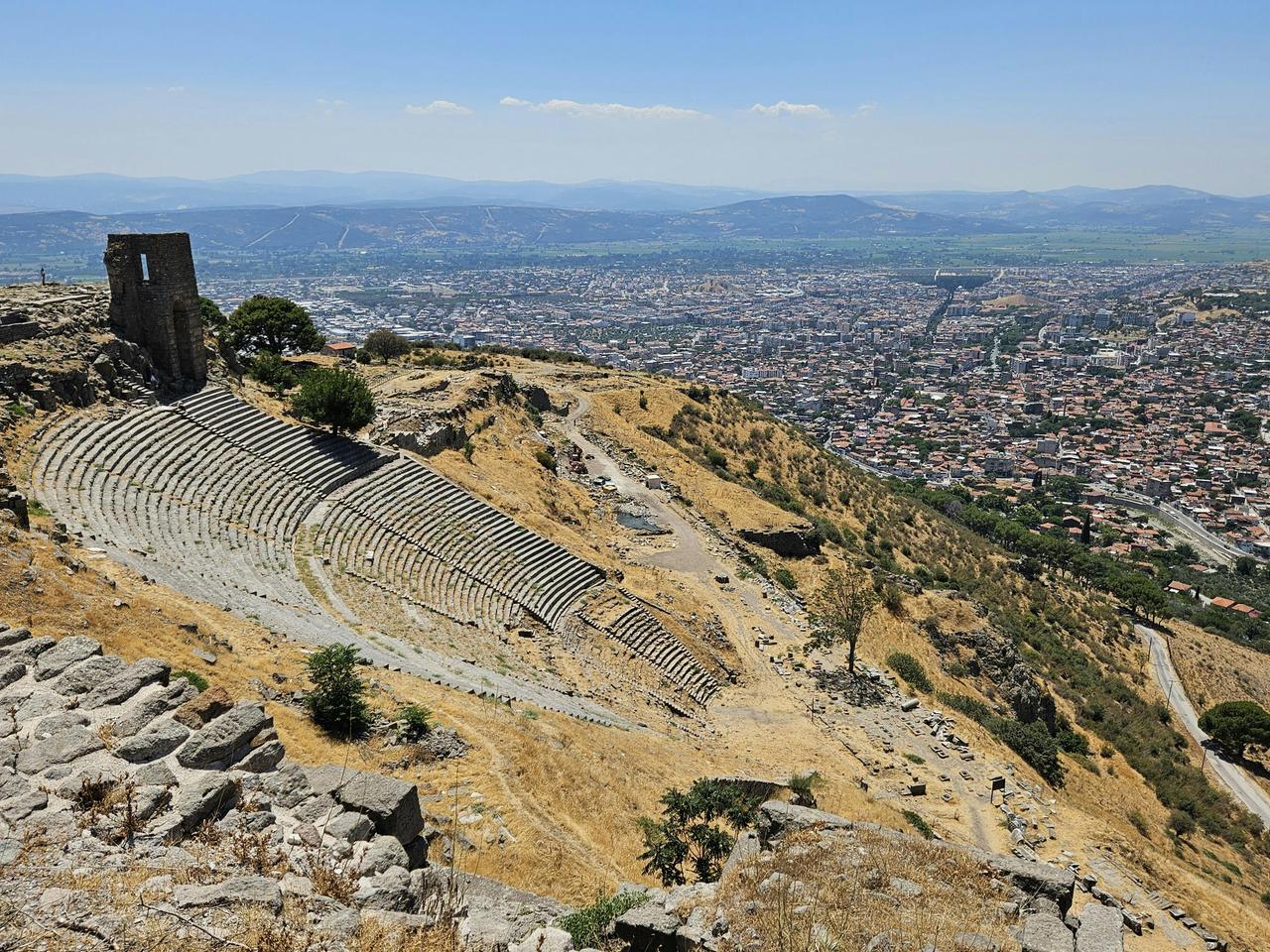
Pergamon Theater (Photograph: Meryem Şentürk Çoban)
Located outside the Acropolis, the Lower City was the residential and commercial hub of Pergamon, containing various public buildings and trade centers. This area included the Gymnasium, Agora, Stadium, and the Temple of Demeter.
After coming under Roman control in 133 BCE, Pergamon became the capital of the Roman province of Asia and was expanded following Roman architectural principles.
The economy of Pergamon was primarily based on agriculture, mining, and trade.
During the Hellenistic and Roman periods, Pergamon was not only a political and economic hub but also a significant religious center. The city housed numerous temples and sacred sites, which played a vital role in both religious rituals and political legitimacy.
During the Hellenistic and Roman periods, Pergamon emerged as one of the most advanced cities in the fields of art and culture. The city made significant progress in sculpture, relief art, and architecture, leaving a lasting artistic legacy.
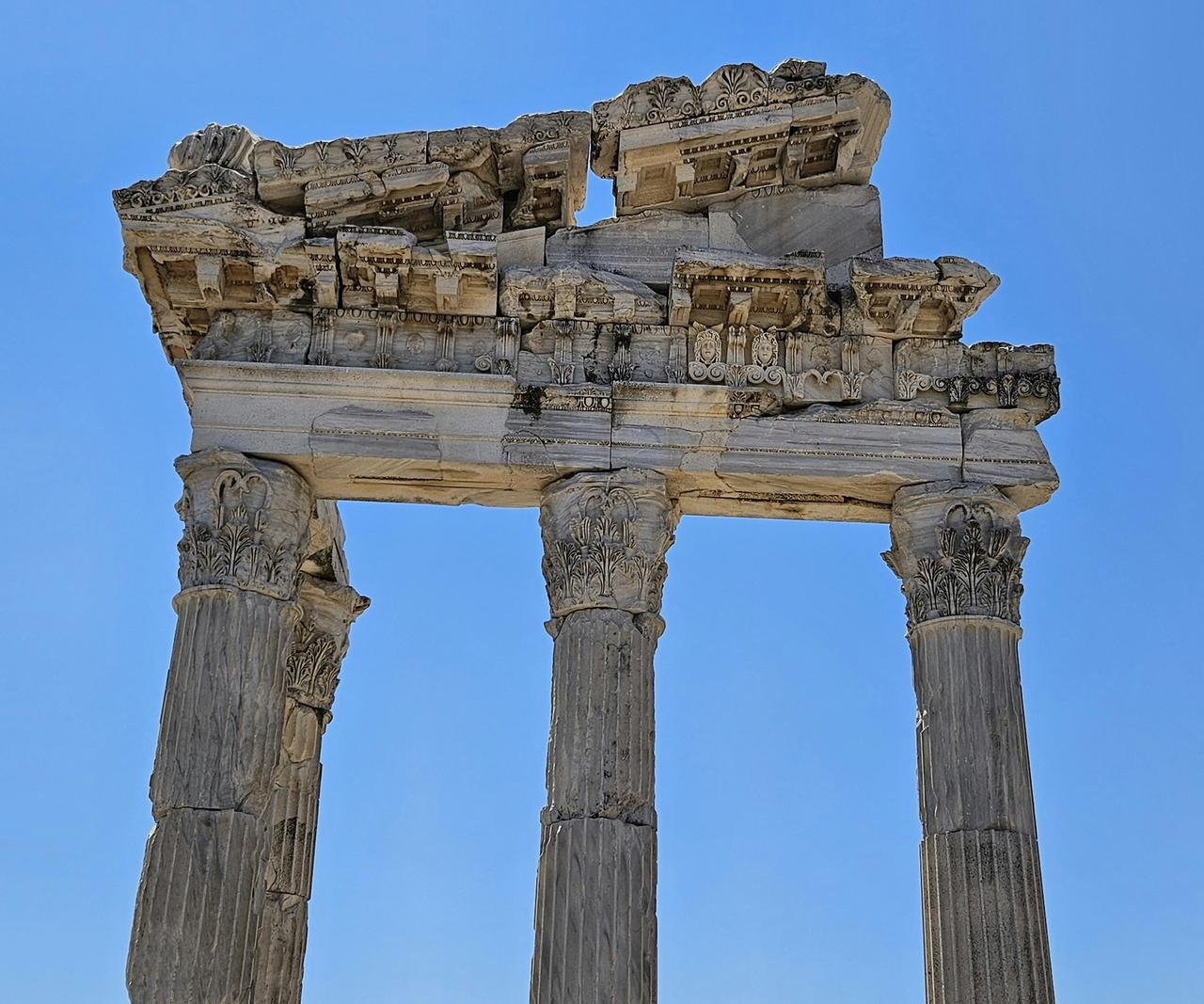
Pergamon (Photograph: Meryem Şentürk Çoban)
Hoffmann, A. "Pergamon’daki Kızıl Avlu: Geleceğe Yönelik Perspektiflerle Ayrıntılı Bir Araştırma Tarihçesi."Anadolu / Anatolia 25 (2003): 37-52.
İzmir Büyükşehir Belediyesi. "Bergama." Accessed 18.03.2025. https://www.izmir.bel.tr/tr/MekanDetay/64/230
Müze Kart. "Bergama Müzesi." Accessed 18.03.2025. https://muze.gov.tr/muze-detay?SectionId=BRG01&DistId=MRK
Müze Kart. "Bergama Akropolü." Accessed 18.03.2025. https://muze.gov.tr/muze-detay?DistId=AKR&SectionId=AKR01
T.C. Kültür ve Turizm Bakanlığı. İzmir İl Kültür ve Turizm Müdürlüğü. "Bergama." Accessed 18.03.2025. https://izmir.ktb.gov.tr/TR-77442/bergama.html
T.C. Kültür ve Turizm Bakanlığı. İzmir İl Kültür ve Turizm Müdürlüğü. "Pergamon (Bergama)." Accessed 18.03.2025. https://izmir.ktb.gov.tr/TR-210588/pergamon-bergama.html
Üreten, Hüseyin. "Antikçağ Anadolu'sunda Bir Kültür Merkezi Pergamon - Kraliyet Kütüphanesi." Türk Kütüphaneciliği 22, no. 4 (2008): 435-450.
Yılmaz, Cuma Ali ve Fırat Gülerdoğan. "Helenistik Dönemin Metropol Şehri: Pergamon."Fırat Üniversitesi Sosyal Bilimler Dergisi / The Journal of International Social Sciences 31, no. 1 (Ocak 2021): 455-476.

Ancient City of Pergamon
Location | Bergama Türkiye İzmir | ||||||||
|---|---|---|---|---|---|---|---|---|---|
Founder(s) | Philetairos | ||||||||
Foundation Date | 281 BCE | ||||||||
Significance | A center of culture; art and science | ||||||||
Notable Figures | Galen (129-216 CE) (Physician and philosopher) | ||||||||
Prominent Structures | Altar of Zeus, Temple of Athena, Pergamon Royal Library, Pergamon Theater, Gymnasium, Asklepion, Temple of Demeter | ||||||||
UNESCO Status | Inscribed on the UNESCO World Heritage List in 2014. | ||||||||
Location
History
Early Period and Foundation
Kingdom of Pergamon During the Hellenistic Period
Attalid Dynasty and the Golden Age of Pergamon (280-133 BCE)
I. Attalos (241-197 BCE) and Pergamon’s Expansion
II. Eumenes (197-159 BCE) and the Rise of Pergamon
The End of the Attalid Dynasty and Roman Annexation
Pergamon During the Roman Period (133 BCE - 395 CE)
Cultural and Archaeological Legacy of Pergamon
Architectural Structures and Archaeological Remains of Pergamon
Acropolis (Upper City)
Temple of Athena
Altar of Zeus
Pergamon Royal Library
Pergamon Theater
Royal Palaces
Lower City and Public Structures
Gymnasium (Educational Center)
Agora (Commercial and Gathering Area)
Temple of Demeter
Architectural Expansion of Pergamon During the Roman Period
Asklepion (Healing and Medical Center)
Roman Theater
Temple of Trajan
Economic Resources and Trade
Religious Centers and Cults in Pergamon
Art and Culture in Pergamon
Pergamon School of Sculpture
Architecture and Public Buildings
Literature and Science
This article was created with the support of artificial intelligence.