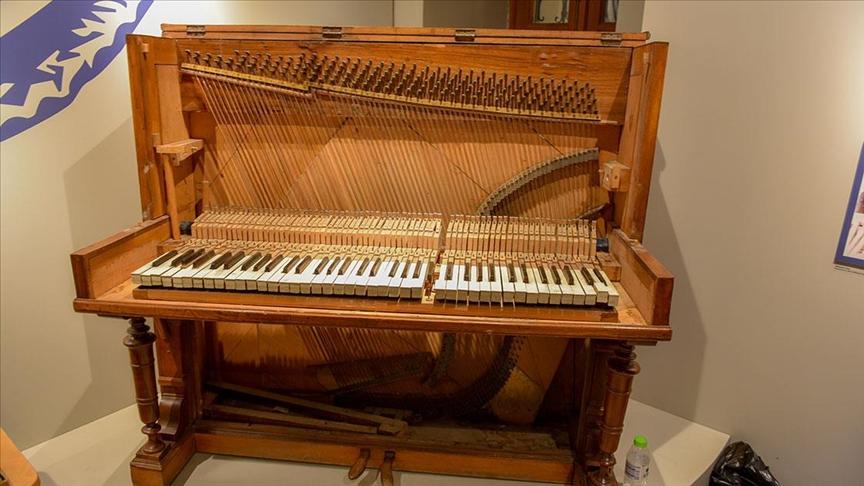
+1 More

Name(s) | Piano | ||||||||
|---|---|---|---|---|---|---|---|---|---|
Instrument Class | Keyboard Instruments Stringed Percussion Instrument (Chordophone) | ||||||||
Origin(s) | Italy (1700s) Florence | ||||||||
Inventor | Bartolomeo Cristofori | ||||||||
Number of Strings | Between 20 and 240 (in a standard piano) | ||||||||
Tonal Range | 7 Octaves + 1 Third (A0–C8) | ||||||||
Standard Number of Keys | 88 Keys (52 White 36 Black) | ||||||||
Tuning System | Equal Temperament | ||||||||
Number of Pedals | Typically 2 or 3 | ||||||||
The piano is a versatile keyboard musical instrument that produces sound by striking strings with hammers. Used both as a solo and accompanying instrument, the piano is widely utilized in various fields ranging from classical music to jazz and pop, as well as in education and the performing arts. Notable for its wide tonal range and polyphonic capability, this instrument also holds significant importance in terms of its historical development, structural features, and use across different cultures.
The origins of the piano can be traced back to the “monochord,” a single-string, keyboardless device used in Ancient Greece. In medieval Europe, early keyboard instruments such as the clavichord and harpsichord were developed. These instruments offered limited dynamic variation in sound production. The first step toward the modern piano structure occurred between 1709 and 1711 in Florence, with the invention of the “gravicembalo col piano e forte” by Bartolomeo Cristofori. This instrument allowed for changes in sound intensity depending on the force applied to the keys.
From the second half of the 18th century, interest in the piano increased, and various European countries saw intensive work on construction techniques and design. Builders such as Johann Andreas Stein, Sebastian Erard, Henri Pape, and James Thom introduced significant innovations in areas such as mechanism design, string arrangement, and hammer coverings. By the late 19th century, the Steinway & Sons company had largely set the technical and aesthetic standards of the modern piano. During this period, the piano became widespread in both homes and concert halls.
As an instrument of Western origin, the piano was known within limited circles during the Ottoman period, particularly in the palace and among groups influenced by Westernization. Ottoman sultans such as Murad V and Sultan Abdülaziz were known for their interest in the piano. Following the proclamation of the Republic, performances of Turkish music accompanied by piano became more common, especially under the leadership of Istanbul Radio.
From the 1930s onward, thanks to radio broadcasts, the piano became more closely associated with traditional Turkish music. The program “Instrumental Works with Piano,” broadcast on Istanbul Radio, accelerated this process. Feyzi Aslangil emerged as one of the most recognized pianists in this field.
The piano consists of components such as strings, hammers, keyboard, pedals, and a soundboard. A standard piano contains 88 keys: 52 white and 36 black. Each key is connected to one or more strings designed to produce a specific frequency. When a key is pressed, a small felt-covered hammer strikes the string, and the resulting vibration is transmitted through the soundboard into the air. This mechanism gives the piano a tone that responds sensitively to both soft and forceful touches.
The pedal system allows for control over the duration and character of the sound. The right pedal (damper pedal) prolongs the sound, the left pedal (una corda) alters the tone to produce a softer expression, and the middle pedal (sostenuto) sustains only the notes that are held at the moment it is pressed, aiding in the performance of complex compositions. Pianos are generally produced in two main types:

Visual Representation of the Grand Piano Instrument (pexels)
The sound of the piano is produced based on the principle of striking tensioned strings with hammers. The vibration is transmitted through bridges connected to the strings to the soundboard, where it is transferred to air molecules. The resulting sound consists of a combination of many partials (natural harmonics). Piano sound has a complex structure resulting from the interaction of acoustic parameters such as frequency, amplitude, and phase. This characteristic allows the piano to be played with varying dynamics and to offer a rich tonal palette.
Since the piano exhibits characteristics of both stringed and percussion instruments, it is classified as having a dual nature. According to the Hornbostel–Sachs system, it is placed in the "chordophone" category (stringed instruments), while also displaying percussive features due to the hammer-striking action.
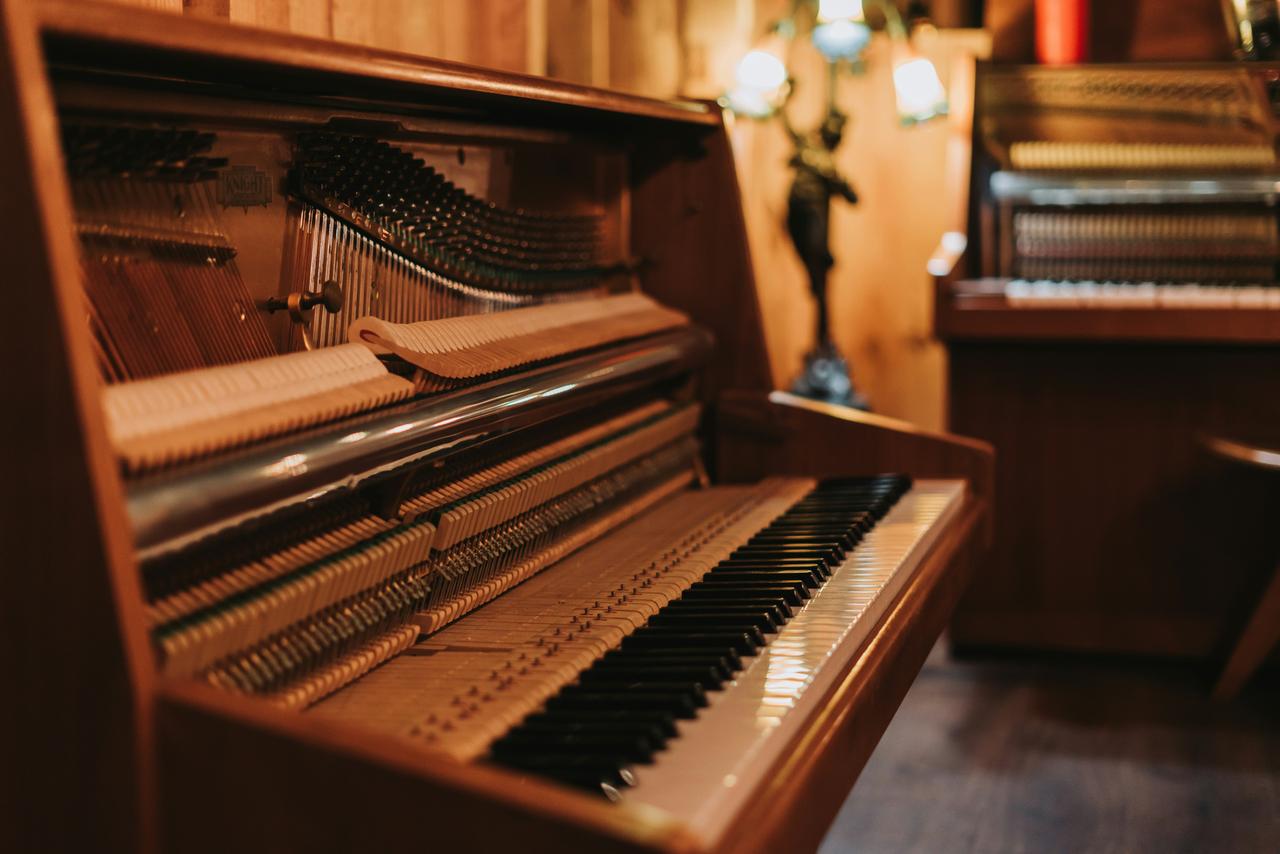
Internal Design of a Piano (Unsplash)
Piano education became institutionalized in the 18th century as a continuation of the evolving instruction of keyboard instruments. Method books written during this period emerged as comprehensive sources that included harmony, counterpoint, finger techniques, and ornamentation. Johann Sebastian Bach’s Das Wohltemperierte Klavier served as a significant reference not only for technical training but also for artistic development.
Throughout the 18th century, piano instruction was predominantly influenced by the Finger School. According to this approach, technical development could only be achieved through the independent and rapid movement of the fingers. Composer-educators such as Muzio Clementi, Johann Nepomuk Hummel, Carl Czerny, and Charles-Louis Hanon adopted this philosophy, focusing on mechanical exercises to strengthen finger muscles. During this time, some instructors even developed mechanical devices to restrict arm and wrist movement.
However, from the mid-19th century onward, this approach came into question as the technical possibilities of the piano expanded. Composers like Frédéric Chopin and Robert Schumann advocated more natural techniques based on the coordination of the arm, wrist, and fingers. Franz Liszt emphasized that technical mastery depended not on the content of the exercises but on the method of their application. Principles proposed by Ludwig Deppe—such as physical balance, use of arm weight, and mental preparation—would go on to form the foundation of modern piano pedagogy in the following century.
Johann Sebastian Bach’s The Well-Tempered Clavier (Vladimir Ashkenazy – Subject)
Although the piano is a Western-origin instrument, it began to be used in traditional Turkish music starting from the first half of the 20th century. Especially in broadcasts by Istanbul Radio, classical Turkish music works were performed with the piano, though these performances were largely based on individual adaptations. The prominence of elements such as makam (modal system) and usul (rhythmic patterns) in Turkish music made it difficult to adapt to the piano’s fixed-pitch system.
Despite these challenges, pianists and composers managed to perform pieces with various arrangements by utilizing the structural features of the instrument. Although the body of work performed with piano in the Turkish music repertoire remains limited, the contributions of pioneering figures in this field are noteworthy. Artists who adapted the traditional repertoire for piano and developed improvisational techniques used the instrument as a distinctive means of expression.
Among the pianists who have contributed to this field are Mihran Kavukciyan, Neveser Kökdeş, Ahmet Şefik Gürmeriç, Hilal Çalıkoğlu, Kamil Tahsin Sökmen, Hakan Ali Toker, and Güneş Yakartepe. These artists, at different periods, adapted piano techniques rooted in Western music to traditional Turkish music compositions.
The piano’s fixed tempered tuning system is not directly compatible with the modal richness of Turkish music. The microtonal intervals used in Turkish modes—such as Segâh or Hüzzam—cannot be fully represented on standard piano keys. However, modes like Hicaz, Rast, and Nihavent partially align with Western scales and are thus more suitable for piano performance. Pianists address this incompatibility through interpretive techniques such as glissando, ornamentation, and stretching certain intervals to convey melodic expression.
Traditional Turkish music is based on a monophonic structure. Nevertheless, performances incorporating the piano have explored harmonic accompaniment possibilities, often influenced by jazz music, utilizing modal harmony or improvised chord progressions. While the left hand performs walking bass lines or sustained chords, the right hand carries the traditional melody. This layered performance approach adds a modern dimension to Turkish music while attempting to preserve its essence.
In Türkiye, a systematic approach to piano education specific to Turkish music has yet to be established. In conservatories, piano is typically taught as part of Western music training. The use of piano in Turkish music generally relies on the performer’s individual ear training, improvisational skill, and familiarity with the repertoire. As a result, each pianist develops a personal style of interpretation, and the educational process remains non-standardized.
The TRT archives contain piano-accompanied recordings of Turkish music from the 1960s to 1980s. Performances featuring Neveser Kökdeş and radio pianists serve as valuable documents for repertoire and technical analysis. Such audiovisual materials are original sources that illustrate how piano accompaniment was interpreted and integrated into the traditional structure. Moreover, contemporary recordings have begun to document alternative harmonic approaches.
The materials used in piano construction are necessary for both sound quality and durability. The body and soundboard are typically made of tonewoods such as spruce, maple, and beech, known for their resonant properties. The strings are made of high-carbon steel, and the bass strings are usually wound with copper. These materials are carefully selected to ensure uniform sound production across different frequencies.
The frame, designed to withstand the high tension of the strings, is made of cast iron. In the past, the key surfaces were covered with natural materials such as ebony and ivory, whereas today synthetic materials are more commonly used. The hammer heads are covered with felt and play a significant role in determining the instrument’s tonal character.
Mechanical precision is essential in the construction of modern pianos. The response of each key is balanced to suit the performer’s touch, requiring both craftsmanship and engineering expertise throughout the manufacturing process.
Anadolu Agency. “The First Piano Made in Turkey in 1904 Has Been Restored.” Anadolu Agency. Accessed July 20, 2025. https://www.aa.com.tr/tr/kultur/turkiyede-1904-yilinda-yapilan-ilk-piyano-restore-edildi/3409219
Castro, Luis. “A Close Up of a Piano in a Room.” Unsplash, 13 Eylül 2021. Erişim Tarihi: 21 Temmuz 2025. https://unsplash.com/photos/JwlF5hPcE1k
Dalprat, Dalila. “Brown Grand Piano with Bench JPG.” Pexels. Last accessed July 20, 2025. https://www.pexels.com/tr-tr/fotograf/kahverengi-kuyruklu-piyano-sandalyeli-2043571/
Kültek, Buğra. “History of Piano Education.” avys.omu.edu.tr. Accessed July 20, 2025. https://avys.omu.edu.tr/storage/app/public/faciksoz/140836/PI%CC%87YANO%20EG%CC%86I%CC%87TI%CC%87MI%CC%87%20TARI%CC%87HI%CC%87%20.pdf
Republic of Türkiye Ministry of National Education. Basic Concepts of Musical Instruments. Ankara: Ministry of National Education, 2016. Accessed July 20, 2025. https://megep.meb.gov.tr/mte_program_modul/moduller_pdf/M%C3%BCzik%20Aletleri%20Temel%20Kavramlar%C4%B1.pdf
Republic of Türkiye Ministry of National Education. Piano. Musical Instrument Making Field. Ankara, 2013. Accessed July 20, 2025. https://ogmmateryal.eba.gov.tr/kitap/guzel-sanatlar-lisesi/muzik/9/piyano/piyano.pdf
Republic of Türkiye Ministry of National Education. Sound Production Applications. Common Module for the Musical Instrument Making Field. Ankara, 2013. Accessed July 20, 2025. https://megep.meb.gov.tr/mte_program_modul/moduller_pdf/Ses%20Olu%C5%9Fum%20Uygulamalar%C4%B1.pdf
Sökmen, Kamil Tahsin. “The Use of Piano in Traditional Turkish Music.” AKÜ AMADER (Afyon Kocatepe University Academic Journal of Music Research) 8, no. 16 (June 2022): 271–286. Accessed July 20, 2025. https://dergipark.org.tr/tr/download/article-file/2404460
Vladimir Ashkenazy – Subject. “J.S. Bach: The Well-Tempered Clavier: Book 1, BWV 846–869: Prelude in C Major BWV 846.” YouTube. Accessed July 20, 2025. https://www.youtube.com/watch?v=LLHDkM2DMDQ


Name(s) | Piano | ||||||||
|---|---|---|---|---|---|---|---|---|---|
Instrument Class | Keyboard Instruments Stringed Percussion Instrument (Chordophone) | ||||||||
Origin(s) | Italy (1700s) Florence | ||||||||
Inventor | Bartolomeo Cristofori | ||||||||
Number of Strings | Between 20 and 240 (in a standard piano) | ||||||||
Tonal Range | 7 Octaves + 1 Third (A0–C8) | ||||||||
Standard Number of Keys | 88 Keys (52 White 36 Black) | ||||||||
Tuning System | Equal Temperament | ||||||||
Number of Pedals | Typically 2 or 3 | ||||||||
Historical Development
Structural Features
Sound Production and Acoustic Properties
History of Education and Pedagogical Development
Use of the Piano in Turkish Music
Prominent Pianists
Technical Challenges in Performance and Interpretation
Harmonic Approaches and Accompaniment Techniques
The Role of the Piano and Educational Needs
Need for Visual and Audio Materials
Material and Construction Features
This article was created with the support of artificial intelligence.