



What Happened in Hiroshima and Nagasaki?
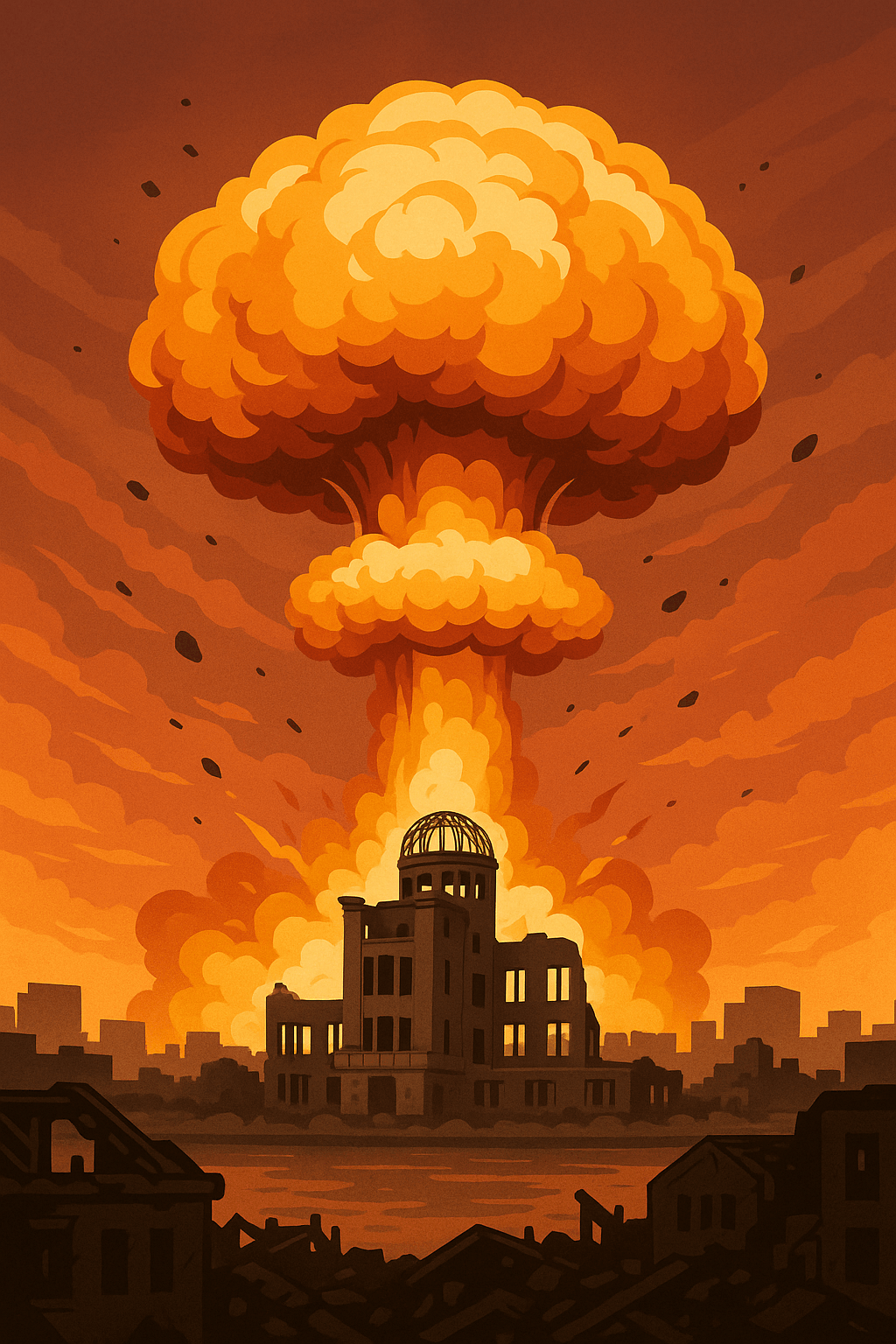
Hiroshima and Nagasaki are two major cities in Japan. During World War II, in August 1945, these cities were struck by extremely powerful weapons known as “atomic bombs.” Hiroshima was bombed on 6 August and Nagasaki on 9 August. These explosions caused massive destruction in both cities, injuring and killing many people.

Hiroshima and Nagasaki (Generated with Artificial Intelligence Assistance)
Significance of the Event
When an atomic bomb detonates, it releases enormous energy. This energy produces both extremely high temperatures and a powerful shockwave. The explosions in Hiroshima and Nagasaki did not only destroy buildings; they also had long-lasting effects on human health. These events demonstrated to the world the devastating potential of war.
✂️ What Happened?
- Massive Explosion: The bomb dropped on Hiroshima was named “Little Boy,” and the one dropped on Nagasaki was named “Fat Man.”
- Cities Were Damaged: Buildings were destroyed, roads were ruined, and fires broke out.
- People Were Affected: Many people died at the moment of the explosions and in the aftermath. Survivors suffered illnesses for years afterward.
- The War Ended: Shortly after these bombings, Japan surrendered, bringing World War II to an end.
Timeline:
📅 August 1945
On 6 August 1945, Hiroshima was bombed; on 9 August 1945, Nagasaki was bombed. These dates are remembered as two of the most destructive moments in world history. Today, both cities have “Peace Parks” and memorials. Every year on these dates, people hold ceremonies to remember the importance of peace.