
KURE Kids Header Line
badge icon

Bu içerik çocuklar için Türkçe olarak yazılmış olup yapay zeka ile otomatik olarak İngilizceye çevrilmiştir.

article-image

Camel

Son Güncellenme: 01.12.2025

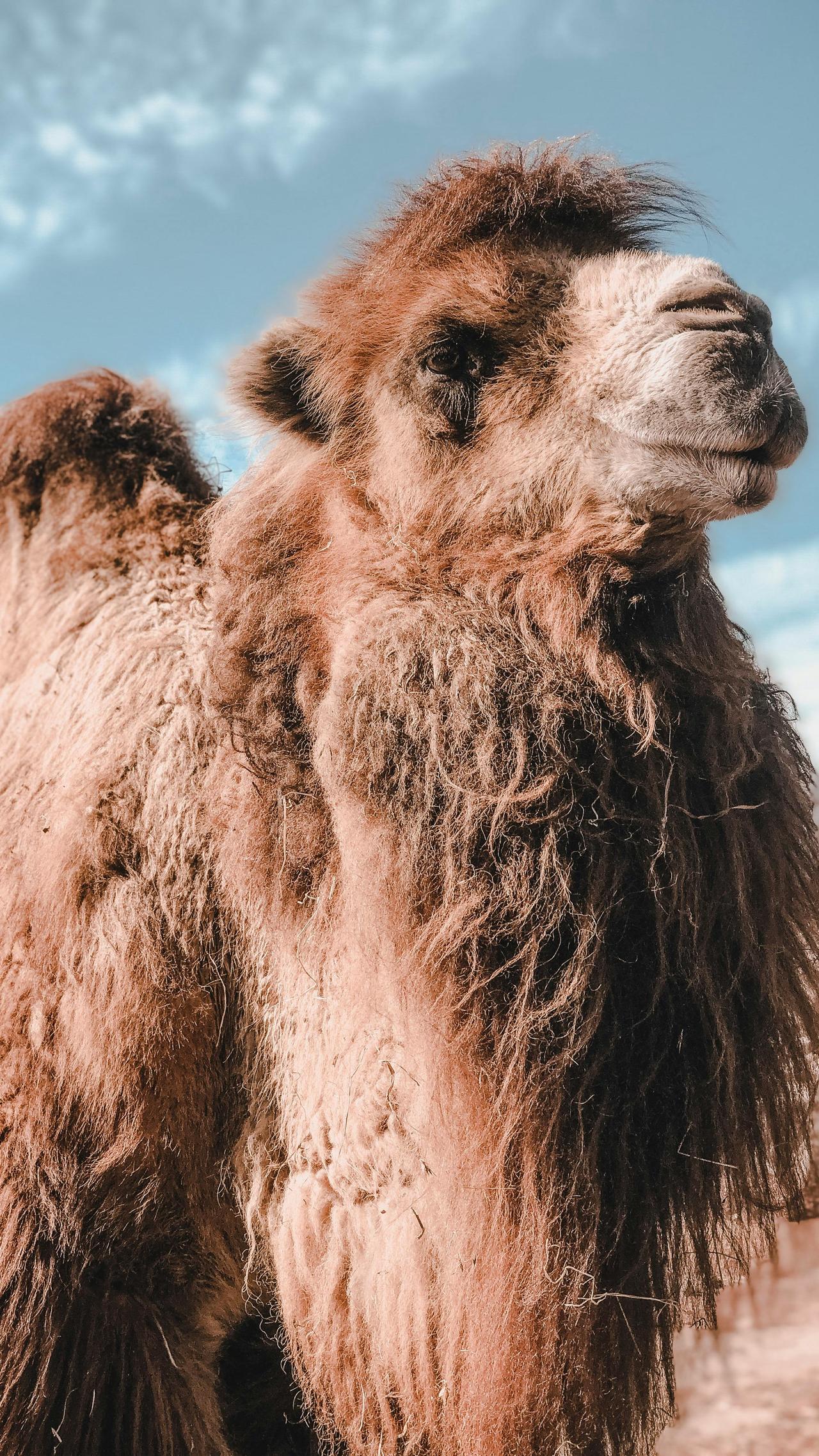
Camel (Camelus) belongs to the family Camelidae and is one of the hardy and strong animals of deserts. One of its most distinguishing features from other animals is the humps on its back. Based on the number of humps, camels are divided into two species: the two-humped camel and the one-humped camel.

Additionally, their long legs and thick eyelashes are notable. By storing fat in their humps, camels can endure long periods without water, enabling them to survive in harsh desert conditions.

Camels in Different Color Tones (Pexels)

What Colors Do They Have?

The coat color of camels varies depending on their habitat and species. Their fur can range from light brown, cream, beige, dun, gray to dark brown. In some camels, these colors appear in mixed patterns.

Camels living in desert regions are typically light-colored, which helps them absorb less heat from the sun. In Türkiye, the one-humped camels (dromedaries) are mostly recognized by their light brown or yellowish fur. Their undersides and inner legs are lighter in color.

One-Humped Camel (

What Does It Look Like?

Camels are striking due to their large and robust build. Thanks to their long necks, they can easily reach leaves on high branches. Their large, protruding lips are adapted for plucking tough desert plants. Long eyelashes, closable nostrils, and thick fur protect them from sandstorms. Their bulky and resilient bodies make them uniquely adapted to desert life.

They have protrusions on their backs called humps, which are among their most distinctive features. The humps store fat, not water. This fat is converted into energy when food is scarce, sustaining the camel for long periods. One-humped camels (dromedaries) have a single large hump, while two-humped camels (Bactrian) have two separate humps.

Two-Humped Camel (Flickr)

How Large Do They Grow?

Camels can reach shoulder heights of 1.8 to 2 meters and total lengths, including the head, of 2.5 to 3 meters. Their weight varies by species but generally ranges from 600 to 1000 kilograms. Two-humped camels (Bactrian) are typically slightly larger than one-humped camels (Dromedary).


What Do They Eat?

In the wild, camels feed on thorny desert plants, dry grasses, leaves, and salt-tolerant steppe vegetation. They particularly favor acacia leaves and resilient desert grasses.


Where Do They Live?

Camels generally inhabit arid deserts and semi-arid steppes of Africa and Asia. In Türkiye, they are commonly seen in the Southeastern Anatolia and Aegean regions, used for cargo transport and camel wrestling.

Sandy deserts, saline grasslands, and dry steppes are their natural habitats.

Camels in the Desert (

Contributions to the Ecosystem

Camels play an important role in desert and steppe ecosystems. By consuming thorny and tough vegetation, they prevent these plants from overgrowing. Additionally, as they migrate, they aid in seed dispersal through their dung, contributing to the growth of new vegetation and supporting ecosystem continuity in arid regions.


Conservation Status

Camels are assessed by the International Union for Conservation of Nature (IUCN) in different categories depending on the species. The one-humped camel (Camelus dromedarius) is domesticated and has no wild population in nature. Although the two-humped camel (Camelus bactrianus) is widely domesticated, the wild two-humped camel is classified as “Endangered,” indicating that its numbers in the wild are under threat.

Bunlara Göz Atmayı Unutma!
Bilim ve Teknoloji
cat img
Tarih ve Kültür
cat img
Sanat ve Edebiyat
cat img
image
En Çok Okunan
Thomas Edison
arrow
image
En Yeni Eklenen
Pardus
arrow
ilham-notu-bg
MERAKLI ÇOCUKLARA İLHAM NOTU!

Camels are strong enough to go without water for days and endure sandstorms. Their secret lies in their patience and resilience. You, too, can be like a camel when pursuing something you want to learn or a dream you wish to achieve: don’t give up quickly, be patient, and move forward step by step. Perhaps you will overcome the “sandstorms” of your own dreams, just like a camel traveling across the desert! 🐪✨

Next time you have the chance, venture out to explore nature; observe the lives of the animals and plants around you. Who knows, perhaps one day you will gather enough adventure to write your own “desert journey”! 🌍

Bunu Kim Yazdı?
Kids Writing
YazarBuse Nur ŞEN1 Aralık 2025
bottom-bg-effect-bottom
bottom-bg-effect-top

The camel is a hardy mammal known for its humps and long eyelashes, native to the arid deserts of Africa and Asia. It feeds on spiny desert plants and grasses, contributing to the ecosystem by aiding in the dispersal of seeds through its droppings. In Türkiye, it is particularly found in Southeastern Anatolia and the Aegean region. Dromedaries, with a single hump, are domesticated and not endangered, but wild Bactrian camels, with two humps, are among the threatened species.

Kaynakça


Animal Diversity Web. "Camelus bactrianus." Animal Diversity Web. Accessed September 18, 2025. https://animaldiversity.org/accounts/Camelus_bactrianus/?utm_source

Animal Diversity Web. "Camelus dromedarius." Accessed September 18, 2025. https://animaldiversity.org/accounts/Camelus_dromedarius/?utm_source

Convention on the Conservation of Migratory Species of Wild Animals. "Camelus bactrianus." cms.int. Accessed September 18, 2025. https://www.cms.int/en/species/camelus-bactrianus?utm_source

Flickr. "Camel JPG." flickr. Accessed September 18, 2025. https://www.flickr.com/photos/cryptic/264242293/

Global Invasive Species Database. "Camelus dromedarius." Accessed September 18, 2025. https://www.iucngisd.org/gisd/species.php?sc=1872&utm_source

Osteloff, Emily. "How do Camels Survive in Desert?" Natural History Museum. Accessed September 18, 2025.

Pexels. "Doğa Kum Su Çöl JPG Pexels." Accessed September 18, 2025. https://www.pexels.com/tr-tr/fotograf/doga-kum-su-col-4321182/

Pexels. "Kahverengi Deve JPG." Accessed September 18, 2025. https://www.pexels.com/tr-tr/fotograf/kahverengi-deve-1915950/

Pexels. "Çimen Çim Ayakta Açık Hava JPG Pexels." Accessed September 18, 2025. https://www.pexels.com/tr-tr/fotograf/cimen-cim-ayakta-acik-hava-6408363/

Pixabay. "Deve Camel Chameau JPG." Accessed September 18, 2025. https://pixabay.com/tr/photos/deve-camel-chameau-%C3%A7%C3%B6l-desert-2817941/

The Zoological Society of London. "Difference between wild camels and domestic camels." zsl.org. Accessed September 18, 2025. https://www.zsl.org/news-and-events/news/wild-bactrian-camel-research?utm_source

Unsplash. "Five Camels on Desert JPG." Accessed September 18, 2025. https://unsplash.com/photos/five-camels-on-desert-YyVmhWec_6Y

ilham-notu-bg
ilham-notu-bg
ilham-notu-bg
HEYY!
Bunları Biliyor
Muydun?
Lamb
Lamb
KÜRE'ye Sor