




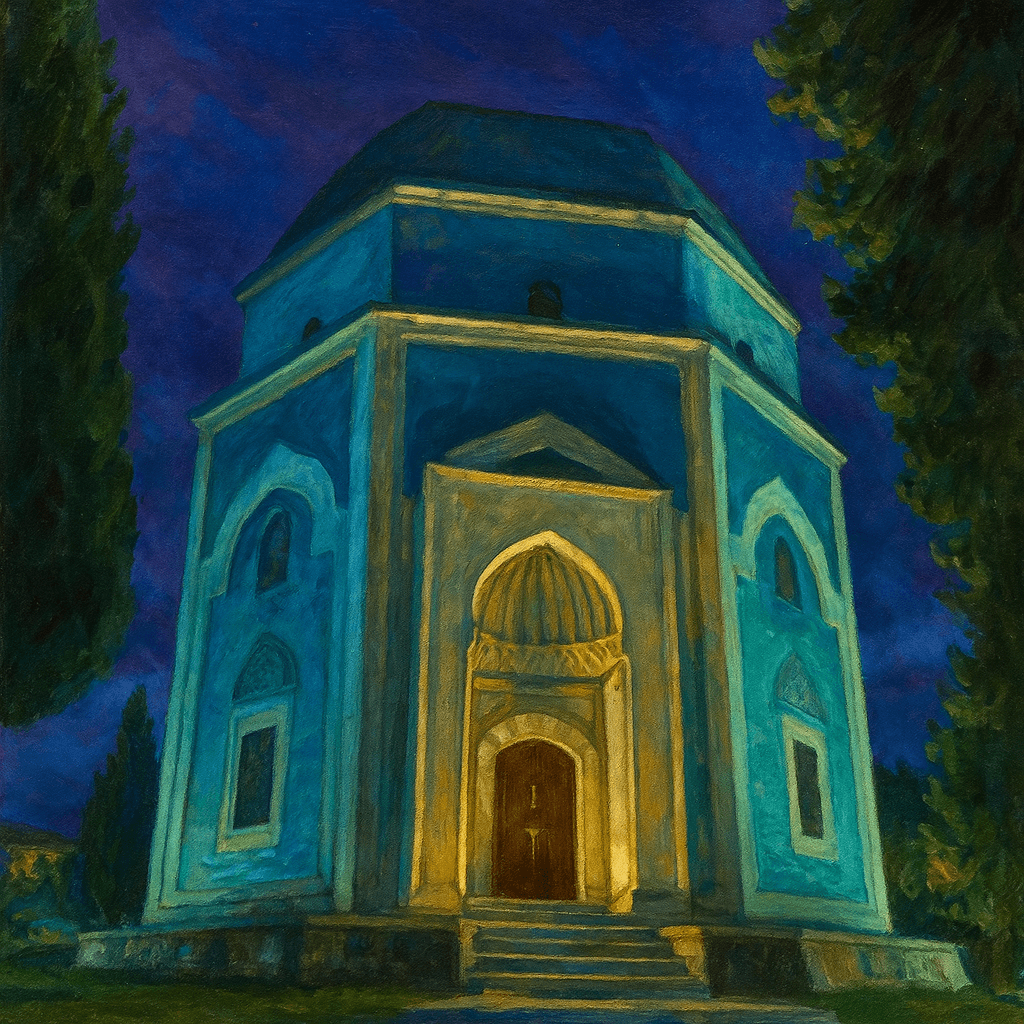
Green Tomb
One of the most distinctive structures of Ottoman history, the Green Tomb is located in Bursa. The tomb derives its name from the green and turquoise tiles that adorn its exterior facade. It was constructed in 1421 for Çelebi Mehmed. Built during a difficult period for the Ottoman state, the tomb was erected to demonstrate the power and artistic achievement of the empire.

(Generated by Artificial Intelligence)
Who Is Buried in the Green Tomb?
The tomb houses Çelebi Mehmed, regarded as the second founder of the Ottoman Empire. Beside him are buried his daughters Selçuk Hatun, Hafsa, Ayşe and Sitti Hatun, his sons Mahmud and Yusuf Bey, as well as his nurse. The coffins within the tomb are notable for their intricate tile decorations.

(Generated by Artificial Intelligence)
Purpose of the Green Tomb’s Construction
The tomb was built on a hill directly opposite the Green Mosque. After his father Yıldırım Bayezid’s defeat by Timur, Çelebi Mehmed restored the Ottoman state and intended this structure to convey the message that “The Ottoman state endures.” The tomb’s height and elaborate decorations serve as a testament to this statement.
Architect and Decorations
The architect of the tomb was Hacı İvaz Paşa. The decorative tiles were crafted by the renowned artists of the period: Ali bin İlyas Ali, Mahmud el Mecnun, and Ali bin Hacı Ahmed Tebrizi. Both the interior and exterior of the tomb are covered in tiles. The entrance features fine woodwork, created by the master craftsman from Tabriz, Ahmed bin Ali.
Features of the Tomb
The Green Tomb has an octagonal plan. Although it appears single-storied from the outside, there is a burial chamber beneath the section housing the coffins. The dome rests on a drum and is adorned with windows. The interior walls are clad in green tiles up to a height of three meters, inscribed with hadiths, verses from the Quran, and ornamental designs.
The Green Tomb Today
The tomb is part of the Green Külliye, which includes a mosque, a medrese, a bathhouse, a soup kitchen, and the tomb itself. It was inscribed on the UNESCO World Heritage List in 2014. Today, it is one of Bursa’s most visited historical monuments.

(Generated by Artificial Intelligence)