



Lahmacun: A Delicious Turkish Dish
Have you ever heard of "lahmacun"? Do you know how it is made or where it first originated? Keep reading, information seeker—you’re about to embark on a wonderful flavor journey!
🍽️What Is Lahmacun?
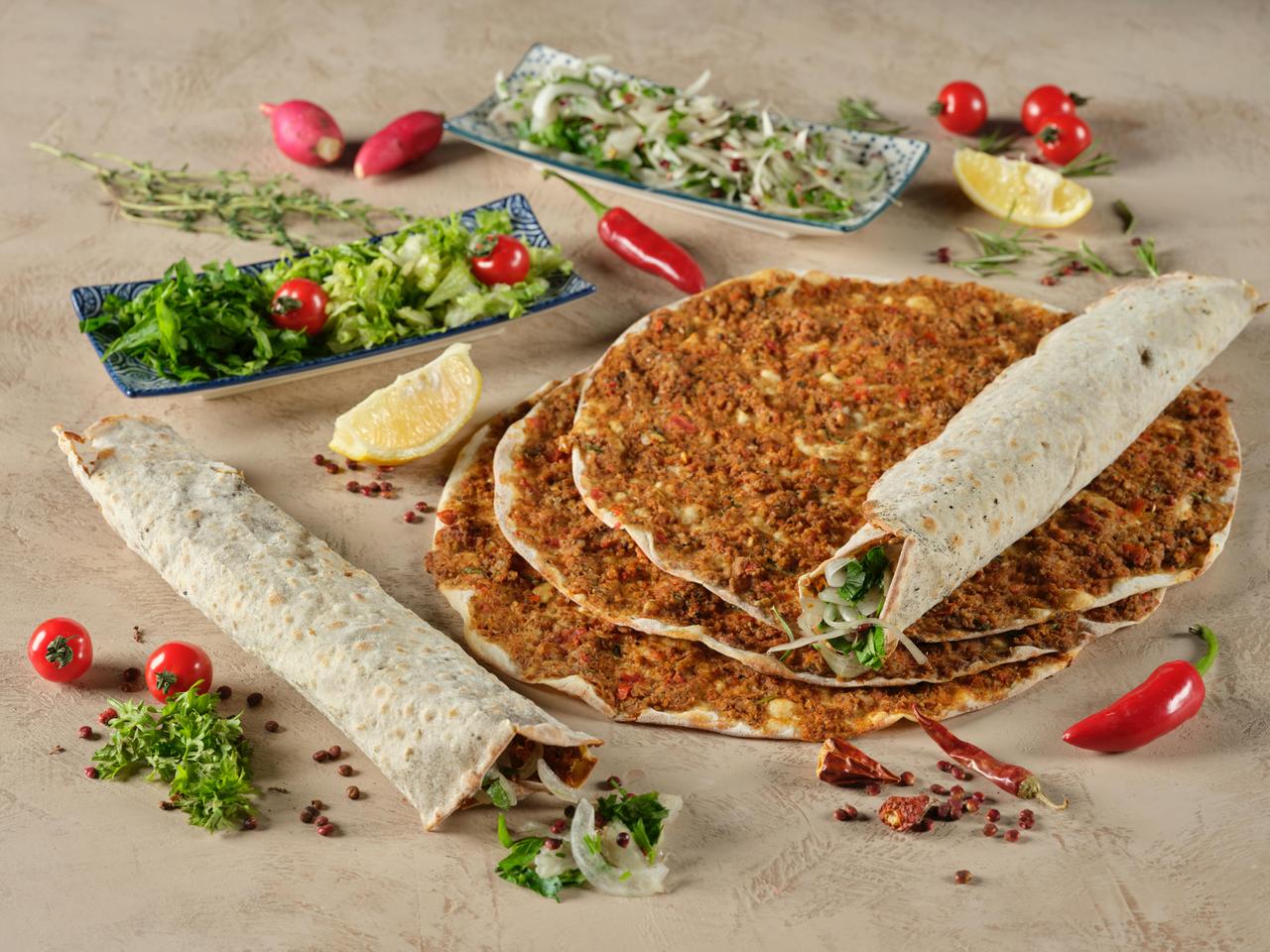
Lahmacun is a delicious dish made by spreading minced meat, onion, parsley, spices, and optionally tomato or pepper onto a thin dough base, then baking it in an oven. It is sometimes served on a plate and sometimes rolled like a wrap. Its flavor has made it a favorite among both children and adults.

(Image generated by artificial intelligence.)
Like a work of art, every ingredient on lahmacun is carefully arranged. Then, as it bakes in the oven, its aromatic scent fills the entire kitchen!
🗺️ Where and When Did It Emerge?
The history of lahmacun stretches back to ancient times—to Mesopotamia! This region has been home to many civilizations throughout history. Over time, the tradition of flatbreads in Mesopotamia and Anatolia evolved with the addition of minced meat toppings, giving rise to meat-covered bread.

Masters preparing lahmacun in past centuries. (Image generated by artificial intelligence.)
Lahmacun has been known in Anatolia since ancient times. The famous traveler Evliya Çelebi referred to this dish as “lahm-ı acinli börek” in his 17th-century book, Seyahatname. “Lahm” means “meat” in Arabic and “acin” means “dough.” Thus, the word lahmacun literally translates to “meat on dough.” It has been prepared and enjoyed in Anatolia for approximately 300 years.
🏅 Registered Lahmacuns
Some cities have developed such distinctive versions of lahmacun that they have been officially registered by the Turkish Patent and Trademark Office:
📍Gaziantep Lahmacun – Features an extremely thin dough, generous spices, and exceptional flavor.
📍Şanlıurfa Lahmacun – Prepared with simpler ingredients, highlighting the meat.
📍Tarsus Fındık Lahmacun – Noted for its small size, bite-sized portions, and great convenience!
🍴 Lahmacun in Daily Life
Lahmacun is not only served in restaurants—it can also be enjoyed at home, during picnics, or as a snack after school.
Sometimes it is the star of the dinner table, other times shared among friends during a game break. Sometimes it is rolled into a wrap and served with ayran: a perfect meal!

(Image generated by artificial intelligence.)
⏳ A Journey Through Time: The Path of Lahmacun
Year: Very ancient times (Mesopotamia)
👩🌾 People spread meat on dough and baked it in stone ovens!
Year: 1900s
🌆 Lahmacun became very popular in Southeastern Anatolia. Different recipes developed from city to city.
Year: 2000s
📜 The Turkish Patent Office officially registered certain lahmacun varieties: Gaziantep, Şanlıurfa, and Tarsus lahmacuns are now officially documented!
Year: Today
📦 Lahmacun now arrives at our homes in packaged form and is even shared on social media! A dish that is both traditional and modern!

(Image generated by artificial intelligence.)