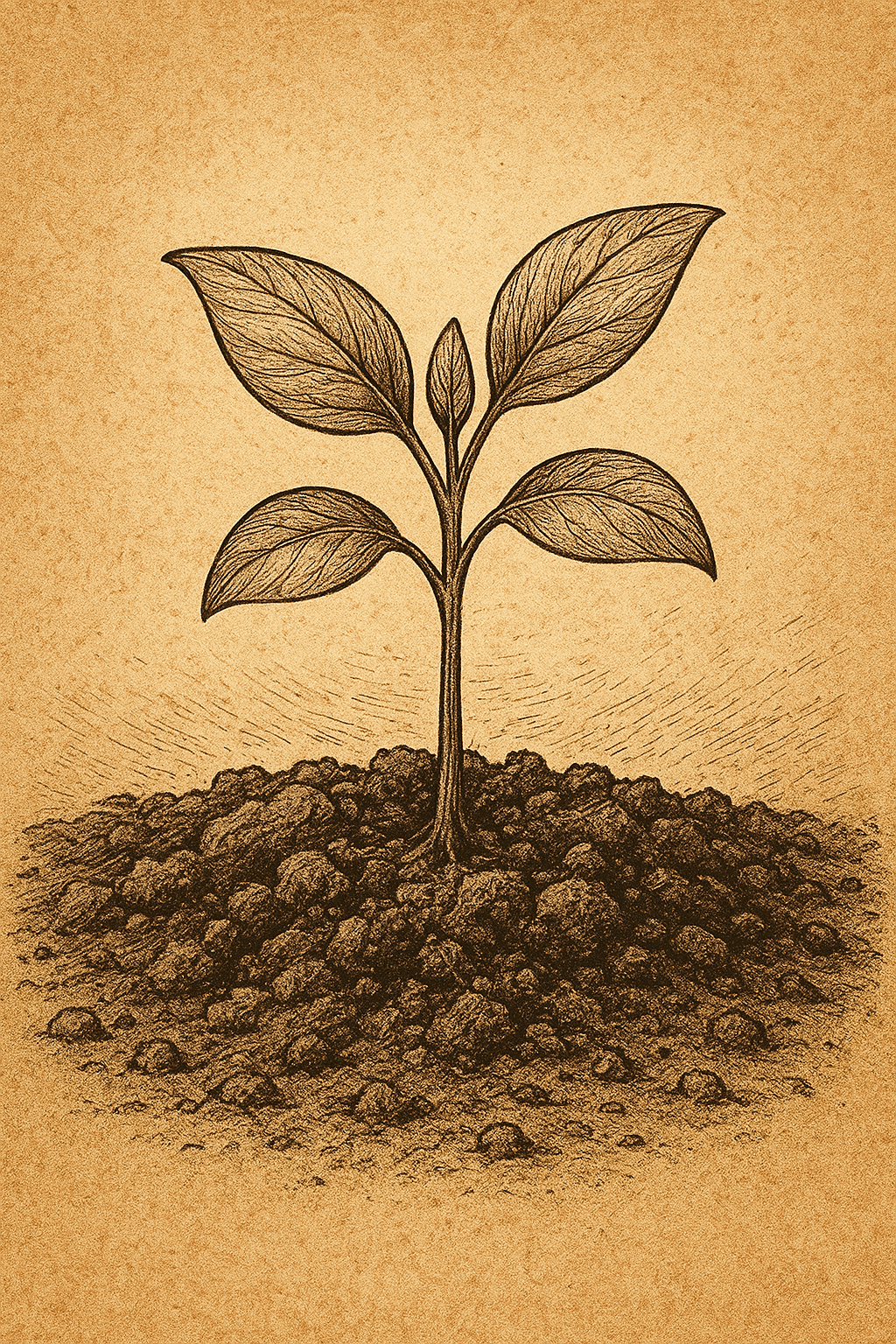




Soil
Soil is a natural resource that covers the Earth's crust as a thin layer and is essential for plant root development and the continuation of life. It consists of mineral particles, organic matter, water, air, and various living organisms. As a fundamental component of Earth's ecosystems, soil provides physical support to plants and serves as the source of water and nutrients they require.

(Generated by Artificial Intelligence.)
Soil Formation
Soil formation occurs through the influence of factors such as climate, parent material, topography, vegetation, and time. The process begins with the physical and chemical weathering of rocks and continues with the addition of organic matter. It can take hundreds of years to form just one centimeter of soil. The structure, mineral composition, organic matter content, and physical properties of soil vary according to the natural conditions of the region where it forms.
Soil Colors and Their Meanings
Soil color varies depending on factors such as mineral composition, amount of organic matter, drainage condition, and exposure to air. Soils rich in humus are dark brown or black. Soils containing iron oxides may appear in red or yellow tones. Well-drained soils typically have reddish hues, while poorly drained and water-saturated soils show gray or blue-green shades. Light-colored soils generally indicate low fertility, whereas dark-colored soils signify high organic matter content and fertility.

(Generated by Artificial Intelligence.)
Soil Types and Characteristics
Soils are classified based on the proportions of sand, silt, and clay particles. Sandy soils allow water to drain quickly but have low nutrient retention capacity. Clay soils are rich in nutrients but are impermeable to water and heavy. Loamy soils consist of a balanced mixture of sand, silt, and clay, retaining water while also draining well. Different climate regions have their own characteristic soil types. For example, red Terra Rossa soils are common in Mediterranean climates, chestnut-colored steppe soils occur in semi-arid regions, and acidic forest soils predominate in humid areas.
The Importance of Soil in Ecosystems and Human Life
Beyond being the primary medium for plant growth, soil provides essential ecosystem services such as water filtration, climate regulation, nutrient cycling, and conservation of biological diversity. It forms the foundation of economic activities including agriculture, forestry, and livestock farming. Microorganisms living in the soil break down organic matter, sustaining the nutrient cycle.

(Generated by Artificial Intelligence.)
Threats to Soil and the Need for Its Protection
Soil faces various threats including erosion, improper agricultural practices, over-irrigation, salinization, pollution, and climate change. Approximately one-third of the world’s soils are degraded. Soil loss not only reduces fertility but also disrupts ecosystem balance. Therefore, sustainable soil management must be planned and implemented based on scientific data.