




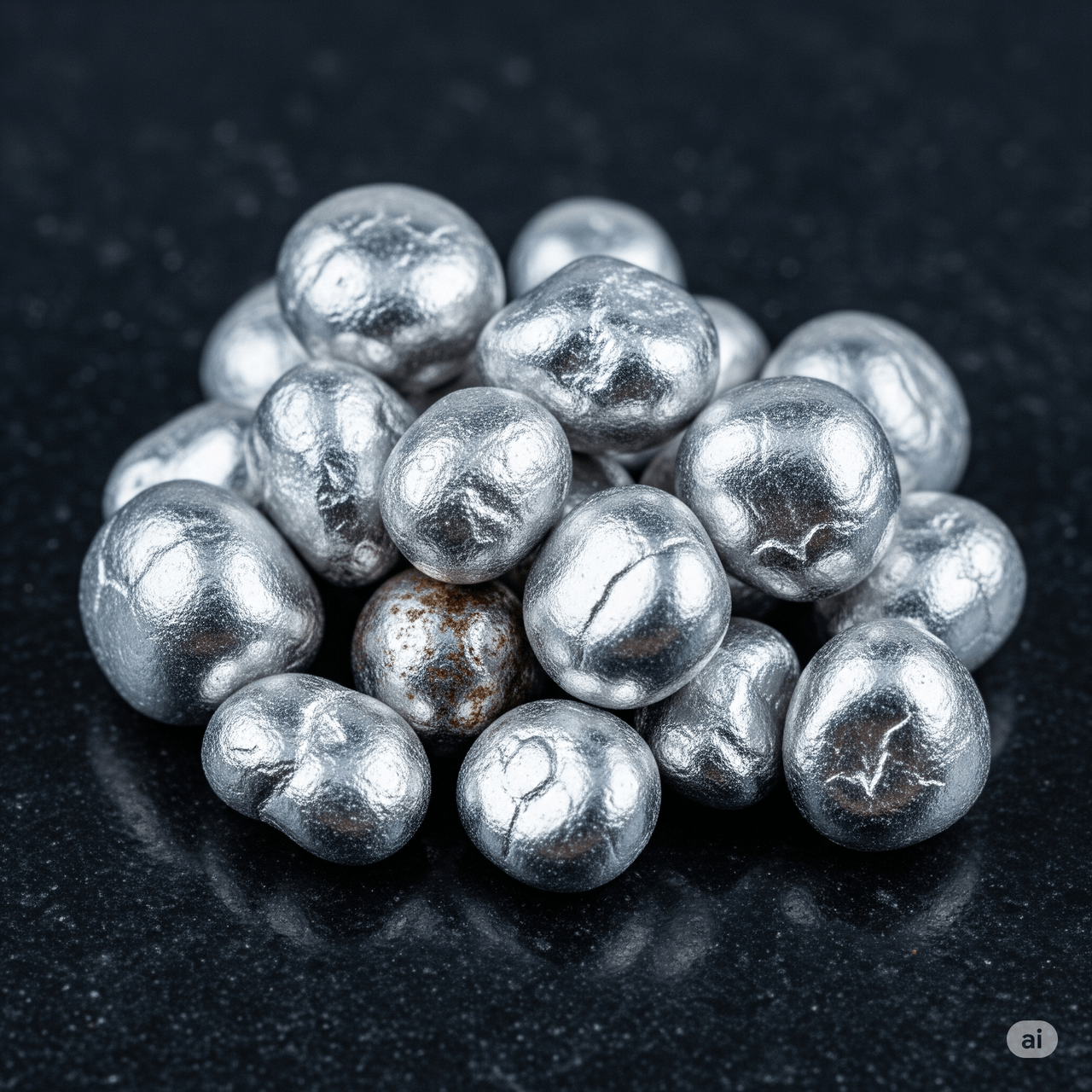
Thallium Element
Thallium is a metal with the symbol Tl and atomic number 81. It has a silvery-white appearance and is a soft, malleable element. It occurs rarely in nature and is found in small amounts within certain minerals.

(Generated by Artificial Intelligence.)
History
Thallium was discovered in 1861 by the British chemist Sir William Crookes. Its name derives from the Greek word “thallos,” meaning “green shoot,” due to the green spectral line observed in thallium. This discovery was an important example demonstrating that elements could be identified through spectral analysis.
Physical Properties
Thallium is a soft, light and easily shaped metal. It has a silvery-gray color and exists in solid form at low temperatures. Its density and melting point are moderate, making it suitable for certain specialized alloys.
Chemical Properties
Thallium is a chemically reactive element. It undergoes reactions with oxygen and moisture in the air. Some thallium compounds are toxic and must be handled with care for health reasons. Therefore, safety precautions are taken in laboratories and industrial settings.
Applications
Thallium has been used historically in certain electronic devices, optical instruments and low-temperature thermometers. Today it is particularly valuable in specific chemical reactions and specialized alloys. Due to its toxicity its use is limited and carried out under controlled conditions.
Natural Occurrence
Thallium is typically found in trace amounts in sulfur minerals and certain copper, lead and zinc ores. Pure thallium is rarely extracted. Consequently, thallium mining is conducted with great care and the element is mostly processed in laboratory environments.
Scientific Significance and Future Perspectives
Thallium continues to be a subject of research in chemistry and materials science. While its toxic nature requires controlled use, its importance in specialized electronic and optical technologies remains significant. Scientists are continuing to investigate safe methods of using thallium and its technological potential.