



Yıldız Sarayı
Istanbul’s Beşiktaş district hosts a vast complex situated on a high hill, behind expansive gardens and high walls. This is not merely a single building; it is a self-sufficient small city containing numerous pavilions, kasr, workshops, and even a theater. In the past, this area served as the administrative center of the Ottoman State and today welcomes visitors as an important museum.
History and Development of the Palace
The earliest structures on Yıldız Hill were built by Sultan III. Selim for his mother, Mihrişah Sultan. Over time, subsequent sultans expanded the site by adding various buildings and fountains. However, the palace’s major development and transformation into the empire’s administrative center occurred during the reign of Sultan II. Abdülhamid.
In 1877, Sultan II. Abdülhamid moved from Dolmabahçe Palace to this site and governed the state from here for 33 years. During this period, the palace grounds were enclosed by high, thick walls for security, and new administrative and residential buildings were added.

Yıldız Sarayı and its courtyard (Anadolu Ajansı)
A Self-Sufficient City
Yıldız Sarayı consists not of a single large structure but of many distinct buildings scattered freely within the gardens. Within the palace complex are pavilions such as the Büyük Mâbeyin and Küçük Mâbeyin, used by the sultan for official and private life. A chalet pavilion was also constructed to accommodate foreign state guests.
The palace complex included not only administrative buildings but also facilities to meet daily needs, such as a library, pharmacy, carpentry workshop, ironworks, and a tile factory. A theater building was also constructed to allow residents to engage with the arts.
Hasbahçe and Natural Areas
One of the most distinctive parts of the palace is the Hasbahçe, an area reserved exclusively for the sultan and his immediate circle. Within this garden lies an artificial lake with an island and artificial waterfalls feeding the water. The landscape features rare plants brought from both local regions and distant countries.
In earlier times, this expansive garden area also housed a zoo with various birds and animals. The outer garden area of the palace complex is now open to the public as Yıldız Parkı.

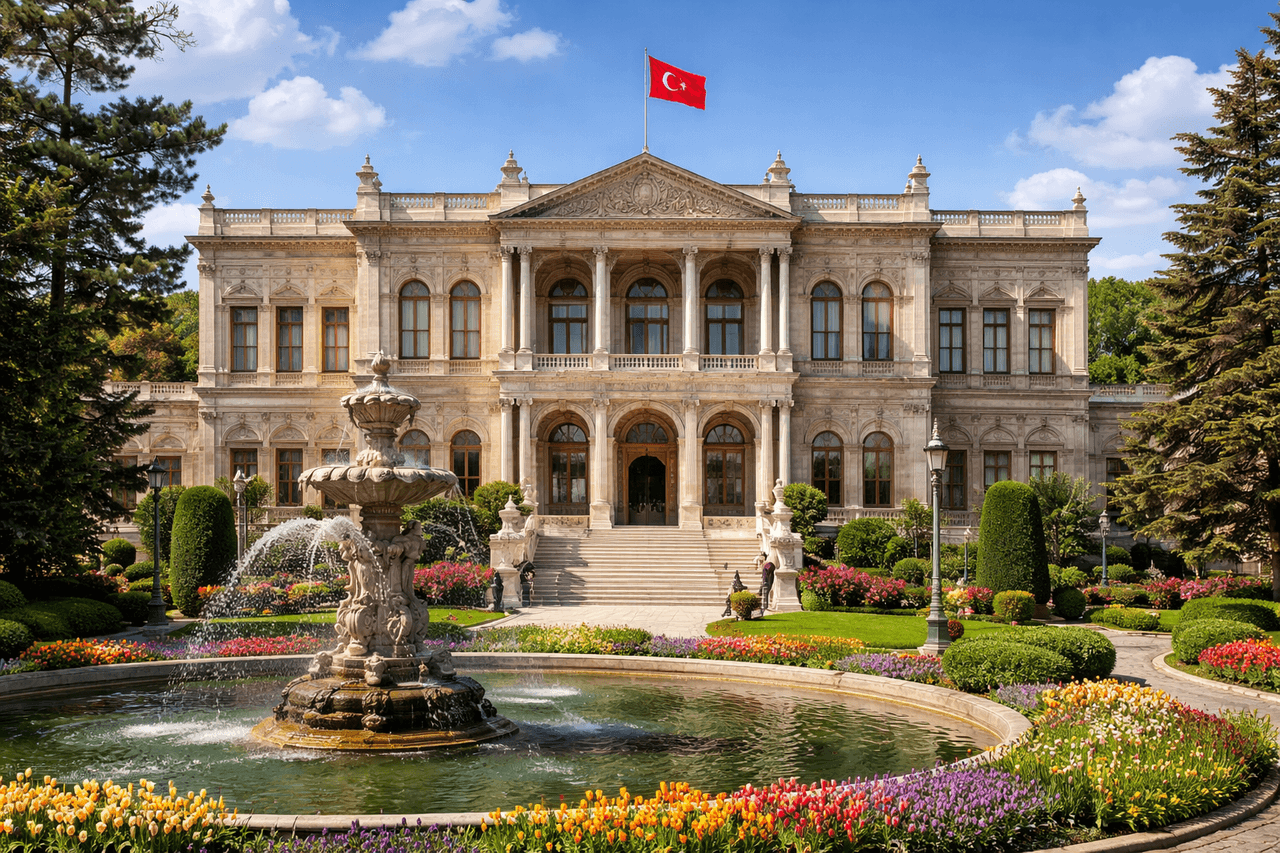
A view of Yıldız Sarayı from one angle. (Generated by artificial intelligence)
Yıldız Sarayı Today
After extensive restoration efforts, Yıldız Sarayı opened its doors to visitors as a museum in 2024. Future plans include the addition of new galleries to house a carpet museum, a furniture museum, and exhibits of rare artifacts. This unique historical site has been on UNESCO’s Tentative List of World Heritage Sites since 2015.