
Bu içerik Türkçe olarak yazılmış olup yapay zeka ile otomatik olarak İngilizceye çevrilmiştir.
Is a homeland composed solely of the land we walk upon?
When we look at maps, landmasses are divided by borders. The seas, however, appear infinite—as if they belong to no nation at all... Perhaps for this reason, most of us saw the sea throughout our childhoods as a blue emptiness where waves crash against the shore, ships pass by, and summer vacations unfold. The blue beyond the horizon was often perceived merely as a part of nature. Yet if the sea were nothing more than water, no nation would call it a homeland.
The sea is nature’s unique gift to us. Blue Homeland, however, is the name given to that gift by human effort, dedication, and responsibility. What makes a sea a homeland is not its salinity, depth, or size. What turns it into a homeland is the labor invested in it, the history written upon it, and the traces left behind.
Every wave carries a memory from the past to the shore. Every port bears not only ships but also hopes, struggles, and civilizations. Thus, the sea sometimes becomes a means of livelihood, sometimes a path of discovery, and sometimes the strongest symbol of independence.
A nation’s relationship with the sea reflects its outlook toward the future. Societies that turn away from the sea narrow their horizons, while those who understand and grow alongside the sea expand their boundaries not only on land but also through knowledge, production, and technology. For the sea is not merely a natural element surrounding our coasts; it is a living legacy connecting our past to our future. That is why Blue Homeland is not merely a geographical definition. It is a shared identity where history, science, sacrifice, abundance, and the ideal of independence converge in the same blue hue. To understand it is not enough to simply look at the sea; one must see the labor, struggle, and responsibility hidden within that blue. And this identity has been shaped by the courage of those who have left their mark on the seas for centuries. Those marks have lived on sometimes in the bows of ships, sometimes in the ink of maps, and sometimes in epics written among the waves. The story of Blue Homeland begins precisely here. A nation’s bond with the sea becomes a great epic written over centuries.
A nation’s memory is not etched only on stones. Sometimes it endures on the peaks of mountains, sometimes on the walls of castles, and sometimes in traces the waves have never erased. The sea has for centuries carried countless ships, witnessed numerous struggles, and quietly preserved the stories of many civilizations. Therefore, the history of Blue Homeland is not merely a chronology of events; it is a collective heritage passed from generation to generation—of courage, accumulated knowledge, and the will for independence.
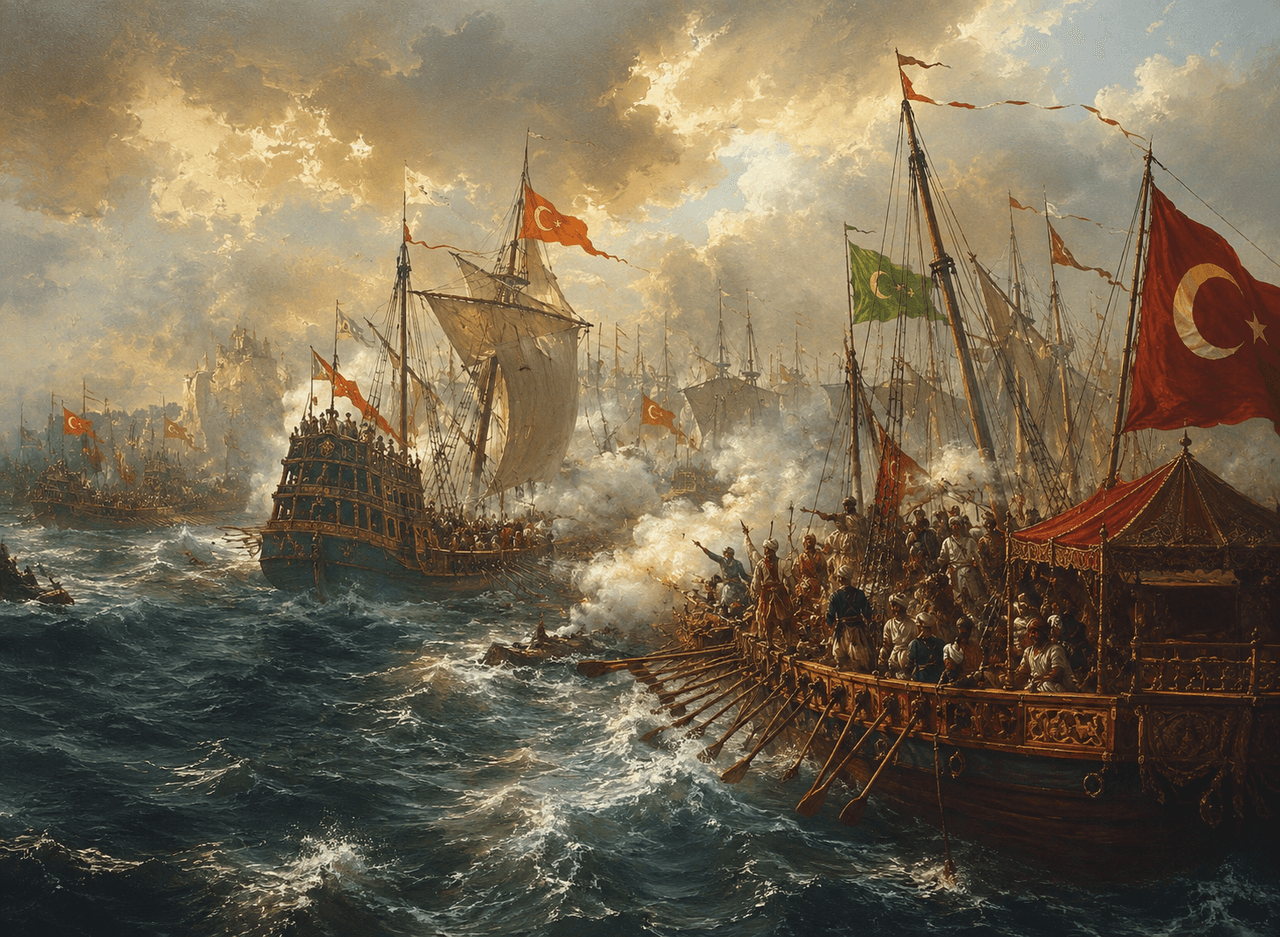
Preveze Deniz Zaferi Temsili Görsel (Yapay Zekâ ile Oluşturulmuştur.)
One of the first steps in the Turkish nation’s strong bond with the seas was taken with the establishment of the first Turkish fleet by Çaka Bey.【1】 The ships launched that day were not merely a new military force; they marked a historic turning point that changed how the Turks viewed the seas. The horizon, once confined to land, began to expand toward the blue expanses. This understanding grew stronger over the centuries. Barbaros Hayreddin Paşa did not merely win a battle at the Battle of Preveza; he demonstrated to the entire world the strength and self-confidence of Turkish seafaring in the Mediterranean.【2】 His success revealed that the seas were not merely obstacles to be overcome but values to be protected. Understanding the sea did not mean merely sailing upon it; it meant knowing it. Piri Reis left behind a legacy of knowledge that reached far beyond his own time through the maps he prepared.【3】 The coastlines he drew, the ports he marked, and the observations he recorded showed that the seas were not merely geographical spaces but vast worlds understood through knowledge. Turgut Reis’s mastery of the winds,【4】 Seydi Ali Reis’s accounts written during his return from the Indian Ocean,【5】 and the works left by Ottoman sailors over centuries revealed that Blue Homeland was shaped not only by courage but also by knowledge, experience, and patience. As history progressed, the meaning carried by the seas did not change. The ships sunk in the waters of the Dardanelles during the Gallipoli Campaign became symbols not merely of a war but of a nation’s will for independence.【6】 The landing craft that cut through the waves during the Cyprus Peace Operation showed the entire world that the sea could be a path of hope when needed.【7】 Each era produced its own heroes. Each generation added a new line to the story of Blue Homeland. Yet the one constant remained: the sea was never, for the Turkish nation, merely water. That blue was sometimes the path to freedom, sometimes the source of abundance, and sometimes the strongest symbol of independence. People wrote the lines of history; the sea forgot none of them. True memory continues to live not in structures rising along the coast but in the depths that have preserved their silence for centuries.
As in Victor Hugo’s The Toilers of the Sea, the sea in literature appears not only as an infinite force confronting humanity but also as a being that evokes memory and the unknown.【8】 For the sea speaks not only through its waves but also through the silent testimonies it has preserved for centuries. Sometimes these testimonies are not in stories but in submerged stones, half-ruined walls, or harbors that have waited in silence for centuries. Kekova is one such trace preserved in the sea’s memory. Beneath the clear waters of the Mediterranean, the ruins of Kekova—partially submerged due to geological movements in antiquity—still guard the silence of the past.【9】 Broken stones, sunken streets, and remnants still living beneath the waves show that history is sometimes not written in books but beneath the waves. The Uluburun Shipwreck near Kaş is one of the most important discoveries proving that these seas in the Bronze Age were not merely routes of transportation but a vast trade network connecting different civilizations.【10】
The cargo carried by the ship tells us that even thousands of years ago, humanity used the sea to connect cultures, knowledge, and wealth.【11】 Another silent witness, the Gelidonya Shipwreck, has carried humanity’s seafaring journey across more than three millennia into the future.【12】 This wreck, resting in the same place for centuries, is like an invisible history teacher defying the passage of time. The depths preserve not only human history but also the Earth’s own memory. Beneath the Sea of Marmara, the North Anatolian Fault Line quietly preserves traces of past earthquakes while whispering warnings of future risks to scientists.【13】 The sea is sometimes an archive preserving civilizations and sometimes nature’s most important warning to us. That is why the depths of the sea are not merely where water begins but where memory deepens.
There, sunken cities narrate the past. Trade ships reveal how civilizations touched one another. Geological structures whisper the Earth’s multi-million-year story. Marine life reminds us of the continuity of life, while scientists continue to pursue still-undiscovered secrets. Blue Homeland is a unique heritage where all these layers converge under the same blue hue. Its value lies not merely in its visible surface but in its invisible depths. These depths, where the past is silently preserved, are also where the future is being built. For memory exists not merely to remember but to build a stronger tomorrow. Precisely for this reason, the founder of our Republic, Gazi Mustafa Kemal Atatürk, looked to the seas not only as a window to today but also as a window to the future when he said, “We must regard seafaring as the great national aspiration of the Turks and accomplish it in a short time.” 【14】Although the years that have passed have brought changing technologies, this goal has never changed. Today, every scientific research conducted in Blue Homeland, every energy discovery made, and every national technology developed is a reflection of this grand vision in our time.
The seas do not merely preserve memories of the past; they also carry the possibilities of the future. If a nation sees only waves when it looks toward the horizon, it has not yet understood the sea. But when it sees knowledge, production, and independence within that same blue, then the sea gains its true meaning.
Centuries ago, Piri Reis used his ink to try to understand the unknowns of the blue. Today, that same curiosity, courage, and faith continue through the technologies developed by Turkish engineers. Only the tools have changed; what has not changed is this nation’s will to explore. Yesterday, compasses guided direction; today, seismic instruments uncover secrets thousands of meters beneath the sea.
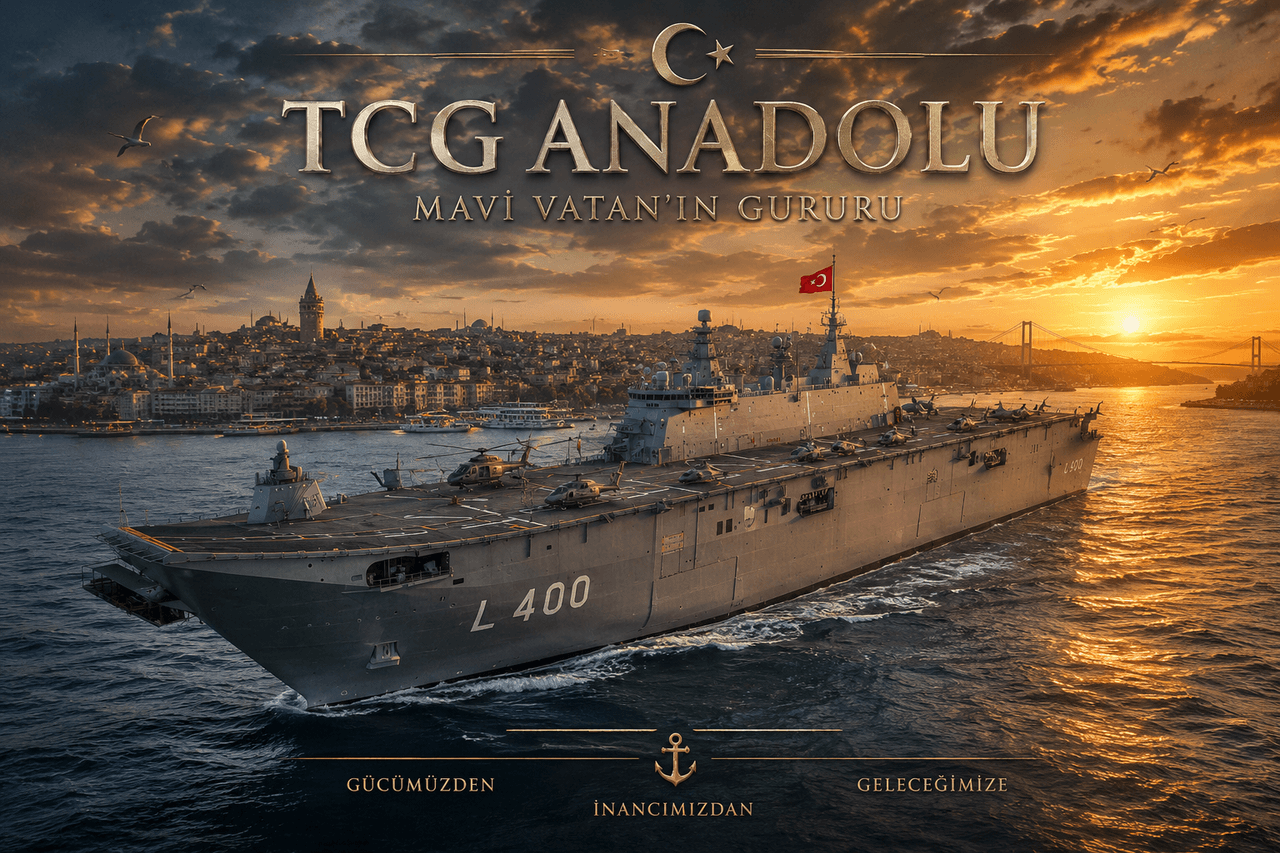
TCG Anadolu Temsili (Yapay Zekâ ile Oluşturulmuştur)
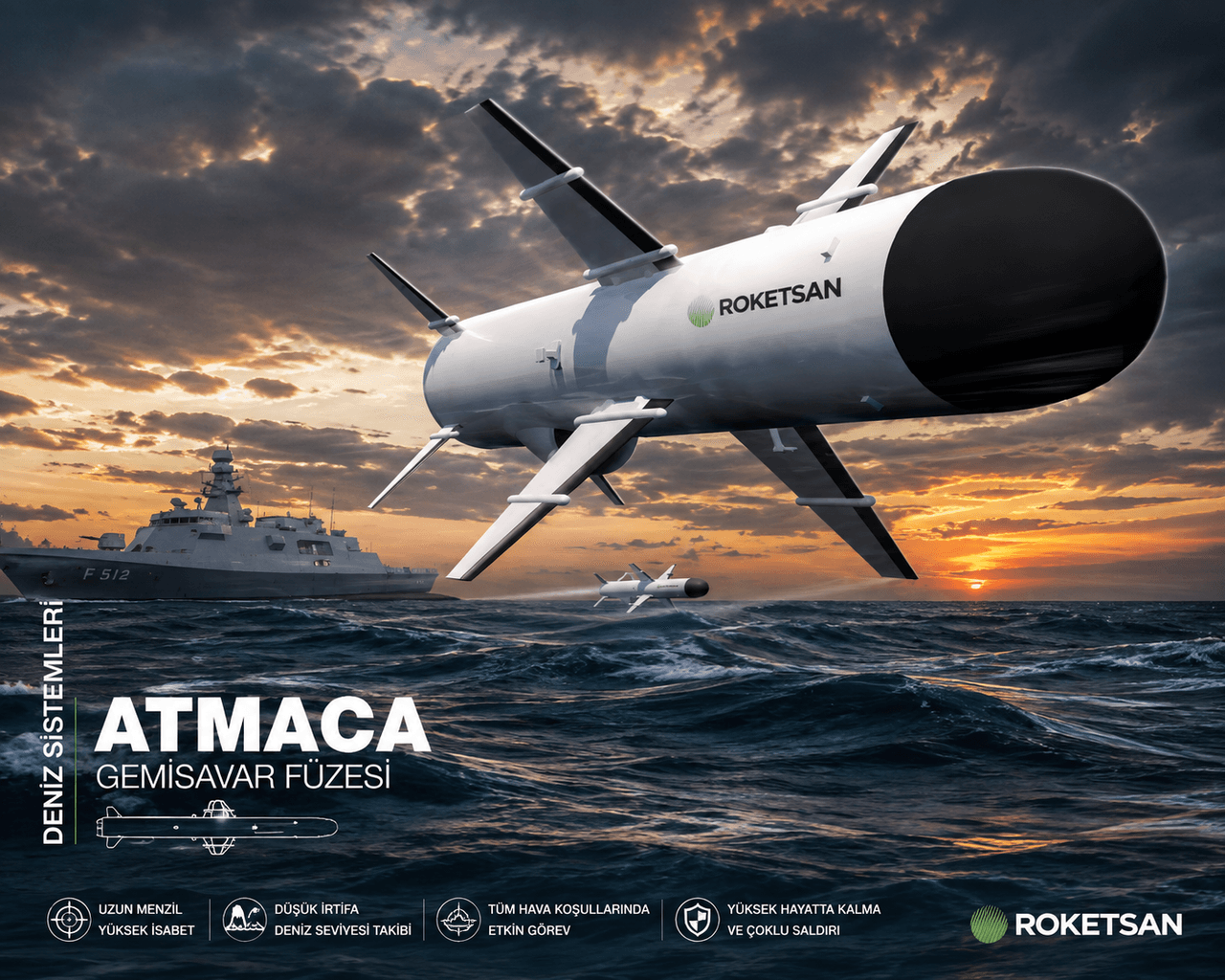
ATMACA Gemisavar Füzesi Temsili (Yapay Zekâ ile Oluşturulmuştur)
The Sakarya Gas Field discovered in the depths of the Black Sea is one of the most concrete examples of this.【17】 What was extracted from beneath the sea that day was not merely natural gas; the nation’s confidence in knowledge, labor, and its own strength also came to light. The Fatih, Yavuz, Kanuni, and Abdülhamid Han drilling vessels are not merely platforms exploring the deep sea; they are silent yet powerful declarations that Türkiye can write its own future with its own capabilities. A nation’s borders are drawn on maps; its horizon is defined by its faith. Blue Homeland is the reflection of that faith in the seas. For a homeland’s true strength is measured not only by its wealth but by its will to protect that wealth. Discovery is a great achievement; but the true power lies in preserving it and carrying it into the future.
The will that carved through the waves at Preveza is today transformed into steel through the MİLGEM Project. The winds that once filled sails now blow through national warships built by Turkish engineers. TCG Anadolu, indigenous submarines, unmanned maritime vehicles, ATMACA anti-ship missiles, and AKYA heavy torpedoes are not merely defense systems.【19】 They are the silent but unshakable will of a nation that refuses to entrust its independence to anyone else’s power. Every new technology, every new ship, every new discovery is not merely a legacy of today but a gift left for Türkiye’s tomorrow. For the true boundaries of Blue Homeland are not drawn by maps but by generations endowed with the will to protect it.
The true strength of Blue Homeland lies neither in the energy resources hidden in its depths nor in the warships visible on the horizon. True strength lies in the faith of a nation that, when needed, produces; when needed, protects; and when needed, charts its own course without yielding to any pressure.
Waves strike the shore every day. But some waves carry not only water; they carry the voice of independence, the legacy of history, and an unshakable faith in the future.
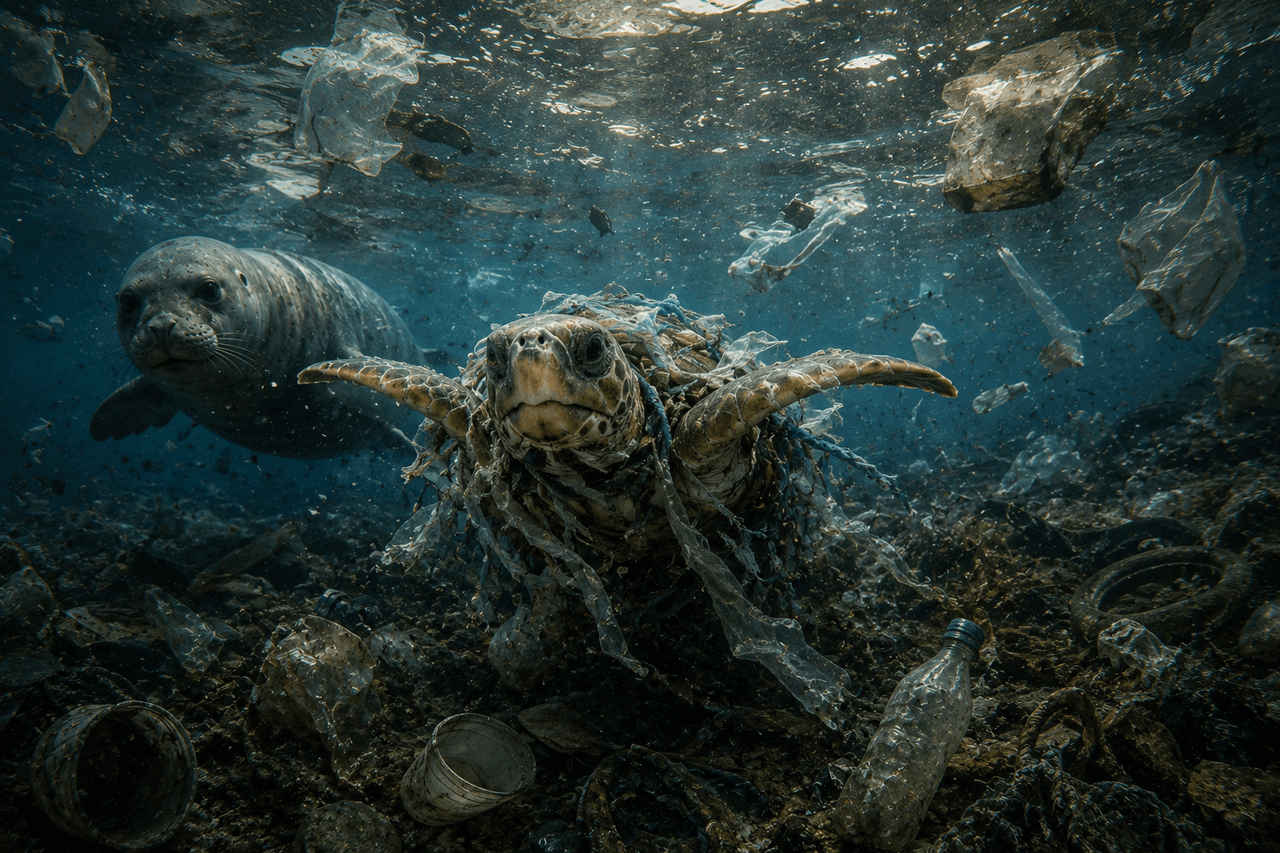
Deniz Kirliliğini Temsil Eden Görsel (Yapay Zekâ ile Oluşturulmuştur)
Protecting Blue Homeland is not merely about defending our borders. For a homeland suffers not only from enemies but also from neglect. Sometimes the greatest threat is not a warship on the horizon but a plastic bottle silently washing ashore. Every piece of waste we discard into the sea does not merely pollute the water; it quietly consumes the hope of a caretta caretta turtle, the life of an Mediterranean monk seal, and the inheritance of future generations. While we protect our seas with national technologies on one side, we must also sustain every living being and every value that gives life to that blue. For a sea we fail to protect is not merely a lost natural environment but a diminished homeland.
If a nation sees only water when it looks at the sea, it has not yet understood it. But when it sees its history, science, labor, independence, and future within that blue, then the sea becomes an identity. The sea was given to us by nature. Blue Homeland is the work of those who understand it, protect it, explore it, and dedicate their labor to it. If the sea were merely water, we would not call it a homeland.
Atatürk, Mustafa Kemal. “1 Kasım 1937 Tarihli Konuşması.” *Türkiye Büyük Millet Meclisi Tutanak Dergisi*, Dönem V, Volume 20, Issue 3. Accessed August 11, 2026.https://cdn.tbmm.gov.tr/TbmmWeb/tarihce/ataturk_konusma/5d3yy.htm
Göksu, Erkan. “Çaka Bey.” *Türk Dünyası Ansiklopedisi*. June 15, 2025. Accessed August 11, 2026.https://turkdunyasiansiklopedisi.gov.tr/detay/48/%C3%87aka-Bey
Hugo, Victor. Les Travailleurs de la Mer. Paris: A. Lacroix, Verboeckhoven et Cie, 1866.
Kurşun, Zekeriya. “Çanakkale Muharebeleri.” *TDV İslâm Ansiklopedisi*. 1993. Last update May 27, 2019. Accessed August 11, 2026.https://islamansiklopedisi.org.tr/canakkale-muharebeleri#1
Ministry of Culture and Tourism. "Bodrum Sualtı Archaeology Museum." Museums of Türkiye. Accessed August 11, 2026.https://muze.gov.tr/muze-detay?distId=MRK§ionId=BSA01.
Ministry of Culture and Tourism. "Kekova - Antalya." *Kültür Portalı*, August 22, 2025. Accessed August 11, 2026.https://www.kulturportali.gov.tr/turkiye/antalya/gezilecekyer/kekova.
Ministry of Energy and Natural Resources of the Republic of Türkiye. "The 5th Anniversary of the Largest Natural Gas Discovery." August 21, 2025. Accessed August 11, 2026.https://enerji.gov.tr/haber-detay?id=21555
T.C. Millî Savunma Bakanlığı. “Mutlu Barış Harekâtı'nın 52’nci Yıl Dönümü Kutlu Olsun!” July 20, 2026. Accessed August 11, 2026.https://www.msb.gov.tr/SlaytHaber/7d530dd41cf94db392d6c1ca28d33453.
T.C. Ministry of Agriculture and Forestry, General Directorate of Nature Conservation and National Parks. "Deniz Kaplumbağalarını Sahillerimizden Uğurladık." November 21, 2024. Accessed August 11, 2026.
T.C. Ministry of Energy and Natural Resources. “Oruç Reis Was Sent Off from Dolmabahçe.” May 10, 2024. Accessed August 11, 2026.https://enerji.gov.tr/haber-detay?id=21374
T.C. Ministry of Energy and Natural Resources. “Sakarya Gaz Field Will Go Down in History as the World’s Fastest-Constructed Offshore Field Development Project.” June 13, 2022. Accessed August 11, 2026.https://enerji.gov.tr/haber-detay?id=20989.
UNESCO. “The Piri Reis World Map (1513).” Memory of the World. 2017. Accessed August 11, 2026.https://www.unesco.org/en/memory-world/piri-reis-world-map-1513
[1]
Erkan Göksu, “Çaka Bey,” Türk Dünyası Ansiklopedisi, 15 Haziran 2025, erişim 11 Ağustos 2026, https://turkdunyasiansiklopedisi.gov.tr/detay/48/%C3%87aka-Bey
[2]
T.C. Millî Savunma Bakanlığı, “Millî Savunma Bakanı Hulusi Akar’ın Preveze Deniz Zaferi’nin Yıl Dönümü ve Deniz Kuvvetleri Günü Mesajı,” 26 Eylül 2020, erişim 11 Ağustos 2026, https://www.msb.gov.tr/SlaytHaber/2492020-71717
[3]
UNESCO, “The Piri Reis World Map (1513),” Memory of the World, 2017, erişim 11 Ağustos 2026, https://www.unesco.org/en/memory-world/piri-reis-world-map-1513
[4]
Hüseyin Serdar Tabakoğlu, “Turgut Reis,” Türk Dünyası Ansiklopedisi, 20 Şubat 2025, erişim 11 Ağustos 2026, https://turkdunyasiansiklopedisi.gov.tr/detay/7782/Turgut-Reis
[5]
Tabakoğlu, “Turgut Reis.”
[6]
Zekeriya Kurşun, “Çanakkale Muharebeleri,” TDV İslâm Ansiklopedisi, 1993, son güncelleme 27 Mayıs 2019, erişim 11 Ağustos 2026, https://islamansiklopedisi.org.tr/canakkale-muharebeleri#1
[7]
T.C. Ministry of National Defense. "May the 52nd Anniversary of the Happy Peace Operation Be Blessed!" Accessed August 11, 2026.https://www.msb.gov.tr/SlaytHaber/7d530dd41cf94db392d6c1ca28d33453.Haber/7d530dd41cf94db392d6c1ca28d33453
[8]
Victor Hugo, Les Travailleurs de la Mer (Paris: A. Lacroix, Verboeckhoven et Cie, 1866).
[9]
T.C. Kültür ve Turizm Bakanlığı, Kültür Varlıkları ve Müzeler Genel Müdürlüğü, “Kekova (Antalya),” erişim 11 Ağustos 2026, https://kvmgm.ktb.gov.tr/TR-44418/kekova-antalya.html
[10]
T.C. Kültür ve Turizm Bakanlığı, Antalya İl Kültür ve Turizm Müdürlüğü, “Uluburun Antik Batığı,” erişim 11 Ağustos 2026, https://antalya.ktb.gov.tr/TR-68443/turizm-amacli-sportif-faaliyetler.html.
[11]
T.C. Kültür ve Turizm Bakanlığı, “Bodrum Sualtı Arkeoloji Müzesi,” erişim 11 Ağustos 2026, https://muze.gov.tr/muze-detay?distId=MRK§ionId=BSA01.
[12]
T.C. Kültür ve Turizm Bakanlığı, Antalya İl Kültür ve Turizm Müdürlüğü, “Spor Turizmi,” erişim 11 Ağustos 2026, https://antalya.ktb.gov.tr/TR-175450/spor-turizmi.html.
[13]
Laure Drab et al., “The Earthquake Sedimentary Record in the Western Part of the Sea of Marmara, Turkey,” Natural Hazards and Earth System Sciences 12 (2012): 1235–54, https://doi.org/10.5194/nhess-12-1235-2012.
[14]
Mustafa Kemal Atatürk, “1 Kasım 1937 Tarihli Konuşması,” Atatürk Sitesi, 1 Kasım 1937, erişim 11 Ağustos 2026, https://ata.msb.gov.tr/Sayfa/SayfaGoster/1-kasim-1937-tarihli-konusmasi.
[17]
T.C. Enerji ve Tabii Kaynaklar Bakanlığı, “En Büyük Doğal Gaz Keşfinin 5’inci Yılı,” 21 Ağustos 2025, erişim 11 Ağustos 2026, https://enerji.gov.tr/haber-detay?id=21555.
[19]
T.C. Millî Savunma Bakanlığı, “Cumhurbaşkanımız Sn. Recep Tayyip Erdoğan’ın Teşrifleriyle ‘Mavi Vatan’da Güç: Yeni Deniz Platformları Teslimat Töreni’ Gerçekleştirildi,” 19 Ocak 2024, erişim 11 Ağustos 2026, https://www.msb.gov.tr/SlaytHaber/29c2a74eb9b54be595e8d57d042a41df.
History Written on the Waves
Memory Hidden in the Depths
From the Traces of the Past to the Discovery of the Future
From Sea to Homeland