

Bu içerik Türkçe olarak yazılmış olup yapay zeka ile otomatik olarak İngilizceye çevrilmiştir.
History | 21 January – 11 February 1920 (the start date varies between 20–22 January in sources) | ||||||||
|---|---|---|---|---|---|---|---|---|---|
Place | Maraş (present-day Kahramanmaraş) | ||||||||
Type | Armed resistance and siege. | ||||||||
Event | Armed resistance and siege | ||||||||
Parties | Kuva-yı Milliye and the people of Maraş; French forces and Armenian units | ||||||||
Commanders | Aslan Bey (President of the Maraş Defense of Rights Society), Kılıç Ali, Yörük Selim; French side: General Querette | ||||||||
Forces | French: approximately 4,000; approximately 7,000 with the Normand reinforcement (Ünalp). National forces: an average of 1,500–2,000 inside the city and approximately 500 in the surrounding areas (Ünalp). | ||||||||
Outcome | The French forces' evacuation of the city on the night of 11 February 1920 | ||||||||
Casualties | The figures vary greatly according to sources; a reliable total accounting cannot be established | ||||||||
Subsequent Developments | 20 October 1921 Treaty of Ankara; Independence Medal with red ribbon in 1925; the title 'Kahraman' awarded in 1973 | ||||||||
Defense of Maraş, a 22-day armed resistance launched in January 1920 by the local population and Kuva-yı Milliye forces against French occupation troops and their Armenian allies in Maraş (present-day Kahramanmaraş), ended with the French forces evacuating the city on the night of February 11, 1920.【1】 Following the Armistice of Mudros, the city first came under British military control (February 22, 1919), then under French control (October/November 1919); rising tensions under French administration led to street clashes following incidents such as the Sütçü İmam Incident and the Flag Incident.【2】 The defense is regarded as the first successful resistance that resulted in the withdrawal of occupying forces from a settlement and is considered to have significantly strengthened the resolve of resistance movements in Antep, Urfa, and Adana.【3】
Figures regarding Maraş’s population before and after the occupation vary in terms of dates and scope. Approximately 30,000 Armenians lived in the city before World War I; the number of those deported and those who returned differs across sources. According to a report cited by Günay, 19,000 were deported and 8,000 returned; according to Kerr, 24,000 were deported and 16,000 returned.【4】 On the eve of the defense, both sources estimate the Armenian population at approximately 22,000; Kerr also calculates, based on church censuses, that the pre-war Armenian population of the sanjak was approximately 24,000 (1,400–2,000 in villages).【5】 The total population of the city is estimated at approximately 50,000 on the eve of the British occupation.【6】
Article 7 of the Armistice of Mudros, signed between the Ottoman State and the Allied Powers on October 30, 1918, granted the Allied Powers the right to occupy strategic points if their security was threatened; this article was cited as justification for the occupation of Southern Anatolia.【7】 Maraş was occupied by British forces on February 22, 1919, following the Ottoman military units’ withdrawal as stipulated by the agreement.【8】 Before the occupation, the populace attempted to delay the advance by destroying the Aksu Bridge between Pazarcık and Narlı; British units repaired the bridge and continued their advance.【9】
The reported strength of the occupying force varies. A cipher dated March 5, 1919, from the deputy commander in Diyarbakır stated that around 6,000 troops entered Maraş on February 22; subsequent research and a British document dated April 22, 1919, indicate that the contingent arriving from Antep numbered approximately 600, of whom about 360 were cavalry and 240 infantry, mostly Indian soldiers.【10】 Sources name Colonel Roskorof and Miralay Max Andrio as commanders of the occupation force; a document dated May 1, 1919, mentions Captain Nicran and Lieutenant Bersi.【11】 The British occupation period did not witness major events; a religious affinity developed between the Muslim Indian soldiers and the local population, and toward the end of the occupation, these soldiers secretly provided weapons and ammunition to the people of Maraş.【12】
In accordance with the Syria Agreement signed between the Prime Ministers of Britain and France, control of Maraş, Antep, and Urfa was transferred to France.【13】 French forces entered Maraş at the end of October 1919. However, sources provide differing dates for the entry of troops, the commencement of occupation, and the transfer of authority from the British. According to Ünalp and Özbey, the French entered the city on October 29 and assumed control on October 30. Kalaycı records that Captain Julie arrived on October 29 and Officer Fontaine on October 30. Arslanyürek dates the occupation to October 30, while Eyicil and Kuzgun date it to October 31. According to Günay, the British handed over the city to the French on November 1.【14】
The strength of the French unit occupying the city also varies by source. Kerr describes the force as consisting of approximately 400 Armenians, 150 French, and Algerians; Kalaycı describes a force of 1,000 French, 500 Algerians, and 400 Armenians (approximately 1,900 people); Günay reports approximately 400 Armenians and 500 Algerians.【15】 According to an Ottoman military document cited by Arslanyürek, the force entering Maraş consisted of three battalions of the 41st French Regiment and one Armenian militia battalion, with approximately 20 percent being French and Algerian and the remainder Armenians from the Erzurum region.【16】 During the London Conference between February 12 and April 10, 1920, British Prime Minister David Lloyd George stated that more than two-thirds of the occupying forces in the region were composed of Algerians and Armenians.【17】 Some of the Armenian population welcomed the French forces ceremonially.【18】
A portion of the local Armenian community, particularly the Catholic segment, welcomed French administration. The expectation of establishing an Armenian state in Cilicia influenced this attitude; prominent Catholic Armenians of Maraş, including Agop Hırlakyan, the sole Catholic Armenian deputy in the 1914 Ottoman Chamber of Deputies, provided financial support to meet the needs of the French forces.【19】
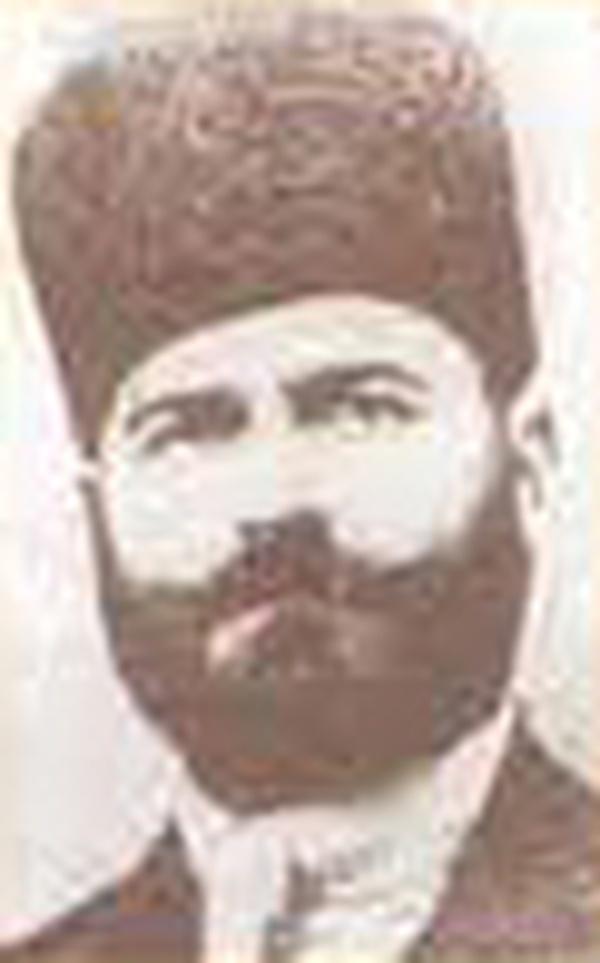
Kılıç Ali (Kahramanmaraş Büyükşehir Belediyesi)
Following the Sivas Congress, the Executive Committee focused on organizing the regions of Maraş, Antep, and Urfa; Elbistan was chosen as the center since it was not under occupation.【20】 Captain Asaf Bey (Kılıç Ali) was sent to Elbistan on October 19, 1919, with the task of organizing national forces in the region.【21】 Chief of Staff Colonel Selahattin of the Third Army also came to Elbistan to monitor developments; in an order issued to his deputy on October 26, 1919, he noted that British forces had withdrawn and French forces were about to arrive.【22】
A group from Maraş, including Dr. Mustafa, traveled to Elbistan on October 28, 1919, to initiate efforts to establish Kuva-yı Milliye and procure weapons and ammunition; with the efforts of Sulh Hâkimi Ali Rıza Bey and his associates, a Central Committee and the Society for the Defense of Rights were established in Elbistan.【23】 The region was divided among resistance leaders: Kılıç Ali in Pazarcık, Yörük Selim in Göksun, and Major Ali Bey in Elbistan.【24】 Kılıç Ali’s decision to make Pazarcık rather than Elbistan the center was explained as a measure to block French reinforcements from reaching Maraş via Antep and to secure the support of local tribes.【25】
National organizational activities in the city began secretly and independently in the Kayabaşı and Şekerli neighborhoods; the two groups later merged to form the Maraş Society for the Defense of Rights.【26】 Arslan Bey was elected president; the list of other officials varies by source.【27】 The city was divided into ten districts, each with its own council and chairman; the villages of Yenicekale and Bertiz remained directly under the Central Administration Committee.【28】 The Ulu Cami and Medresesi were designated as the society’s headquarters.【29】
Approximately 850 weapons and 1,000 crates of ammunition found in a secret gendarmerie depot were distributed to the populace by order of Center Unit Commander Captain Mahmut Bey.【30】 It is reported that 300 crates of ammunition were used during the war, and the remaining 700 crates were handed over to the army after the conflict.【31】
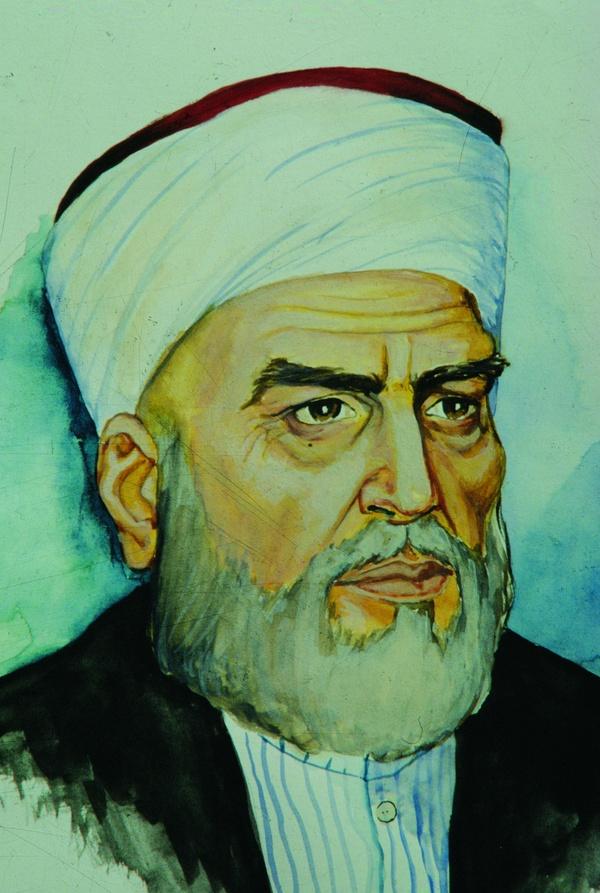
Sütçü İmam (Kahramanmaraş Büyükşehir Belediyesi)
On October 31, 1919, in Maraş, following an attack on a Muslim woman, Sütçü İmam opened fire on the attackers, killing one soldier.【32】 The incident is most commonly associated with the vicinity of Uzunoluk Hamam; the slain soldier is identified as Armenian in most sources.【33】 Among those who intervened were Çakmakçı Sait (severely wounded and later died), Sütçü İmam, Taha, and Kapalıoğlu Osman.【34】 The next day, a funeral was held for the deceased soldier; Zülfikar Çavuşoğlu Hüseyin and Tiyeklioğlu Kadir were also recorded as having been killed.【35】
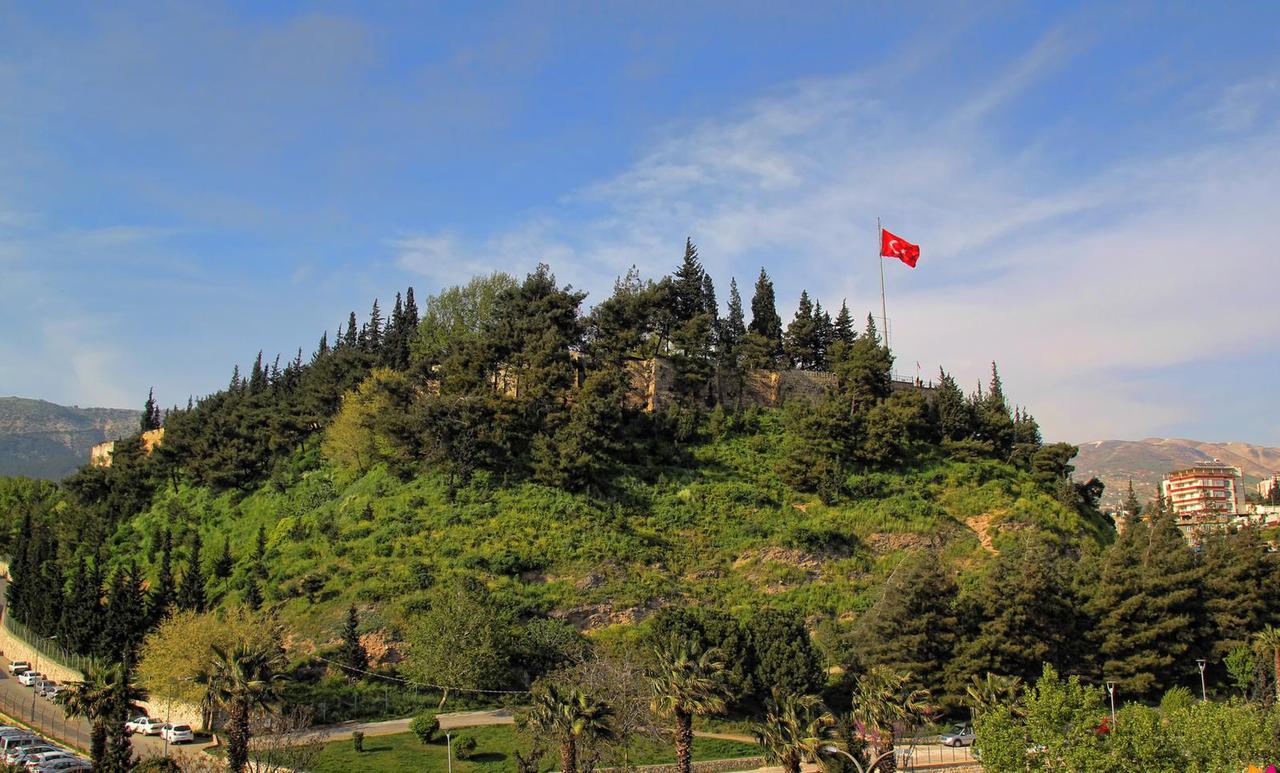
Captain André, arriving from Osmaniye, was appointed governor of Maraş on November 25, 1919, and entered the city on November 26 with a gendarmerie detachment of 150 men.【36】 On Friday, November 28, 1919, the Turkish flag was lowered from Maraş Castle and replaced with the French flag; in response to the crowd gathered at Ulu Cami for Friday prayers, the populace ascended the castle and rehoisted the Turkish flag.【37】 In 1936, a Bozkurt statue and an inscription recounting the incident were erected on the castle tower where the event occurred; the statue was removed in the 1940s and the inscription replaced.【38】
According to Eyicil and Özbey, French commander General Querette assumed command of the occupation of Maraş on December 13, 1919. Günay records that Querette was appointed on December 1, 1919, and arrived in the city on December 15.【39】 Clashes began around the city from the end of December. On January 5, 1920, detachments sent toward Türkoğlu clashed with French forces near Tanıştepe and Baba Burnu; the clash resulted in the deaths of 40 French soldiers and injuries to 100, while six Turkish fighters were wounded. One of the detachment commanders, Muallim Hayrullah Bey, was wounded and later died.【40】
On January 13, 1920, a contingent of approximately 450 infantry and cavalry troops sent from Antep spent the night in Araptar (Araplar) Village and were deployed at Sarılar position.【41】 Kılıç Ali’s forces were positioned around Pazarcık on January 19 to confront a French battalion advancing from Antep.【42】
The strength of the French forces varies by date and scope. Estimates for the unit occupying the city in October 1919 range from approximately 550 to 1,900. In January 1920, as clashes began, estimates for French forces in Maraş range from 3,000 to 4,000; the figure of 4,000 includes Senegalese, Algerian, Armenian, and French soldiers, with locally armed Armenians noted separately. On February 8, 1920, reinforcements led by Colonel Normand, dispatched from İslahiye and arriving on February 9, increased the force to approximately 7,000 with the addition of 2,000 Armenians. Normand’s column consisted of three Algerian infantry battalions, four cavalry squadrons, two artillery batteries, and a medical unit.【43】
The national forces were composed of neighborhood councils within the city, detachments from Pazarcık, Göksun, and Elbistan, and contributions from surrounding tribes.【44】 Approximately 500 fighters were organized in five or six detachments that conducted raids on French supply lines; within the city, the number of defenders per neighborhood rarely exceeded 1,500 to 2,000.【45】 Kılıç Ali arrived in the city on January 25, 1920, with a force of approximately 400 men; Yörük Selim arrived on February 2, 1920, with 80 cavalry and 120 infantry.【46】
General Querette informed the governor in January 1920 of his intention to take control of the government building and summoned the city’s notables to his headquarters. At the meeting, they were pressured to renounce resistance to French control and to remove Kılıç Ali; an attempt was made to obtain their signature on a surrender document, but this initiative was rejected by the Kuva-yı Milliye.【47】 Before the war, Muslims in Maraş proposed joint defense against the occupation to the Armenians; some Armenians refused this proposal and also rejected the option of remaining neutral.【48】
Sources differ on the start date of the defense, citing January 20, 21, or 22, 1920. Eyicil and Özbey assert that the war began on January 21, noting that Aslan Bey issued a proclamation on that date declaring the start of hostilities; Günay states that the war began on January 22 and lasted approximately 22 days.【49】 The Turkish summary of Eyicil’s 2005 article states that the defense began on January 20, 1920, while the English summary and text of the article cite January 21, 1920.【50】
During the first ten days of the war, clashes were concentrated in the city’s streets.【51】 Key locations of fighting included Yumurta Tepesi, Alıçsekisi, Mercimek Tepesi, Sulutarla, Kapalıçarşı, Şekerdere, Tekke, and Kuyucak neighborhoods, as well as the German Farm.【52】 Operations targeting Şekerdere Neighborhood were conducted under the command of Evliya Efendi; in Tekke Neighborhood, near the Great Church, over 400 French and Armenian forces were encountered; Evliya Efendi and Yusuf Çavuş were killed in the engagement.【53】 The French position at Mercimektepe was abandoned on January 22, 1920, following a surprise attack by troops under the command of Mustafa Çavuş.【54】 The initial clashes lasted 48 hours, with intense fighting occurring around Suçatı, Ahır Dağı, the Armenian cemetery, and Kayabaşı.【55】
According to the diary of American missionary C. F. H. Crathern, published in the Evening Star on March 6, 1920, on January 21 the French arrested numerous Turkish officials; these arrests accelerated the fighting. On January 24, ceasefire negotiations failed, and in the afternoon a heavy bombardment began by French forces; it is noted that approximately 2,000 refugees and orphans were sheltered in buildings belonging to missionaries.【56】
Kılıç Ali, operating from Pazarcık since October 1919, positioned his forces around Pazarcık in January 1920 to confront French detachments; when street clashes began, he moved his headquarters first to Dehliz near Maraş, then to Haznedarlı Neighborhood.【57】 He arrived in the city on January 25 with a force of approximately 400 men, surrounded the approximately 80-strong French unit at the German Farm, and then encircled the German Orphanage, Kuyucak Neighborhood, and Hırlakyan’s house.【58】 Sources do not specify when Kılıç Ali moved from the city to Kerhan Köyü; on February 12, 1920, while in Kerhan, Kılıç Ali returned to Maraş upon hearing news of the French withdrawal.【59】
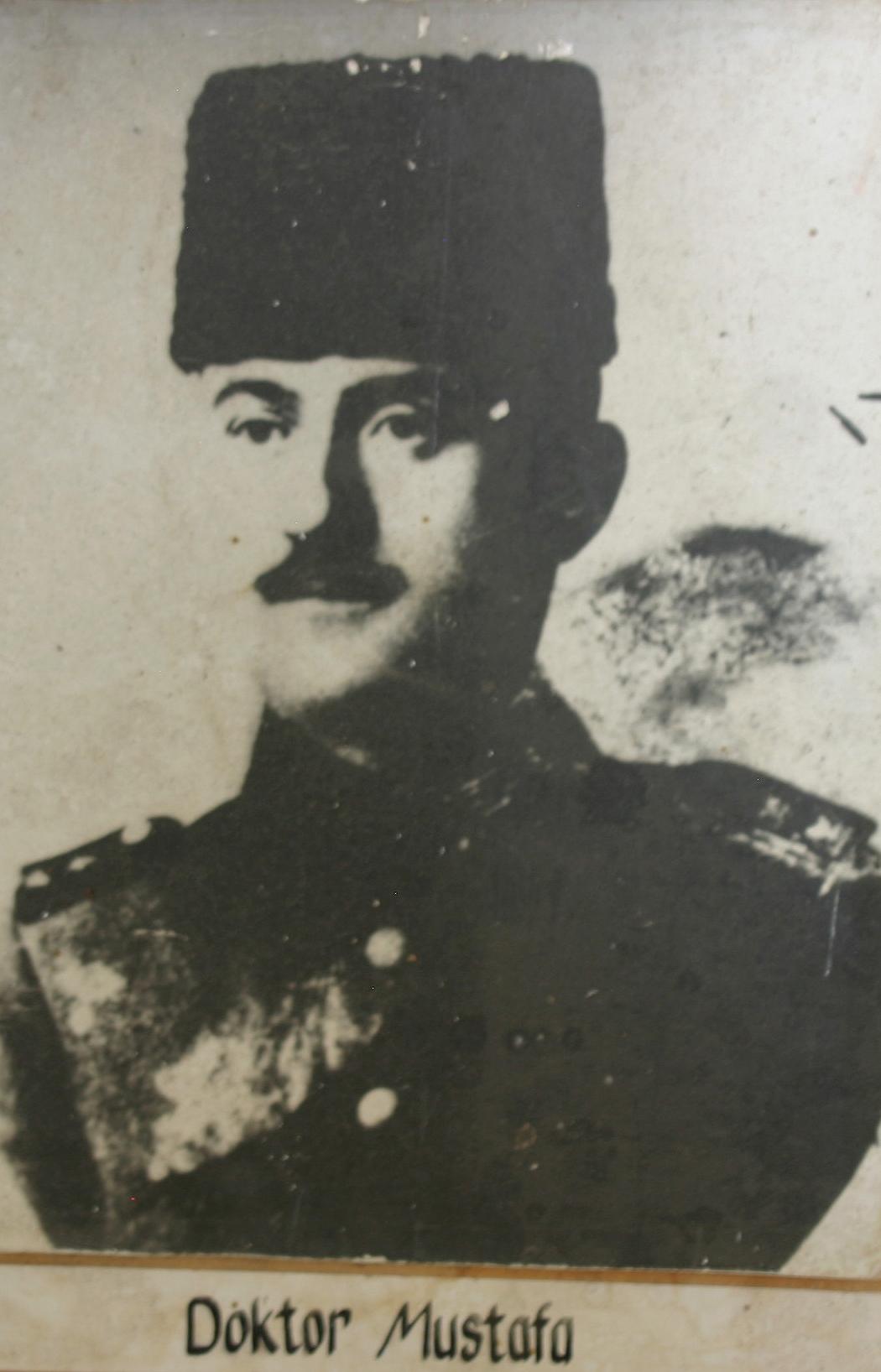
Dr. Mustafa (Kahramanmaraş Büyükşehir Belediyesi)
The force under Yörük Selim established its headquarters at Sulutarla; two heavy machine guns brought from Elbistan were added to this contingent.【60】 On the 18th and 19th days of the clashes, February 7–8, 1920, French forces were encircled within the city; positions at Mercimektepe and Cancık were reinforced to prevent reinforcements from reaching the city from outside.【61】
On the French side, due to the inability of supply lines to reach Maraş, a reinforcement column under Colonel Normand was dispatched from İslahiye on February 8, 1920; despite being ambushed, the force reached the city on February 9.【62】 Normand conveyed General Dufieux’s order to Querette that if peace was not immediately achieved, withdrawal was necessary; besieged French troops faced severe supply shortages in extreme cold, with no food remaining for animals.【63】 Doctor Mustafa, a member of the Maraş Society for the Defense of Rights, was sent to negotiate with the French and was subsequently killed.【64】
French forces began withdrawing from the city on the night of February 11, 1920; the exact time of withdrawal varies by source.【65】 The French departed without informing some of their Armenian supporters, destroyed heavy weapons, and took with them several local figures, including Mayor Bekir Sıtkı.【66】 In a congratulatory telegram sent by Mustafa Kemal Paşa regarding this development, it was noted that the people of Maraş had fought for nearly twenty days against French forces and the Armenians armed by them.【67】
The number of Armenians who left the city varies by source. The American press estimated between 2,000 and 5,000; Kerr calculates that at least 3,400 departed, noting that 2,400 reached İslahiye or Adana and approximately 1,000 corpses were counted along the route; Eyicil’s 2005 article also cites the figure of 3,400.【68】 Some of the remaining Armenians sought refuge with American missionaries; the number remaining in the city is recorded as 9,700 by Kerr and approximately 10,000 by Kuzgun.【69】
Casualty figures vary widely across sources; they do not refer to the same dates, categories, or scopes and therefore cannot be summed or cross-verified.
Turkish casualty estimates range from 200 to 4,500. Immediately after the war, on February 15, 1920, approximately 200 dead and 500 wounded were counted; these same figures are cited in a General Staff report and may cover only regular units. Many of the wounded suffered severe injuries from dum-dum bullets, making treatment difficult; after the war, outbreaks of malaria, dysentery, and the Spanish flu occurred.【70】 Figures of 4,000 to 4,500 are based on later estimates: Eyicil, relying on a General Staff document, states that 4,000 were martyred; Kerr, citing a prediction attributed to the Maraş governor, writes that approximately 4,500 Turks were killed.【71】 A compilation by the Ministry of National Defense based on martyr lists identified a total of 452 martyrs from Maraş and its villages between 1919 and 1923; this number may include Maraş residents killed on other fronts outside the defense.【72】
Estimates for French casualties range from 200 to 1,200. Sources report approximately 1,200 French soldiers killed in combat and an additional 800 (mostly Senegalese) from the cold; others state that 1,000 French soldiers were killed or that 200 of the retreating soldiers were killed by the populace; the American press reported 158 dead, 279 wounded, and 181 missing. In Kerr’s account, the figure of 1,200 refers not to deaths but to total casualties estimated by Colonel Brémond.【73】
Estimates for Armenian casualties vary greatly. However, since these figures refer to different dates and scopes, direct comparisons are difficult. According to a report in The Armenian Review, by February 4, 1920, 3,000 Armenians had been killed and 18,600 survived. Chambers records Armenian losses reaching 6,000–7,000 by February 13. The prediction attributed to the Maraş governor estimates approximately 9,000 Armenian deaths. Kerr, using population calculations, estimates that 11,900 Armenians died in the city, villages, or along the route. Approximately 1,000 Armenians are said to have died from the cold. Eyicil records 15,000 Armenian deaths. American newspapers reported casualty figures ranging from 2,000 to 30,000.【74】 These figures must be approached with caution, as at a time when the total Armenian population of the city is estimated at approximately 22,000–25,000, a report of 30,000 casualties excluding the wounded cannot reflect reality.
Kerr, relying on missionary and church censuses, accepts that approximately 22,000 Armenians were present in Maraş before the defense. Of this population, 9,700 were counted in four settlements on February 11; at least 3,400 departed with the French forces. According to Kerr’s calculation, the remaining approximately 9,000 either died or fled the city.【75】 Adding the 15,000 deaths reported by Eyicil, the 3,400 who left with the French, and the approximately 10,000 remaining in the city according to Kuzgun, the total reaches approximately 28,400. This total exceeds the estimated Armenian population of approximately 22,000 for 1920. Therefore, if these figures refer to the same location, period, and population group, they cannot all be accurate. However, it remains unclear which population and period the figure of 15,000 deaths encompasses.【76】 Since the scope of Turkish and French casualty figures is also undetermined, a reliable total casualty calculation cannot be established.
Estimates of physical destruction in the city also vary by source. It is recorded that approximately half the city burned, one-third was destroyed by artillery fire, and ten major neighborhoods were demolished. Additionally, eight mosques, ten churches, and fifteen schools are reported to have burned. Another account states that the Divanlı and Mağaralı neighborhoods and Akdere were completely destroyed. In Şekerdere, Kümbet, Kuyucak, Çukuroba, and Tekke neighborhoods, approximately 1,000 homes burned, and 350 shops in the bazaar. Another account records that fifteen schools, two mosques, and the Kışla Building were completely destroyed.【77】
Among those remaining in the city were more than 700 Armenians in the Catholic Church and ten French soldiers, two of them officers; 75 Armenian men, mostly of military age, and one officer with 51 French soldiers in the Abarabaşı Church; and many Armenians remained in the Kümbet Orphanage, hospital, and college. Measures were taken to ensure their safety, and wounded French soldiers were treated.【78】 Kılıç Ali and other commanders arrived in the city on February 12, 1920; communal kitchens were established in mosques; hospitals, beginning with the German Hospital, were used to treat the wounded.【79】
On February 12, 1920, the Allied Powers convened in London to discuss the partition of Ottoman territories and peace terms, establishing principles such as leaving Syria under French mandate and ceding İzmir to Greece; unresolved issues were addressed at the San Remo Conference held from April 18–26, 1920, where the final terms of the treaty were determined; the French withdrawal from Maraş is assessed as having influenced these negotiations.【80】 France relinquished the region to Türkiye through the Ankara Agreement of October 20, 1921.【81】
The Ministry of Interior prepared a bill on March 29, 1923, to grant Maraş the title “Kahraman”; the bill was returned without being enacted by the Council of Ministers.【82】 In a response dated December 13, 1924, the Maraş Governorate stated that the entire population of Maraş had displayed heroism; as a result, the Independence Medal with red ribbon was awarded to the city on April 5, 1925.【83】 The title “Kahraman” was later officially granted by the Assembly on February 7, 1973.【84】
The Turkish and foreign press of the period covered the defense from different perspectives. İrade-i Millîye is regarded as the Turkish newspaper that most comprehensively followed events from the French occupation to the evacuation; Hâkimiyet-i Millîye announced on February 16, 1920, under the headline “The Evacuation of Maraş,” that the twenty-day-long clashes had ended with the French withdrawal from the city.【85】 The newspaper Ferda, considered pro-French, reported on February 16, 1920, using French commanders as sources.【86】
In the foreign press, reports consistently framed the events within the theme of an “Armenian massacre.”【87】 American newspapers published conflicting estimates of Armenian deaths ranging from 2,000 to 30,000; French officials reported that the number of dead Armenians did not exceed 5,000.【88】 The Times’ report of February 14, 1920, stated that approximately 1,500 Armenians had been killed by the end of January.【89】
Several structures played direct roles during the defense. The Ulu Cami and Medresesi were chosen as the headquarters of the Society for the Defense of Rights due to their capacity to accommodate the community and served as the gathering point during the Flag Incident; structures such as Çiftli Zaviye, Çiçekli Cami, Çukuroba Cami, and Şekerli Cami were used as neighborhood council meeting places, and Çukuroba Cami was targeted in attacks.【90】 The vicinity of Uzunoluk Hamam is the site of the Sütçü İmam Incident; Maraş Castle is the site of the Flag Incident.【91】
Uzunoluk Hamam was demolished in 1975; the land was expropriated in 2006, and the structure reopened on February 11, 2014, as the “Digital Liberation Museum.”【92】 The first monument to Sütçü İmam was erected in 1936; the fountain was added in 1973 and rebuilt in 2015 after demolition.【93】 It is recorded that Sütçü İmam died on November 25, 1922, that his grave is located in the garden of Bektutiye (Çınarlı) Camii, and that it was converted into a memorial tomb in 1984.【94】 Maraş Castle was registered on June 1, 1989, and underwent comprehensive restoration in 2017.【95】 The Ulu Cami and Medresesi were registered on December 6, 1985, under Decision No. 1629.【96】
Arslanyürek, Yaşar. "İngilizlerin Maraş'ı İşgali." Kahramanmaraş Sütçü İmam Üniversitesi Sosyal Bilimler Dergisi 17, Özel Sayı (2020): 16–42.
Eyicil, Ahmet. "Maraş Savunması." Atatürk Araştırma Merkezi Dergisi 21, sy. 61 (March 2005): 47–75.
Eyicil, Ahmet. "Maraş'ın Örgütlü Bir Şekilde Savunulması." Kahramanmaraş Sütçü İmam Üniversitesi Sosyal Bilimler Dergisi 17, Özel Sayı (2020): 59–88.
Günay, Nejla. "Millî Mücadelenin İlk Zaferi: Maraş Millî Mücadelesi ve Maraş'ın Kahramanlığı." Türkiyat Mecmuası 29, Millî Mücadele Özel Sayısı (2019): 47–74.
Kahramanmaraş Valiliği. "Vali Ömer Faruk Coşkun'un Maraş'a 'Kahraman' Unvanı Verilişinin 48. Yıldönümü Mesajı." February 6, 2021. Accessed September 28, 2026.
Kalaycı, İsa. "Yerli ve Yabancı Basında Maraş'ın Millî Mücadelesi." Kahramanmaraş Sütçü İmam Üniversitesi Sosyal Bilimler Dergisi 17, Özel Sayı (2020): 89–112.
Kerr, Stanley E. The Lions of Marash: Personal Experiences with American Near East Relief, 1919–1922. Albany: State University of New York Press, 1973.
Kuzgun, Meral. "Hâkimiyet-i Millîye Gazetesine Göre Maraş'ın Fransızlarca İşgali ve Ermeni Mezalimi." Kahramanmaraş Sütçü İmam Üniversitesi Sosyal Bilimler Dergisi 17, Özel Sayı (2020): 186–201.
Umar, Ömer Osman and Melek Yenisu. "Gizli Antlaşmalar Çerçevesinde San Remo Konferansı'nda Ortadoğu'yu Şekillendirme Çabaları." Atatürk Araştırma Merkezi Dergisi 36, sy. 101 (Spring 2020): 29–70.
Çabuk, Mustafa. "Amerika Birleşik Devletleri Gazetelerinde Maraş Savunması." Gaziantep Üniversitesi Sosyal Bilimler Dergisi 17, sy. 1 (2018): 362–70.
Özbey, Veysel. "Maraş Savunması Taşınmaz Kültürel Mirası." Kahramanmaraş Sütçü İmam Üniversitesi Sosyal Bilimler Dergisi 17, Özel Sayı (2020): 202–18.
Ünalp, F. Rezzan. "Birinci Dünya Harbi Sonunda Maraş'ın İtilaf Devletlerince İşgali ve Maraş Savunması." Gazi Akademik Bakış 11, sy. 22 (Summer 2018): 205–35.
[1]
Ahmet Eyicil, "Maraş'ın Örgütlü Bir Şekilde Savunulması," Kahramanmaraş Sütçü İmam Üniversitesi Sosyal Bilimler Dergisi 17, Özel Sayı (2020): 59, 77; Nejla Günay, "Millî Mücadelenin İlk Zaferi: Maraş Millî Mücadelesi ve Maraş'ın Kahramanlığı," Türkiyat Mecmuası 29, Millî Mücadele Özel Sayısı (2019): 60.
[2]
Veysel Özbey, "Maraş Savunması Taşınmaz Kültürel Mirası," Kahramanmaraş Sütçü İmam Üniversitesi Sosyal Bilimler Dergisi 17, Özel Sayı (2020): 203–5.
[3]
İsa Kalaycı, "Yerli ve Yabancı Basında Maraş'ın Millî Mücadelesi," Kahramanmaraş Sütçü İmam Üniversitesi Sosyal Bilimler Dergisi 17, Özel Sayı (2020): 89; Günay, "Millî Mücadelenin İlk Zaferi," 63.
[4]
Günay cites two documents from the General Staff Military History and Strategic Studies Directorate archives (ATASE, İSH, Box 22, Folder 102; Box 33, Folder 159) and Hikmet Özdemir et al., Ermeniler: Sürgün ve Göç (Ankara: Türk Tarih Kurumu Yayınları, 2004), 130; however, he does not provide the report’s date. According to the report, the 11,000 people left in place and the 8,000 who returned constituted the 19,000 in 1919, while the additional 3,000 from other areas formed the 22,000 in 1920; the same report also states that another 11,000 Armenians were lost after returning from deportation, bringing the total loss to 22,000. Günay, "Millî Mücadelenin İlk Zaferi," 50, 50n1–3. Kerr’s figures of 30,000, 24,000, and 16,000 relate to the period from 1914 through the postwar era. Kerr, Lions of Marash, 51.
[5]
Günay, "Millî Mücadelenin İlk Zaferi," 50; Kerr, Lions of Marash, 3, 181, 196.
[6]
The first figure is cited by Arslanyürek referencing Özalp (1984) as “the city’s estimated population at the time.” Arslanyürek, in “The British Occupation of Maraş,” also makes a guess of 30,000 but provides no footnote supporting this figure. Mustafa Çabuk, “The Defense of Maraş in American Newspapers,” Gaziantep University Journal of Social Sciences 17, no. 1 (2018): 367. When this figure is taken together with the figure of 22,000 given for the Armenian population, it leaves only approximately 8,000 for the non-Armenian population; therefore, it cannot be claimed that the two figures are based on the same scope and criteria.
[7]
Günay, "Millî Mücadelenin İlk Zaferi," 51; Meral Kuzgun, "Hâkimiyet-i Millîye Gazetesine Göre Maraş'ın Fransızlarca İşgali ve Ermeni Mezalimi," Kahramanmaraş Sütçü İmam Üniversitesi Sosyal Bilimler Dergisi 17, Özel Sayı (2020): 188.
[8]
Günay, "Millî Mücadelenin İlk Zaferi," 51; F. Rezzan Ünalp, "Birinci Dünya Harbi Sonunda Maraş'ın İtilaf Devletlerince İşgali ve Maraş Savunması," Gazi Akademik Bakış 11, no. 22 (Summer 2018): 208. The beginning of the British occupation is dated February 22, 1919, and its end is associated with the French arrival in the city at the end of October and the transfer of administration around November 1, 1919; Arslanyürek writes the occupation lasted "248 days" and on the same page lists the occupation period as February 22–November 1, 1919, although there are 252 days between these two dates. The same article identifies February 22, 1919, as a "Monday," whereas it corresponds to a Saturday. Since the day the British troops actually left the city and the day administration was formally transferred are not separately specified, the duration is not given as an exact number. Additionally, it is noted that the French arrived in Maraş before the British had left the city. Yaşar Arslanyürek, "İngilizlerin Maraş'ı İşgali," Kahramanmaraş Sütçü İmam Üniversitesi Sosyal Bilimler Dergisi 17, Special Issue (2020): 22, 33, 35; Stanley E. Kerr, The Lions of Marash: Personal Experiences with American Near East Relief, 1919–1922 (Albany: State University of New York Press, 1973), 61–62; Ahmet Eyicil, "Maraş Savunması," Atatürk Araştırma Merkezi Dergisi 21, no. 61 (March 2005): 49.
[9]
Arslanyürek, "İngilizlerin Maraş'ı İşgali," 22.
[10]
Arslanyürek, "The English Occupation of Maraş," pp. 22–23. Eyicil’s 2005 article, however, states that the occupation was carried out by "4,000 Indian cavalry"; no source is cited in this statement. Eyicil, "The Defense of Maraş," p. 49.
[11]
Arslanyürek, "İngilizlerin Maraş'ı İşgali," 21, 27.
[12]
Arslanyürek, "İngilizlerin Maraş'ı İşgali," 32–33.
[13]
Ünalp, "Birinci Dünya Harbi Sonunda," 214. The date of the treaty is September 15, 1919, according to Ünalp, Arslanyürek, and Günay; September 17, 1919, according to Kuzgun. Arslanyürek, "İngilizlerin Maraş'ı İşgali," 33; Günay, "Millî Mücadelenin İlk Zaferi," 54; Kuzgun, "Hâkimiyet-i Millîye Gazetesine Göre," 189.
[14]
Ünalp, "Birinci Dünya Harbi Sonunda," 214; Kalaycı, "Yerli ve Yabancı Basında," 92; Arslanyürek, "İngilizlerin Maraş'ı İşgali," 34–35; Eyicil, "Örgütlü Bir Şekilde Savunulması," 59; Kuzgun, "Hâkimiyet-i Millîye Gazetesine Göre," 190; Özbey, "Taşınmaz Kültürel Miras," 203; Günay, "Millî Mücadelenin İlk Zaferi," 54. Eyicil’s 2005 article dates the French occupation as November 1, 1919–February 11, 1920. Eyicil, "Maraş Savunması," 49. Kerr, relying on Turkish official narratives, writes that the first unit arrived on October 29 and the city was occupied the following day. Kerr, Lions of Marash, 62. Kerr’s account from Appendix A, citing a 1920 memorandum from W. Nesbitt Chambers of the Near East Relief, states that the French replaced the British on November 29, 1919—a date differing from the late October–November 1 dates given in other sources. Kerr, Lions of Marash, 255.
[15]
Kerr, Lions of Marash, 62. According to Abadie, as cited by Kerr, the unit that arrived in Marash consisted of the 5th Battalion of the 412th Regiment, the 1st Battalion of the Armenian Legion, and an Algerian cavalry squadron; however, in Chambers’ 1920 memorandum from Near East Relief, the occupying force is first described as comprising approximately 300 Armenians, 90 Algerian cavalry, and 80 Frenchmen, and later, with increasing numbers, as exceeding 3,000. Kerr, Lions of Marash, 255. Kalaycı, "Yerli ve Yabancı Basında," 92; Günay, "Millî Mücadelenin İlk Zaferi," 54–55.
[16]
Arslanyürek dates the document as "January 9, 1919"; since the French entered Maraş in October 1919, the year may be a typographical error. Arslanyürek cites the "41st Regiment," while Kerr, following the Turkish official narrative, cites the "42nd Regiment"; Kerr, relying on Abadie, refers to the "412th Regiment." Kerr, Lions of Marash, 62.
[17]
Arslanyürek, "İngilizlerin Maraş'ı İşgali," 31.
[18]
Günay, "Millî Mücadelenin İlk Zaferi," 55.
[19]
Günay, "Millî Mücadelenin İlk Zaferi," 50, 52, 55.
[20]
Günay, "Millî Mücadelenin İlk Zaferi," 53; Ünalp, "Birinci Dünya Harbi Sonunda," 211–12.
[21]
Günay, "Millî Mücadelenin İlk Zaferi," 53.
[22]
Arslanyürek, "İngilizlerin Maraş'ı İşgali," 33.
[23]
Günay, "Millî Mücadelenin İlk Zaferi," 54; Ünalp, "Birinci Dünya Harbi Sonunda," 211–12. Eyicil writes that the Maraş Defense of Rights Society was established in Elbistan on November 29, 1919, and that members from Maraş were elected to the Central Administrative Board; in the same article, she dates the founding meetings in the city center to the evenings of November 29 and 30, 1919 (based on Aslan Bey’s notes). The article does not clarify the relationship between these two events. Eyicil, "Örgütlü Bir Şekilde Savunulması," 61–63, 63n3.
[24]
Günay, "Millî Mücadelenin İlk Zaferi," 54; Ünalp, "Birinci Dünya Harbi Sonunda," 213.
[25]
Günay, "Millî Mücadelenin İlk Zaferi," 54, 57; Ünalp, "Birinci Dünya Harbi Sonunda," 213.
[26]
Ünalp, "Birinci Dünya Harbi Sonunda," 216. Kuruluş toplantıları için bkz. Eyicil, "Örgütlü Bir Şekilde Savunulması," 63n3.
[27]
Eyicil, based on Aslan Bey’s notes, writes that Refet Hoca was elected as second president, Hacı Nuri Bey as treasurer, and the land registry clerk Faik as secretary. Eyicil, "Örgütlü Bir Şekilde Savunulması," 61–63. Ünalp identifies Faik Bey, the land registry clerk, as second president and Kırmacı Hacı Efendi as chief secretary. Ünalp, "Birinci Dünya Harbi Sonunda," 216. Günay, however, mentions only Kırmacı Hacı Efendi as vice president. Günay, "Millî Mücadelenin İlk Zaferi," 56. These three lists should not be read as a single governing board from the same date, but rather as separate transmissions from their respective sources.
[28]
The regions are listed as follows in Eyicil and Günay: Çavuşlu, Bektutiye, Restebaiye, Acemli, Kayabaşı, Divanlı, Ekmekçi, Cığcığı, Alemli, Hatuniye. Ünalp counts these ten regions with different names (Bayezitli, Restebiye, Kayabaşı, Divanlı, Alemli, Şekerli, Hatuniye, Ekmekçi, Nahırönü, Devecili). The names of the regional leaders are also written differently; for example, for Çavuşlu, Eyicil lists Çukadarzade Hacı Mehmet, while Günay lists Çuhadarzade Hacı Mustafa. Eyicil, "Örgütlü Bir Şekilde Savunulması," 63–64; Günay, "Millî Mücadelenin İlk Zaferi," 56–57; Ünalp, "Birinci Dünya Harbi Sonunda," 216.
[29]
Özbey, "Taşınmaz Kültürel Miras," 204, 206–7.
[30]
Günay, "Millî Mücadelenin İlk Zaferi," 57; Eyicil, "Örgütlü Bir Şekilde Savunulması," 65; Ünalp, "Birinci Dünya Harbi Sonunda," 217.
[31]
Eyicil, "Örgütlü Bir Şekilde Savunulması," 65.
[32]
Günay, "Millî Mücadelenin İlk Zaferi," 55–56; Eyicil, "Örgütlü Bir Şekilde Savunulması," 68–69; Ünalp, "Birinci Dünya Harbi Sonunda," 215. Eyicil's 2005 article dates the event to Thursday, October 30, 1919, the second day of the French occupation. Eyicil, "Maraş Savunması," 56.
[33]
Günay olay yerini Çukur Hamamı olarak, Özbey ise ölen askeri Fransız askeri olarak verir. Özbey, "Taşınmaz Kültürel Miras," 203; Eyicil, "Örgütlü Bir Şekilde Savunulması," 68–69; Günay, "Millî Mücadelenin İlk Zaferi," 55–56; Ünalp, "Birinci Dünya Harbi Sonunda," 215.
[34]
Eyicil, "Örgütlü Bir Şekilde Savunulması," 68–69.
[35]
Eyicil, "Örgütlü Bir Şekilde Savunulması," 70.
[36]
Eyicil, "Örgütlü Bir Şekilde Savunulması," 71; Günay, "Millî Mücadelenin İlk Zaferi," 56. Kerr writes that Captain André arrived on November 24 with 150 gendarmes and left Maraş on November 30. Kerr, Lions of Marash, 70–71.
[37]
Günay, Ünalp, and Eyicil (2020), as well as Özbey and Kuzgun, provide this date. Günay, "Millî Mücadelenin İlk Zaferi," 56; Ünalp, "Birinci Dünya Harbi Sonunda," 216; Eyicil, "Örgütlü Bir Şekilde Savunulması," 72; Özbey, "Taşınmaz Kültürel Miras," 204; Kuzgun, "Hâkimiyet-i Millîye Gazetesine Göre," 190. Kerr also offers a different account, dating the event to Friday morning, November 28, and stating that based on Redan, the French flag was never withdrawn from the fortress, and Dr. Mustafa’s horsemen raised the Turkish flag and the green standard; both accounts agree that the date was Friday, November 28. Kerr, Lions of Marash, 71. Eyicil’s 2005 article dates the event to Friday, November 30, 1919; however, November 30, 1919, was a Sunday, corresponding to Friday, November 28, 1919. Eyicil, "Maraş Savunması," 47, 58.
[38]
Özbey, "Taşınmaz Kültürel Miras," 211.
[39]
Eyicil, "Örgütlü Bir Şekilde Savunulması," 76; Özbey, "Taşınmaz Kültürel Miras," 204; Günay, "Millî Mücadelenin İlk Zaferi," 57.
[40]
The figures belong to Eyicil. Eyicil describes the clash as the ambush of Muallim Hayrullah’s detachment north of Türkoğlu (Eloğlu); Ünalp, "Örgütlü Bir Şekilde Savunulması," 66. According to Özbey, on the same day, Armenians attacked Dönüklü Village; Özbey, "Taşınmaz Kültürel Miras," 204.
[41]
Günay, "Millî Mücadelenin İlk Zaferi," 57; Ünalp, "Birinci Dünya Harbi Sonunda," 219. Kuzgun, in his examination of Hâkimiyet-i Millîye, describes the event as a nighttime attack on the village of Arapdar Köyü, noting that a force of 400 Armenians and French soldiers arrived with six machine guns and four cannons. Kuzgun, "Hâkimiyet-i Millîye Gazetesine Göre," 193.
[42]
Ünalp, "Birinci Dünya Harbi Sonunda," 220; Günay, "Millî Mücadelenin İlk Zaferi," 57.
[43]
For the October 1919 figures, see the above section titled "French Occupation." The figure of approximately 3,000 is attributed to Chambers. Kerr, Lions of Marash, 255, 258. Ünalp provides the number 4,000 for "the forces gathered by General Querette in Marash," adding that local Armenians formed a "large contingent"; Günay states "approximately 4,000 French soldiers" without clarifying the scope. Ünalp, "Birinci Dünya Harbi Sonunda," 221; Günay, "Millî Mücadelenin İlk Zaferi," 58. The figure of 7,000 is attributed to Ünalp and relates to the period after the Normand reinforcement; the phrase "approached seven thousand together with two thousand Armenians" includes the recruitment of 2,000 Armenians. Ünalp, "Birinci Dünya Harbi Sonunda," 224. Chambers estimates the French forces in Marash at approximately 3,000 and the reinforcing column at approximately 4,000; the sum of these two figures equals Ünalp’s total of 7,000, but Chambers does not separately account for the 2,000 Armenians. Kerr, Lions of Marash, 258. For the composition of the Normand column, see Kerr, Lions of Marash, 146. Since these figures encompass different units and reinforcements at different times, they cannot be read as mutually confirming or contradicting one another.
[44]
Günay, "Millî Mücadelenin İlk Zaferi," 54, 56–57; Eyicil, "Örgütlü Bir Şekilde Savunulması," 65, 77–78.
[45]
The figures are from Ünalp. Ünalp, "Birinci Dünya Harbi Sonunda," 222. Kerr, based on Turkish official narratives, reports the number of armed fighters in the city as 1,500–2,000. Kerr, Lions of Marash, 117–18.
[46]
Eyicil, "Örgütlü Bir Şekilde Savunulması," 80; Kerr, Lions of Marash, 118.
[47]
Ünalp, "Birinci Dünya Harbi Sonunda," 222–23; Günay, "Millî Mücadelenin İlk Zaferi," 58. The meeting was dated January 21, 1920, by Ünalp, Günay, and Özbey; Kalaycı writes that Querette issued a warning declaration on January 20, while Kuzgun reports that an ultimatum demanding the surrender of the government building and Maraş Castle within 24 hours was issued on the same date. The transfer of the headquarters from Antep to Maraş is dated January 13, 1920, by Özbey and Ünalp, and January 20, 1920, by Kalaycı. Ünalp, "Birinci Dünya Harbi Sonunda," 222; Günay, "Millî Mücadelenin İlk Zaferi," 58; Özbey, "Taşınmaz Kültürel Miras," 205; Kalaycı, "Yerli ve Yabancı Basında," 95; Kuzgun, "Hâkimiyet-i Millîye Gazetesine Göre," 193.
[48]
Günay, "Millî Mücadelenin İlk Zaferi," 55. Eyicil's 2005 article proposes the date January 18, 1920. Eyicil, "Maraş Savunması," 62.
[49]
Eyicil, "Örgütlü Bir Şekilde Savunulması," 77; Özbey, "Taşınmaz Kültürel Miras," 205; Günay, "Millî Mücadelenin İlk Zaferi," 60.
[50]
Eyicil, "Maraş Savunması," 47–48, 62–63.
[51]
Eyicil, "Örgütlü Bir Şekilde Savunulması," 77–78.
[52]
Eyicil, "Örgütlü Bir Şekilde Savunulması," 78–80.
[53]
Eyicil writes that Evliya Efendi, director of the Ünalp Evkaf, was martyred in a street battle. Ünalp, "Birinci Dünya Harbi Sonunda," 223.
[54]
Günay, "Millî Mücadelenin İlk Zaferi," 58.
[55]
According to Kuzgun’s examination of the Hâkimiyet-i Millîye report, Kuzgun writes that the French “completed their attack preparations and, alongside the Armenians, suddenly occupied the city with approximately 20 cannons and many machine guns”; this reference pertains to the onset of intra-city clashes in January 1920, not to the French initial entry in October–November 1919. It is unclear from Kuzgun’s account whether the newspaper used the term “occupation” to describe this military operation. Kuzgun, “According to Hâkimiyet-i Millîye Gazetesine,” 192–93.
[56]
Çabuk, "Amerika Birleşik Devletleri Gazetelerinde," 362–63.
[57]
Günay, "Millî Mücadelenin İlk Zaferi," 57–58, 58n48; Ünalp, "Birinci Dünya Harbi Sonunda," 220.
[58]
Eyicil, "Örgütlü Bir Şekilde Savunulması," 80. Eyicil also writes in another part of the same article that Kılıç Ali arrived in Maraş on January 23, the third day of the war. Eyicil, "Örgütlü Bir Şekilde Savunulması," 62.
[59]
Ünalp, "Birinci Dünya Harbi Sonunda," 227; Günay, "Millî Mücadelenin İlk Zaferi," 60; Eyicil, "Örgütlü Bir Şekilde Savunulması," 83. According to Kerr, Kılıç Ali and Arslan Bey arrived from Kerhan, northeast of Maraş, on February 12, reported French movements, and stated they withdrew their forces northward to avoid being besieged. Kerr, Lions of Marash, 178.
[60]
Eyicil, "Örgütlü Bir Şekilde Savunulması," 80.
[61]
Günay, "Millî Mücadelenin İlk Zaferi," 58–59.
[62]
Ünalp, "Birinci Dünya Harbi Sonunda," 224.
[63]
Ünalp, "Birinci Dünya Harbi Sonunda," 226. According to Crathern’s diary, on February 5, the French decided to kill horses and donkeys due to lack of feed. Çabuk, "Amerika Birleşik Devletleri Gazetelerinde," 363.
[64]
Ünalp writes that Dr. Mustafa was sent to meet with General Querette and was killed upon his return due to the betrayal by members of the Armenian Hinchak Committee. According to Eyicil’s 2005 article, Dr. Mustafa met with American Dr. Wilson and French officers at the German Hospital on the evening of February 10 to discuss peace; Colonel Thibault provided him with a document containing the terms of the armistice; after leaving the hospital, Dr. Mustafa was assassinated; Eyicil asserts that the perpetrators were Armenians. Eyicil, "Maraş Savunması," 70.
[65]
Ünalp states that the evacuation began at midnight on February 11 under cold and heavy snow, and that forces reached Türkoğlu on February 12 and Belpınar on February 13. Ünalp, "Birinci Dünya Harbi Sonunda," 226–27. According to Crathern’s diary, General Querette informed the missionaries at midnight on February 9 that the city would be evacuated; on February 10, he postponed the evacuation by 24 hours; on February 11, between 6:00 and 9:00 p.m., French forces and some Armenians left the city, and the general and his staff departed at 10:30 p.m. Çabuk, "Amerika Birleşik Devletleri Gazetelerinde," 363. Günay writes only that the French departed on the night of February 11. Günay, "Millî Mücadelenin İlk Zaferi," 60.
[66]
Günay, "Millî Mücadelenin İlk Zaferi," 60.
[67]
Günay, "Millî Mücadelenin İlk Zaferi," 64.
[68]
Çabuk, "Amerika Birleşik Devletleri Gazetelerinde," 364, 368. It is also reported that Ottoman Foreign Minister Sefa Bey stated that more than half of the Armenians had separated from the French. Çabuk, "Amerika Birleşik Devletleri Gazetelerinde," 365. Kerr, Lions of Marash, 196; Eyicil, "Maraş Savunması," 70. Eyicil bases this figure on The 22 Days of Marash, Kerr (196), and Yetişgin. Eyicil, "Maraş Savunması," 70n51.
[69]
Kerr reports 9,700 people counted across four sites on February 11; he also notes that those who fled with the French were not included. Kerr, Lions of Marash, 181. Kuzgun cites Dinçaslan (2009) for the figure of 10,000 and the date of 1922; he does not present it as a report from Hâkimiyet-i Millîye. Kuzgun, "Hâkimiyet-i Millîye Gazetesine Göre," 198.
[70]
Günay, "Millî Mücadelenin İlk Zaferi," 60–61; Kuzgun, "Hâkimiyet-i Millîye Gazetesine Göre," 196. The February 21, 1920 issue of Hâkimiyet-i Millîye also states that the wounded were sent to two hospitals opened in the western and eastern parts of the city, and that the American Red Cross Commission contributed to their treatment. Kuzgun, "Hâkimiyet-i Millîye Gazetesine Göre," 196. Kerr bases his figures of 200 dead and 500 wounded on the General Staff report (Saral, Türk İstiklâl Harbi, IV, 97) and notes that these numbers may cover only regular units (the 3rd Battalion of the 9th Caucasian Infantry and two cavalry regiments). Kerr, Lions of Marash, 195.
[71]
Eyici’s 2005 article presents this information in its concluding remarks and cites in footnote 75: ATASE, Peace Operations Collection, Folder 1162, File 153/81, Document 2-12. The Turkish abstract of the article states “4,000 Muslim martyrs,” while the English abstract writes “approximately 4,000 casualties”; the text itself reads “4,000 people became martyrs.” This document has not been directly examined. Kerr’s figure of 4,500 is based on a report written by Lieutenant Colonel Nicol from Robert A. Lambert to the Mutasarrıf of Maraş on May 19, 1920; in Lambert’s report dated March 11, 1920, it is stated that the Mutasarrıf of Antep estimated 6,000–7,000 dead (4,000 of them Armenian) on February 29, and that “final estimates” were 8,000 Armenians and 4,500 Turks. Kerr, Lions of Marash, 3, 195.
[72]
Günay, "Millî Mücadelenin İlk Zaferi," 60n58.
[73]
依次为:Günay, “Millî Mücadelenin İlk Zaferi,” 60; Eyicil, “Maraş Savunması,” 75; Kuzgun, “Hâkimiyet-i Millîye Gazetesine Göre,” 197, Hâkimiyet-i Millîye, February 21, 1920; Çabuk, “Amerika Birleşik Devletleri Gazetelerinde,” 369, The Sun and New York Herald, March 9, 1920. Some authors also believe that the majority of French soldiers killed were Armenian volunteers from America. Günay, “Millî Mücadelenin İlk Zaferi,” 60. Dr. Mabel Elliott, serving at the American Hospital, reported having witnessed 900 cases of frozen or wounded feet and noted that all French wounded were Senegalese and Moroccan. Çabuk, “Amerika Birleşik Devletleri Gazetelerinde,” 369. Kerr compares Brémond’s estimate of 1,200 casualties with unit reports: 223 casualties (101 wounded) for the regiment, 11 dead and 35 wounded (plus 150 frostbite cases) for the Norman column, and 50 dead and 100 wounded for the Armenian Legion; Kerr notes that approximately 630 casualties from this total remain unaccounted for and may have come from Algerian and Senegalese battalions. Kerr, Lions of Marash, 195. Chambers’ memorandum states that it was “said” that approximately 800 of the roughly 3,000 French soldiers in Marash were lost. Kerr, Lions of Marash, 258.
[74]
依次为:Kuzgun, “Hâkimiyet-i Millîye Gazetesine Göre,” 195, Kuzgun cites this report from Chorbajian (1979) in The Armenian Review but attributes it incorrectly to Hâkimiyet-i Millîye; Kerr, Lions of Marash, 258, according to Chambers, during the French withdrawal, 3,000–4,000 Armenians died while attempting to flee the city, 2,000 died during the French march, and approximately 1,000 perished alongside the French; Kerr, Lions of Marash, 3; Kerr, Lions of Marash, 195–96, Kerr calculates that of the approximately 24,000 Armenians in the sanjak, 9,700 remained in the city, 2,400 reached İslahiye, and the remaining 11,900 died in the city, villages, or along the road; Günay, “Millî Mücadelenin İlk Zaferi,” 50, does not provide the report’s date; Günay, “Millî Mücadelenin İlk Zaferi,” 60; Eyicil, “Maraş Savunması,” 75; Çabuk, “Amerika Birleşik Devletleri Gazetelerinde,” 367–68. Çabuk finds the Armenian death tolls reported in U.S. newspapers exaggerated; he argues that a significant portion of these figures derives from reports by American missionaries in the city, whose sources were largely Armenians, and that Turkish casualties were not accounted for. Çabuk, “Amerika Birleşik Devletleri Gazetelerinde,” 367, 369–70. This assessment reflects the author’s interpretation.
[75]
Kerr, Lions of Marash, 3, 181, 196. The final number is not Kerr’s own total but an inference from these three figures (22,000 − 9,700 − 3,400 = 8,900); it is of the same magnitude as the approximately 9,000 that Kerr attributed to the mutasarrıf. Kerr’s count of 11,900, however, is based on the sanjak’s population of 24,000 and the 2,400 people who reached İslahiye. Kerr, Lions of Marash, 195–96.
[76]
In Chambers’ memorandum, the figure of 15,000–16,000 refers to the number of Armenians still expected to remain in the city after the evacuation, not to the dead; it is also stated in the final telegram from the Americans in Maraş, on the same page, concerning 10,000 impoverished individuals. Kerr, Lions of Marash, 258. Eyici writes this figure as deceased in the concluding remark attached to the ATASE document, without clarifying its scope. Eyici, "Maraş Savunması," 75.
[77]
The first account belongs to Günay, the second to Özbey. Günay, "Millî Mücadelenin İlk Zaferi," 62; Özbey, "Taşınmaz Kültürel Miras," 206. Eyicil’s 2005 article writes that 1,000 houses, 350 shops, 5 mosques, 10 churches, and 15 schools were destroyed, with a material loss of 700,000 lira. Eyicil, "Maraş Savunması," 75.
[78]
Günay, "Millî Mücadelenin İlk Zaferi," 62.
[79]
Günay, "Millî Mücadelenin İlk Zaferi," 60–61.
[80]
Ömer Osman Umar and Melek Yenisu, "Efforts to Shape the Middle East at the San Remo Conference within the Framework of Secret Agreements," Atatürk Research Center Journal 36, no. 101 (Spring 2020): 51, 56, 59. Günay evaluates that the news of the French withdrawal from Maraş had an impact on the conference and writes that the conference "dispersed without reaching any decision"; this statement contradicts Yenisu and Umar’s account of the London negotiations. Günay, "The First Victory of the National Struggle," 63. Yenisu and Umar’s article does not mention the evacuation of Maraş as part of the conference agenda. The influence of the Maraş news on diplomatic negotiations does not imply that the conference reached no decisions or disbanded solely for this reason.
[81]
Günay, "Millî Mücadelenin İlk Zaferi," 63.
[82]
Günay, "Millî Mücadelenin İlk Zaferi," 64.
[83]
Günay, "Millî Mücadelenin İlk Zaferi," 64.
[84]
Günay, "Millî Mücadelenin İlk Zaferi," 65; Kahramanmaraş Valiliği, "Vali Ömer Faruk Coşkun'un Maraş'a 'Kahraman' Unvanı Verilişinin 48. Yıldönümü Mesajı," February 6, 2021, Accessed September 28, 2026,https://www.kahramanmaras.gov.tr/vali-omer-faruk-coskunun-marasa-kahraman-unvani-verilisinin-48-yildonumu-mesaji.
[85]
Kalaycı, "Yerli ve Yabancı Basında," 99, 108.
[86]
Kalaycı, "Yerli ve Yabancı Basında," 97, 109.
[87]
Kalaycı, "Yerli ve Yabancı Basında," 102–3, 109.
[88]
Çabuk, "Amerika Birleşik Devletleri Gazetelerinde," 367.
[89]
Kalaycı, "Yerli ve Yabancı Basında," 97–98.
[90]
Özbey, "Taşınmaz Kültürel Miras," 204, 206–7, 212–15.
[91]
Özbey, "Taşınmaz Kültürel Miras," 203–4, 206.
[92]
Özbey, "Taşınmaz Kültürel Miras," 207.
[93]
Özbey, "Taşınmaz Kültürel Miras," 208.
[94]
Özbey, "Taşınmaz Kültürel Miras," 207, 209.
[95]
Özbey, "Taşınmaz Kültürel Miras," 209–10.
[96]
Özbey, "Taşınmaz Kültürel Miras," 206, 212.
History | 21 January – 11 February 1920 (the start date varies between 20–22 January in sources) | ||||||||
|---|---|---|---|---|---|---|---|---|---|
Place | Maraş (present-day Kahramanmaraş) | ||||||||
Type | Armed resistance and siege. | ||||||||
Event | Armed resistance and siege | ||||||||
Parties | Kuva-yı Milliye and the people of Maraş; French forces and Armenian units | ||||||||
Commanders | Aslan Bey (President of the Maraş Defense of Rights Society), Kılıç Ali, Yörük Selim; French side: General Querette | ||||||||
Forces | French: approximately 4,000; approximately 7,000 with the Normand reinforcement (Ünalp). National forces: an average of 1,500–2,000 inside the city and approximately 500 in the surrounding areas (Ünalp). | ||||||||
Outcome | The French forces' evacuation of the city on the night of 11 February 1920 | ||||||||
Casualties | The figures vary greatly according to sources; a reliable total accounting cannot be established | ||||||||
Subsequent Developments | 20 October 1921 Treaty of Ankara; Independence Medal with red ribbon in 1925; the title 'Kahraman' awarded in 1973 | ||||||||
Henüz Tartışma Girilmemiştir
"Defense of Maraş" maddesi için tartışma başlatın
Background
Population of the City
British Occupation
French Occupation
Organization of the Resistance
Elbistan Center
Maraş Society for the Defense of Rights
Weapons and Ammunition
Initial Resistance Actions
Sütçü İmam Incident
Flag Incident
Querette and Surrounding Clashes
Forces of the Parties
Course of the Defense
Urban Clashes
Reinforcements and Preparations for Withdrawal
Withdrawal of French Forces
Casualties
Destruction
Post-Defense Process
Handover and Public Order
Political Consequences
Titles and Awards
Media Coverage
Commemoration and Cultural Heritage
Sites of the Defense
Later Developments