This article was automatically translated from the original Turkish version.
+2 More
Location | Approximately 200 m from Kanlısırt, on the right side of the road, northern section of Albayrak Sırtı, Eceabat, Çanakkale | ||||||||
|---|---|---|---|---|---|---|---|---|---|
Region | Arıburnu – Kanlısırt area | ||||||||
Martyrdom Type | The actual martyrs' cemetery | ||||||||
Historical Record | Shown on map number 17 of Şevki Paşa's map. | ||||||||
Main Unit | 16th Division – 48th Regiment | ||||||||
Other Units | 72nd, 77th and 63rd Regiments | ||||||||
Number of Identified Martyrs | 1,153 martyrs | ||||||||
Construction Year | 2006 | ||||||||
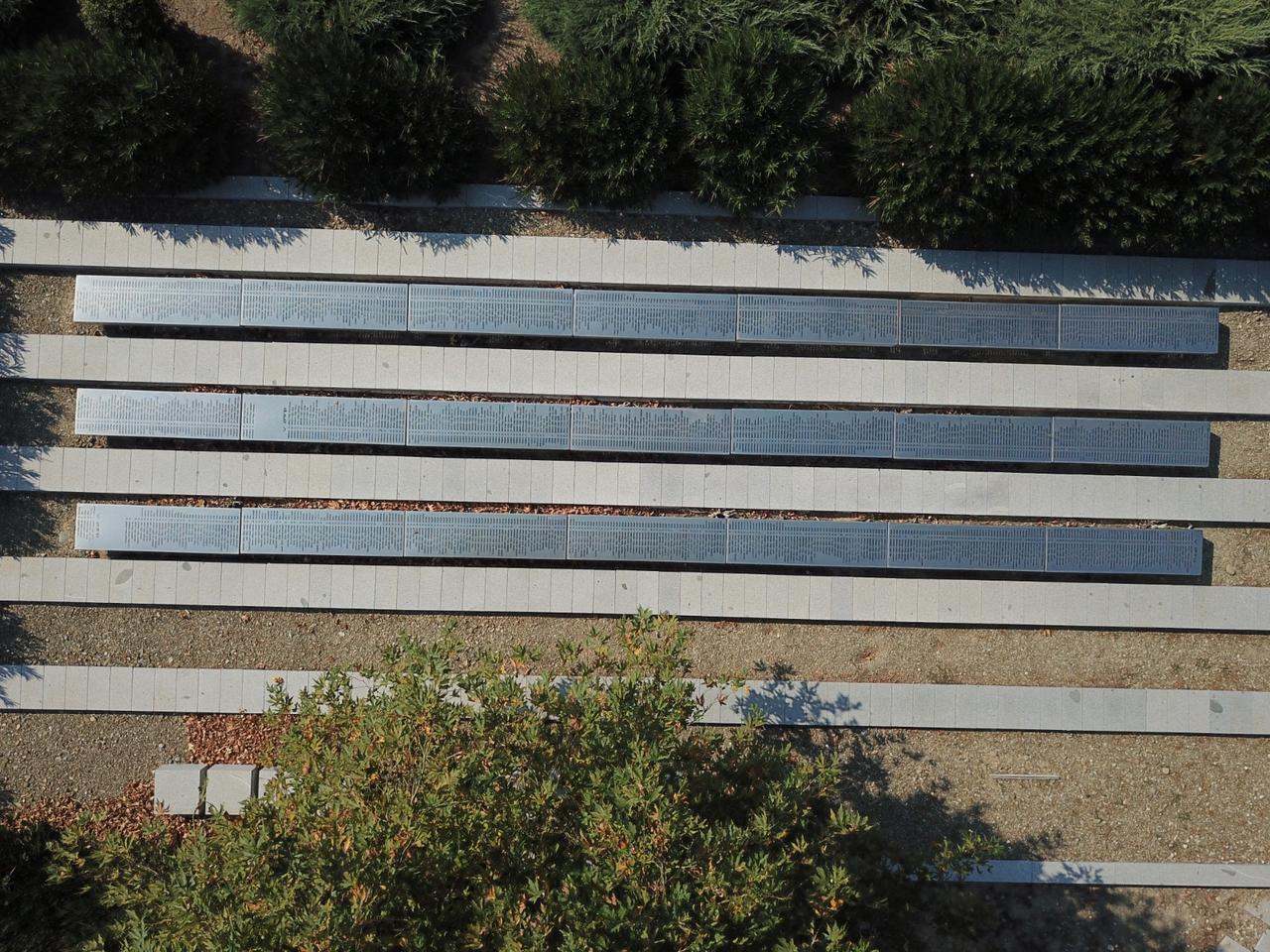
Karayörük Deresi Şehitliği is a genuine martyrs' cemetery located within the boundaries of the Gallipoli Historical Area, where soldiers who fell on the Gallipoli Front are buried, as confirmed by historical documents.
Karayörük Deresi Şehitliği (Gelibolu Tarihi Alan Başkanlığı)
The cemetery is situated on the right side of the road approximately 200 meters before reaching the Kanlısırt position within the Gallipoli Peninsula Historical Area. Geographically, it lies on the northern section of the Albayrak Ridge, on the slope descending toward Karayörük Stream.
This cemetery, accessible to visitors via a long staircase, is clearly marked on Map No. 17 of the historic Şevki Paşa Map. This cartographic record confirms the site as a genuine martyrs' cemetery.【1】
The area where the cemetery is located formed the frontline of the 48th Regiment, part of the 16th Division stationed at Kanlısırt during the Gallipoli Campaign. During ground combat, this defensive line was subjected to heavy naval artillery fire and intense machine gun assaults by the Allied Powers, resulting in severe military casualties in the region.
During the battle, this area served as a field dressing station for medical aid and evacuation of the wounded, transforming it into a central collection point for casualties from surrounding positions. Consequently, not only soldiers from the 48th Regiment but also those from the 72nd, 77th, and 63rd Regiments who fell in nearby positions were buried here.【2】
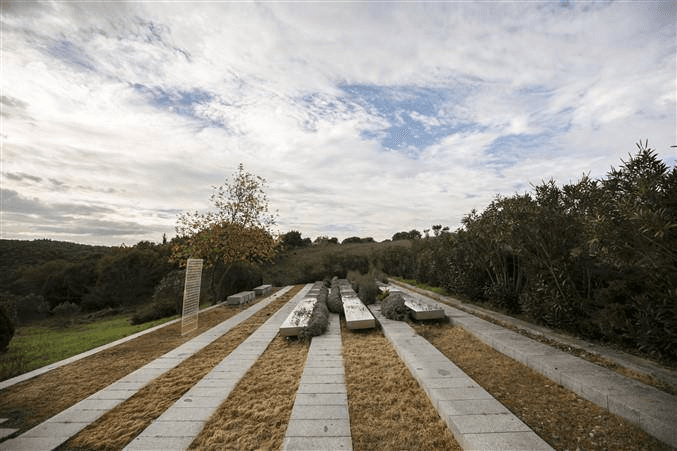
Karayörük Deresi Şehitliği (Gelibolu Tarihi Alan Başkanlığı)
Karayörük Deresi Şehitliği was constructed and opened to the public in 2006 by the Ministry of Environment and Forestry.
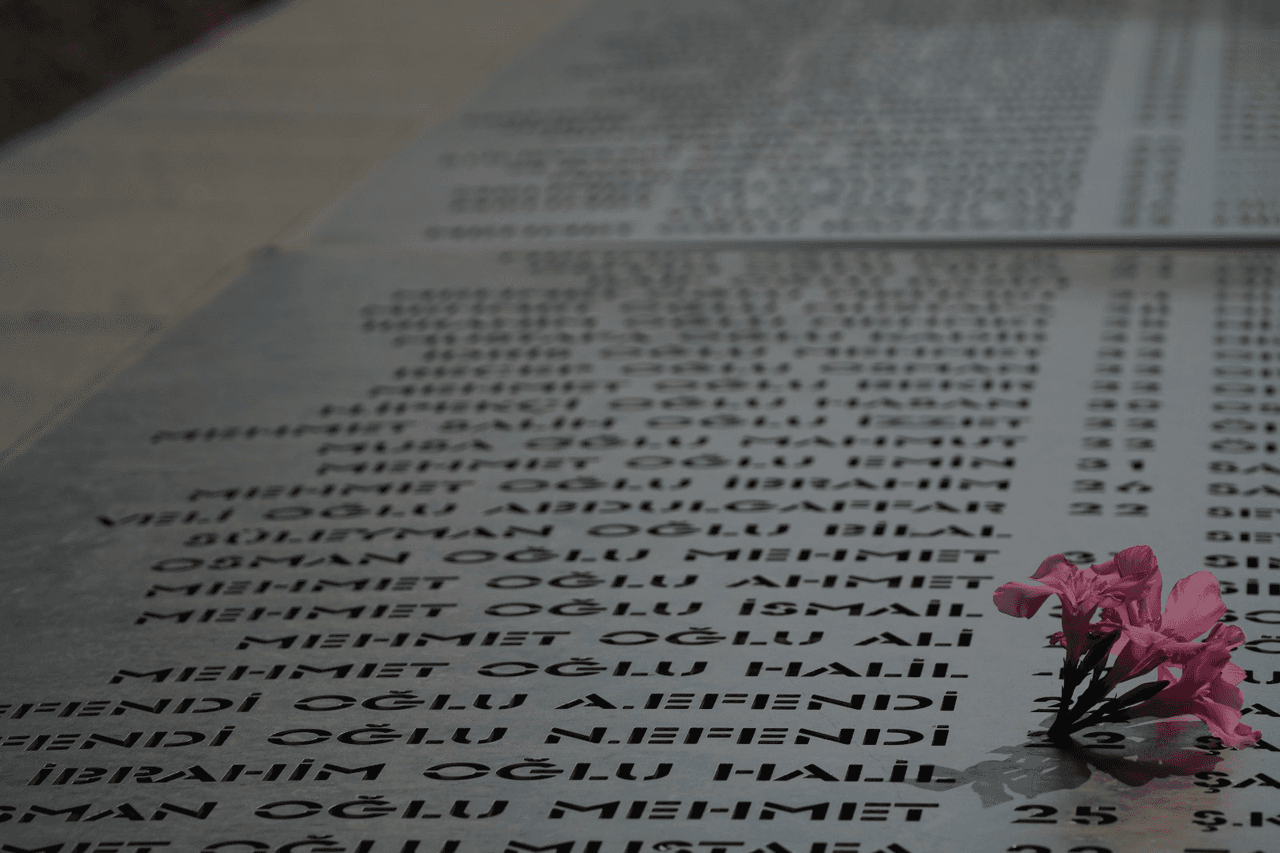
The cemetery serves as the final resting place for 1,153 martyrs who served with the 16th Division and whose names have been identified through archival research, primarily those who fought on Kanlısırt.
The architectural design of the cemetery features individual metal headstones engraved with the names of the fallen soldiers. Immediately beside these headstones stands a historic prayer hall constructed from wood.【3】
During one of the most critical phases of the fighting, on May 13, 1915, the 2nd Division was deployed to the Arıburnu Front from Istanbul. A large portion of its military personnel consisted of volunteers who were either graduates or students of Darülfünun, including students from Istanbul Sultanisi (known today as Istanbul High School).
Fifty high school students from Istanbul Sultanisi volunteered to join the Gallipoli Front. The remaining students at the school converted the school building into a medical facility and hospital to care for wounded soldiers returning from the front. As part of this transformation, the building was painted yellow. At the time, Istanbul High School operated in the building on Karaköy Kemeraltı Street, now occupied by Saint Benoit French High School.
After undergoing a brief and intensive military training at the military headquarters in Halıcıoğlu, Istanbul, the volunteer students were deployed directly to the front and integrated into the ranks of the 2nd Division.【4】
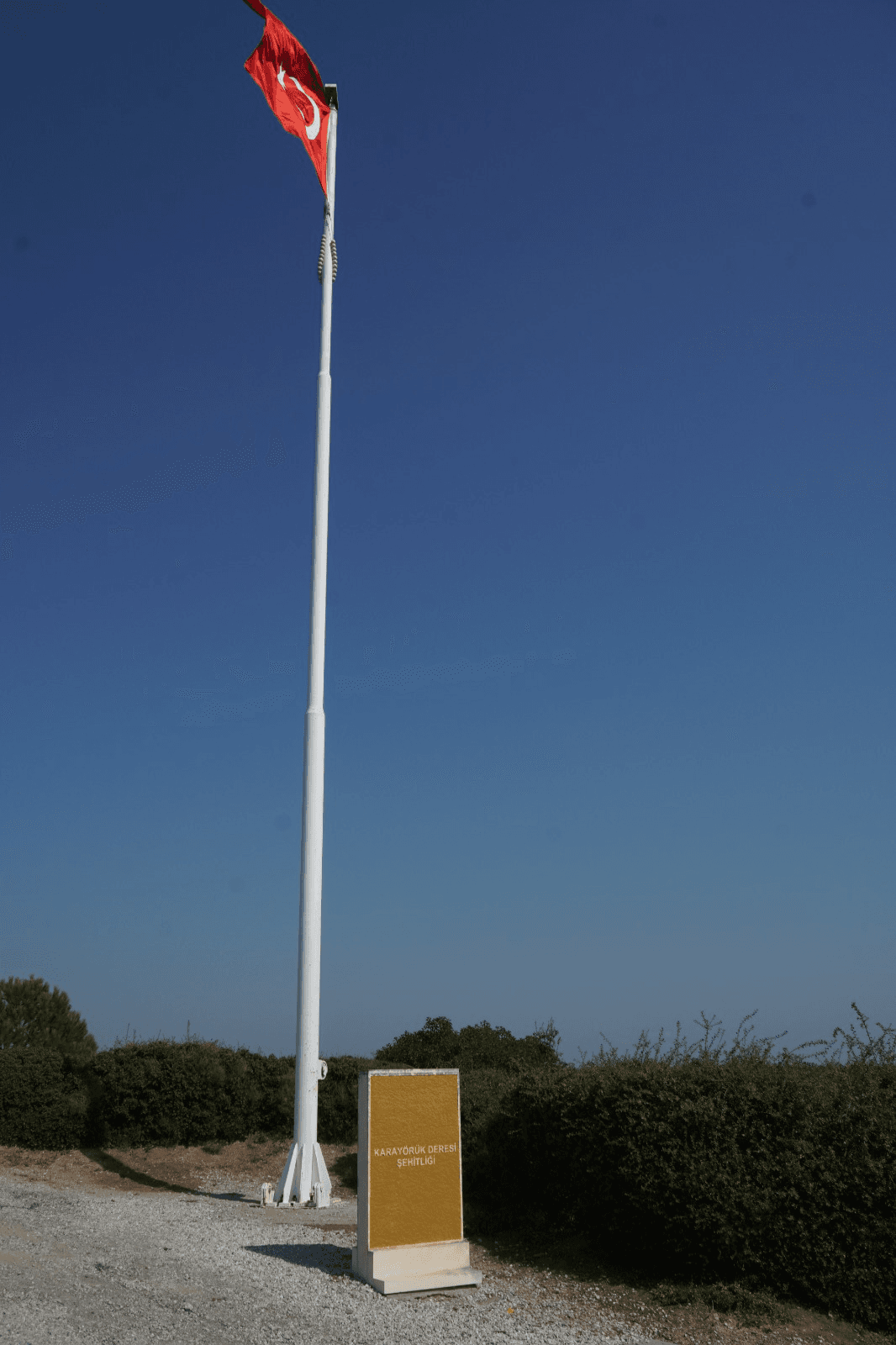
Karayörük Deresi Şehitliği (Gelibolu Tarihi Alan Başkanlığı)
High school students who had joined the front wore yellow ribbons on their arms, while medical students wore white ribbons. However, prior to the major offensive scheduled for the night of May 18–19, military orders were issued requiring the removal of these ribbons to prevent them from serving as visible targets for enemy snipers and soldiers.【5】
The counter-offensive launched on May 19, 1915, against the ANZAC forces resulted in extremely bloody combat. A large proportion of the 2nd Division, whose ranks were predominantly composed of students and young educated volunteers, were killed in action. Among the survivors in the trenches, only fragments of yellow ribbons remained, bearing the inscription “Istanbul High School, May Our Homeland Be Safe.”【6】
When news arrived at the school that all fifty Istanbul Sultanisi student volunteers had been killed, the remaining students painted the doors and window frames of the school building black to honor their fallen comrades. This historic event led to the adoption of black and yellow as the official colors of the school’s institutional identity and traditions.【7】
Culture Inventory. "Karayörük Deresi Şehitliği." Accessed July 17, 2026.https://kulturenvanteri.com/yer/karayoruk-deresi-sehitligi/
Gelibolu Tarihi Area Directorate. "Karayörük Deresi Martyrdom Site." Accessed July 17, 2026.https://canakkaletarihialan.gov.tr/tr/ziyaret/sehitlikveanitlar/karayoruk-deresi-sehitligi
[1]
Gelibolu Tarihi Alan Başkanlığı. "Karayörük Deresi Şehitliği." Erişim Tarihi 17 Temmuz 2026. https://canakkaletarihialan.gov.tr/tr/ziyaret/sehitlikveanitlar/karayoruk-deresi-sehitligi
[2]
Gelibolu Tarihi Alan Başkanlığı. "Karayörük Deresi Şehitliği."
[3]
Gelibolu Tarihi Alan Başkanlığı. "Karayörük Deresi Şehitliği."
[4]
Gelibolu Tarihi Alan Başkanlığı. "Karayörük Deresi Şehitliği."
[5]
Gelibolu Tarihi Alan Başkanlığı. "Karayörük Deresi Şehitliği."
[6]
Gelibolu Tarihi Alan Başkanlığı. "Karayörük Deresi Şehitliği."
[7]
Gelibolu Tarihi Alan Başkanlığı. "Karayörük Deresi Şehitliği."

Location | Approximately 200 m from Kanlısırt, on the right side of the road, northern section of Albayrak Sırtı, Eceabat, Çanakkale | ||||||||
|---|---|---|---|---|---|---|---|---|---|
Region | Arıburnu – Kanlısırt area | ||||||||
Martyrdom Type | The actual martyrs' cemetery | ||||||||
Historical Record | Shown on map number 17 of Şevki Paşa's map. | ||||||||
Main Unit | 16th Division – 48th Regiment | ||||||||
Other Units | 72nd, 77th and 63rd Regiments | ||||||||
Number of Identified Martyrs | 1,153 martyrs | ||||||||
Construction Year | 2006 | ||||||||
No Discussion Added Yet
Start discussion for "Karayörük Stream Martyrdom Site" article
Geographical Location and Access Features
Historical Background and Role in Battles
Construction and Structural Features of the Cemetery
The May 19 Offensive and the Volunteers of the 2nd Division
Casualties on the Front and the Black Paint Tradition