
Bu içerik Türkçe olarak yazılmış olup yapay zeka ile otomatik olarak İngilizceye çevrilmiştir.
Definition | They are vehicles capable of performing tasks above or below water without requiring a human crew. | ||||||||
|---|---|---|---|---|---|---|---|---|---|
Application Areas | Military operations Scientific research Exploration and surveillance Mine detection and clearance Underwater investigation studies | ||||||||
Vehicle Types | Unmanned Surface Vehicles (USV) Unmanned Underwater Vehicles (ROV / AUV) | ||||||||
Working Environment | Surface / Subsurface | ||||||||
Working System | Remotely controlled Autonomous system | ||||||||
Early Historical Example | PUV (Programmed Underwater Vehicle) | ||||||||
Examples in Türkiye | ULAQ, MARLİN, ALBATROS-S, TUFAN | ||||||||
Basic Systems | Communication, navigation, control, sensing, and mission systems | ||||||||
An unmanned surface vehicle (USV) or unmanned underwater vehicle (UUV) is a marine platform capable of operating on the sea surface or underwater without human presence, either through remote control or autonomously.【1】 These platforms have been developed to carry out military, civil, and scientific missions at sea by integrating communication, navigation, control, sensing, and mission systems. With advances in marine technologies, their operational domains have expanded, leading to the development of various platforms tailored to different operational needs. Based on the physical conditions of the marine environment, mission requirements, and technological progress, systems capable of operating both on and beneath the water surface have emerged.
The development of unmanned marine vehicles began with the aim of reducing risks to human life in underwater operations. High pressure, salinity, wave motion, limited communication capabilities, and energy demands in the underwater environment made it necessary to develop unmanned platforms as alternatives to manned systems. A significant portion of recent academic and industrial research has focused on developing unmanned systems capable of operating in marine environments. Although there is no universally accepted starting point for the emergence of unmanned underwater vehicles, one of the earliest documented examples is the Programmed Underwater Vehicle (PUV), a programmed torpedo-like underwater vehicle developed in Austria in 1864.【2】
The first remotely operated underwater vehicle with characteristics closer to modern systems was developed in 1953.【3】 Subsequent efforts, particularly by the British Royal Navy and the United States Navy, accelerated the development of these vehicles. Initially used primarily for mine detection, explosive ordnance disposal, and seabed operations, these systems evolved through technological advancements to perform a broader range of missions.
As a result of U.S. Navy initiatives, remotely operated underwater vehicles began to be developed under a specific program starting in 1957 and were gradually introduced into limited service after 1970. Early applications included mapping the ocean floor and locating sea mines.【4】 During the same period, the British Royal Navy used remotely operated underwater vehicles to locate and retrieve training torpedoes lost underwater.
Driven by technological progress, the scope of missions for unmanned marine vehicles has expanded. While early systems were predominantly remotely operated, advancements in energy systems, navigation technologies, communication infrastructure, and control systems enabled the development of platforms capable of autonomous operations. As a result, these vehicles evolved beyond merely executing pre-programmed tasks and gained the ability to adapt their actions in response to real-time conditions encountered during missions.
The development of autonomous underwater vehicles and underwater gliders for marine research also marked a significant milestone in this process. These systems, capable of prolonged missions, enabled the collection of extensive marine data across wide areas, leading to widespread adoption of unmanned systems in oceanographic studies and environmental monitoring.
In Türkiye, research on unmanned marine vehicles has diversified over time. Defense industry institutions have developed surface platforms tailored to various mission requirements, while universities have conducted academic research on the design, control systems, and application areas of unmanned underwater vehicles. In addition, technology competitions have encouraged the development of original designs and supported university student participation in this field.
Unmanned marine vehicles are categorized into different groups based on their operating environment, control method, and operational capabilities. The most fundamental classification distinguishes between unmanned surface vehicles (USVs), which operate on the sea surface, and unmanned underwater vehicles (UUVs), which operate underwater. Underwater vehicles are further divided into two main categories according to their control method: remotely operated underwater vehicles (ROVs) and autonomous underwater vehicles (AUVs). Additionally, platforms with varying features have been developed based on mission purpose, mobility, energy system, and payload capacity.
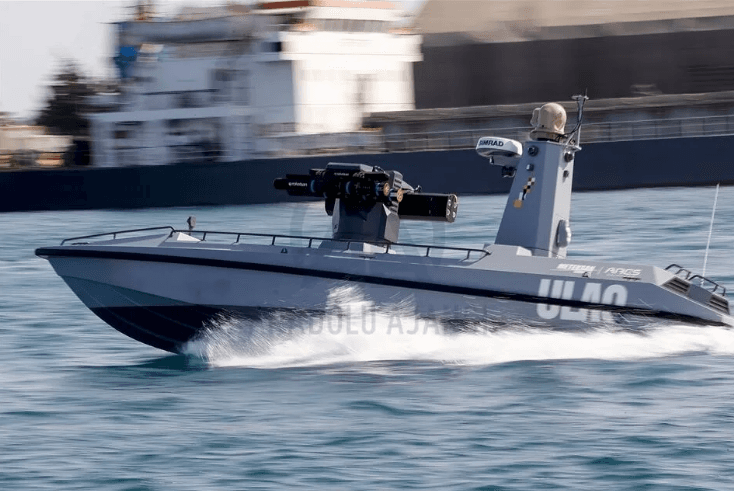
ULAQ SİDA (Anadolu Ajansı)
Unmanned surface vehicles are platforms designed to operate on the sea surface. They can be operated via remote control or function autonomously according to a pre-defined mission plan. Communication systems, navigation equipment, sensors, and mission payloads are integrated onto a single platform to create solutions tailored to diverse mission requirements.
Unmanned surface vehicles have been developed for use in reconnaissance, surveillance, intelligence gathering, surface warfare, asymmetric warfare, anti-submarine warfare, electronic warfare, armed escort, force protection, strategic facility security, and mine countermeasures. Some platforms are designed for a single specific mission, while others feature a modular structure that allows integration of various mission payloads.
In recent systems, artificial intelligence-supported control algorithms, image processing applications, and swarm architectures have been introduced. This enables multiple vehicles to move in coordinated fashion within the same mission, share tasks, and exchange data with each other.
Unmanned underwater vehicles are platforms developed to operate beneath the sea surface. Due to the physical conditions of the marine environment, their design takes into account water pressure, communication limitations, energy consumption, and hydrodynamic structure.
Unmanned underwater vehicles are used for seabed mapping, mine detection, oceanographic research, oceanographic measurements, pipeline inspection, search and rescue operations, wreck investigations, and various military missions. Developed in different sizes and technical specifications according to mission needs, these vehicles can operate in areas where human diving is impossible or hazardous.
Based on control method, they are divided into two main categories: remotely operated and autonomous systems.
Remotely operated underwater vehicles (ROVs) are systems controlled by an operator on the surface. Communication between the vehicle and the control center is maintained via a tether cable. This connection allows commands to be transmitted to the vehicle while real-time video and other data are sent back to the control station.
ROV systems consist of the underwater vehicle, a control station, a connecting cable, a power system, and equipment for deploying and recovering the vehicle into the water. Equipped with cameras, sonars, manipulators, and various sensors, ROVs enable operators to conduct underwater missions in real time.
ROVs have been developed in different classes according to their intended use. Micro and mini-class vehicles are primarily used for observation and inspection tasks. Larger systems are employed for maintenance, repair, and technical intervention operations in deep waters. Platforms equipped with manipulator arms can grasp, move, or perform various technical procedures on underwater objects.
These vehicles are used in numerous applications including oil and gas facilities, underwater pipelines, port structures, dams, bridge piers, wreck investigations, mine detection, and search and rescue operations.
Autonomous underwater vehicles (AUVs) are systems capable of executing missions without continuous operator control. The mission plan is pre-loaded into the vehicle’s onboard system, and the vehicle navigates autonomously during the mission using its own control systems.
AUVs carry their own power sources, follow predetermined routes, and adjust their movements based on data collected during the mission. Even when communication is interrupted, they continue their missions and surface at appropriate intervals to transmit collected data to the control center via satellite communication.
These vehicles are typically manufactured with hydrodynamic cylindrical hulls. Thrust systems and control surfaces work together to enable movement. Energy capacity, mission duration, and payload capacity are key factors determining vehicle performance.
Autonomous underwater vehicles are used for seabed mapping, oceanographic data collection, environmental monitoring, marine science research, and military missions. Their ability to operate for extended durations and collect data over wide areas constitutes their most prominent features.
The ability of unmanned marine vehicles to perform their missions depends on the coordinated operation of the hull structure, propulsion system, energy source, control system, communication infrastructure, navigation equipment, sensors, and mission payloads. The technical specifications of these vehicles are determined by the nature of the mission, mission duration, operating marine environment, and carried payload. While systems used on surface and underwater platforms differ according to mission requirements, their fundamental operating principles share a similar structure.
The hull structure of unmanned marine vehicles is designed considering the physical conditions encountered in the marine environment. In underwater vehicles, cylindrical or torpedo-shaped hulls are predominantly preferred to maintain hydrodynamic efficiency, reduce drag, and minimize energy consumption. This design ensures more stable movement underwater and enables prolonged mission durations.
In autonomous underwater vehicles, diving and ascending movements are achieved through motors and movable fins rather than traditional ballast tanks used in submarines. Balance between the center of gravity and buoyant force is carefully considered to ensure stable movement underwater. A critical safety feature is the design that allows the vehicle to return to the surface in case of any system failure.
For surface vehicles, hull design is based on speed, maneuverability, and mission duration. Platforms of varying dimensions have been developed to accommodate different mission profiles and carry diverse payloads according to operational needs.
The movement of unmanned marine vehicles is provided by propulsion systems. The type of propulsion system used is determined by the operating environment and mission duration. In underwater vehicles, motion is achieved through the coordinated operation of thrusters and control surfaces. Surface vehicles employ propulsion systems suited to their operational requirements.
The energy system is one of the primary factors determining the mission duration of unmanned marine vehicles. Particularly in autonomous underwater vehicles, energy capacity is directly linked to operational range. The energy source powers not only the propulsion system but also the control computer, communication systems, sensors, and other electronic equipment. Therefore, energy consumption must be managed efficiently throughout the mission.
Advances in energy technologies have enabled unmanned marine vehicles to operate for longer durations and cover wider areas.
Navigation systems are used in unmanned marine vehicles to monitor mission routes and ensure safe movement. These systems determine the vehicle’s position, follow the planned route, and provide necessary guidance during the mission.
In autonomous systems, the pre-defined route is uploaded into the vehicle’s memory before the mission begins. During the mission, sensor data are analyzed to update the route as needed and generate new movement plans to avoid obstacles.
Due to communication limitations underwater, autonomous underwater vehicles rely on their own navigation systems to carry out missions. They periodically surface to update their position and transmit collected data to the control center.
In unmanned marine vehicles, the communication system enables control of the vehicle and transmission of data collected during the mission. Because seawater significantly attenuates electromagnetic waves, underwater communication employs different methods than those used for surface platforms.
In ROV systems, communication between the vehicle and the control station is maintained via a tether cable. Commands are transmitted to the vehicle, while camera footage and other sensor data are relayed in real time to the operator.
In autonomous underwater vehicles, the mission plan is pre-programmed. During the mission, the vehicle operates under its own control system and surfaces at appropriate intervals to exchange data with the control center via satellite communication.
For unmanned surface vehicles, line-of-sight communication, satellite systems, mobile communication infrastructure, and mesh network architectures can be used together. This allows vehicles not only to communicate with the control center but also with other platforms operating within the same mission.
Different sensor systems are used in unmanned marine vehicles to perceive the environment and execute missions. Depending on mission requirements, radar, sonar, cameras, electro-optical systems, and various sensors are integrated onto the platform.
Data collected from these systems are processed by the vehicle’s mission computer to perceive the environment, identify targets, detect obstacles, and execute the mission plan. Information gathered during the mission can be transmitted to the control center or stored onboard for later use.
In platforms developed for specific missions, weapon systems, manipulators, electronic warfare equipment, and other payloads form part of the mission system. Thanks to modular design, the same platform can be configured for different mission payloads.
Autonomous control systems play a crucial role in the development of unmanned marine vehicles. Autonomous systems can execute mission plans, evaluate data from sensors, and operate according to predefined rules.
In next-generation platforms, image processing, target detection, target tracking, obstacle avoidance, route planning, and swarm operation capabilities are integrated. The ability of multiple vehicles to move in coordinated fashion, share tasks, and exchange data among themselves is among the key capabilities enabled by this control architecture.
Thanks to this technological structure, unmanned marine vehicles can operate either remotely or autonomously depending on mission requirements and can be reconfigured with different payloads for various operations.
Unmanned marine vehicles are used in military, scientific, industrial, and civil domains due to their technical capabilities and the ability to integrate diverse mission payloads onto their platforms. These vehicles, capable of operating either remotely or autonomously depending on mission nature, have been developed to meet various needs in surface and underwater operations. Application areas vary according to the technical features of the platforms and the systems they carry.
One of the most common application areas for unmanned marine vehicles is military operations. Naval forces use them for reconnaissance, surveillance, intelligence gathering, maritime security, and execution of various combat missions.
Unmanned surface vehicles are employed in surface warfare, anti-submarine warfare, asymmetric warfare, armed escort, force protection, electronic warfare, strategic facility security, and mine countermeasures. Data collected during missions from radar, cameras, electro-optical systems, and other sensors can be transmitted to the control center or evaluated by the vehicle’s mission management system.
Armed platforms can carry various weapon systems and perform missions against mobile or stationary targets. With artificial intelligence-supported control systems, target detection, identification, tracking, and autonomous mission management are possible. In swarm-capable systems, multiple vehicles coordinate their movements, share tasks, and conduct joint operations.
Unmanned underwater vehicles are used for mine detection and neutralization, seabed mapping, port security, monitoring critical underwater zones, anti-submarine operations, and various reconnaissance missions. Remotely operated systems operate under direct operator control, while autonomous vehicles independently execute pre-defined mission plans.
Unmanned marine vehicles are widely used in marine science research. Collecting data about the marine environment, conducting oceanographic studies, and performing long-term observation missions are among their primary applications.
Autonomous underwater vehicles and underwater gliders can operate for extended periods over large ocean areas, collecting data on temperature, salinity, and other environmental parameters. Data gathered during missions are transmitted to control centers whenever communication opportunities arise, enabling continuous long-term monitoring of the marine environment.
Mapping the seabed, investigating the ocean floor, studying shipwrecks, and conducting various scientific measurements are also among the tasks performed using unmanned marine vehicles.
Unmanned marine vehicles are used in industrial applications for inspection, maintenance, monitoring, and technical support, particularly in underwater environments where human operations are difficult or hazardous.
Applications include monitoring oil and gas facilities, inspecting underwater pipelines, checking cable routes, observing port structures, inspecting bridge piers, and conducting technical assessments of dams.
Remotely operated underwater vehicles can also be used for maintenance and repair tasks thanks to their manipulator systems. Objects underwater can be grasped, moved, or subjected to technical interventions as needed.
Inspection of ship hulls, propellers, and other submerged components is also possible with these vehicles. This reduces the need for divers during maintenance and allows technical inspections to be completed more quickly.
Unmanned marine vehicles are also used in search and rescue operations. These include locating missing persons or objects underwater, investigating incident sites, and imaging hard-to-reach areas.
Security and law enforcement units use unmanned underwater vehicles to investigate underwater evidence, examine shipwrecks, and conduct forensic investigations.
In addition, unmanned marine vehicles are employed for continuous monitoring of ports, coastal areas, and strategically important marine facilities. Platforms equipped with diverse sensor systems enable continuous tracking of activities on and beneath the sea surface.
Unmanned marine vehicles are also used in environmental monitoring. This includes tracking physical changes in the marine environment, collecting environmental data, and conducting long-term observation missions.
Additionally, these vehicles are utilized in monitoring fish farms, inspecting underwater structures, conducting wreck investigations, supporting documentary and underwater imaging projects, and performing various surveillance operations. Thanks to their interchangeable payloads, the same platform can be adapted for different mission requirements.
In Türkiye, research on unmanned marine vehicles has focused on developing indigenous systems capable of supporting military and civil missions at sea. During this process, research, design, production, and testing activities have been carried out for unmanned surface and underwater vehicles, with various initiatives undertaken in autonomous systems, communication technologies, control software, sensing systems, and mission management. Infrastructure has been established to develop platforms with diverse features tailored to specific mission needs by different institutions.
Efforts to develop unmanned marine vehicles in Türkiye have progressed through research conducted by defense industry institutions, universities, and research teams. These activities have focused on designing platforms capable of operating in marine environments, developing control systems, communication infrastructure, autonomous mobility, sensor systems, and mission software.
During the development of unmanned marine vehicles, not only the mechanical structure of the vehicle but also the mission computer, electronic systems, power management, communication systems, and software infrastructure have been addressed holistically. The goal has been to develop integrated systems adaptable to diverse mission requirements.
Alongside advancements in remotely operated systems, research has also been conducted to develop platforms capable of autonomous operations. In this context, various control algorithms have been developed to enable vehicles to execute pre-defined mission plans, perceive their environment, follow routes, and evaluate data collected during missions.
Solutions have been developed to integrate functions such as mission planning, target detection, target tracking, obstacle avoidance, route generation, and mission management within a single control architecture. Additionally, research has been conducted to enable swarm capabilities, allowing multiple vehicles to operate in coordinated fashion.
Academic research at universities on unmanned marine vehicles has focused on vehicle design, hydrodynamic structure, control systems, communication methods, artificial intelligence applications, image processing techniques, and autonomous mobility. Prototypes developed under research projects have been evaluated through practical implementation of different control methods and mission scenarios.
Alongside academic research, projects led by research centers and defense industry institutions have continued to develop technologies tailored to diverse mission needs. Thus, research and application activities have been conducted in a mutually reinforcing framework.
In Türkiye, technologies have been developed to enable the integrated operation of communication systems, electro-optical sensors, radar and sonar systems, mission computers, control software, and artificial intelligence applications on the same unmanned marine vehicle platform. In addition, a modular design approach has been adopted to allow different mission payloads to be integrated onto the same platform.
As a result of these efforts, a technical infrastructure has been established for developing unmanned marine vehicles capable of performing reconnaissance, surveillance, intelligence gathering, electronic warfare, anti-submarine warfare, mine countermeasures, strategic facility security, and other missions.
As a result of ongoing efforts in Türkiye, various surface platforms have been developed to meet diverse mission requirements. These platforms have been designed for applications such as reconnaissance, surveillance, intelligence gathering, electronic warfare, surface warfare, anti-submarine warfare, strategic facility security, force protection, mine countermeasures, and offensive operations. Key elements in platform development include remote command, autonomous mission execution, modular mission payloads, communication infrastructure, and mission management systems.
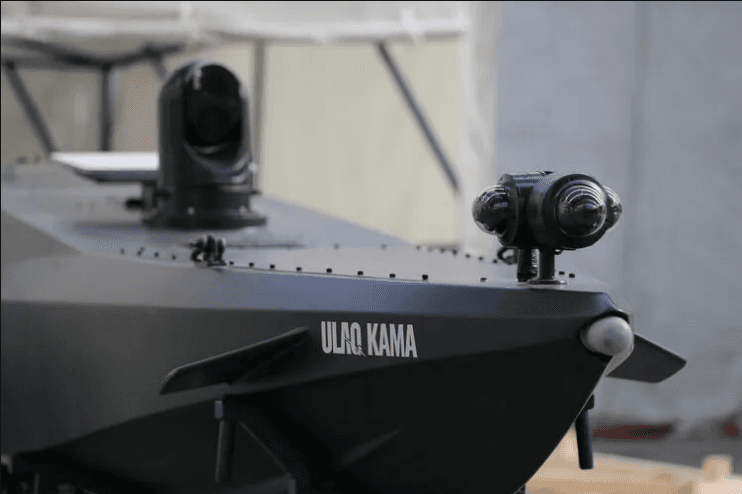
ULAQ KAMA (Anadolu Ajansı)
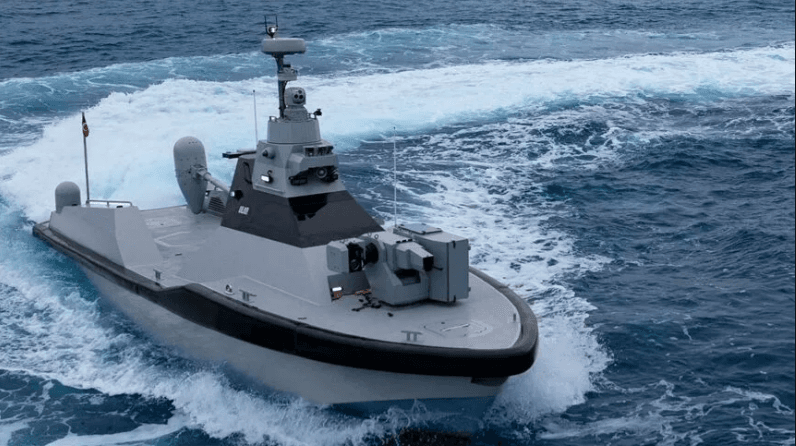
ULAQ is one of the armed unmanned surface vehicles developed in Türkiye. The platform can be remotely commanded or operate autonomously. It features a composite hull and incorporates national encrypted communication infrastructure along with day and night imaging systems.
The platform has been developed to perform reconnaissance, surveillance, intelligence gathering, surface warfare, asymmetric warfare, armed escort, force protection, and strategic facility security missions. It can be controlled via mobile land-based control stations, command and control centers, and floating platforms.
Integration of national missile systems onto ULAQ has been achieved. In subsequent development phases, a sea-compatible remotely operated weapon system was added, along with capabilities such as artificial intelligence-supported target detection, identification, and tracking. The system has been designed for use against maritime, land, and aerial targets.
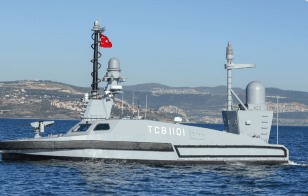
MARLİN 100 EW / İnsansız Deniz Aracı (Aselsan)
MARLİN is one of the unmanned marine vehicles featuring a modular structure capable of integrating various mission payloads.【5】 The platform can be remotely commanded and, when necessary, perform autonomous missions.
The vehicle has been developed to perform reconnaissance, surveillance, and electronic warfare missions, as well as other operational tasks using different mission payloads. Thanks to its open architecture, various electronic systems can be integrated onto the platform. Data collected during missions can be transmitted to the control center and coordinated missions can be conducted with other platforms.
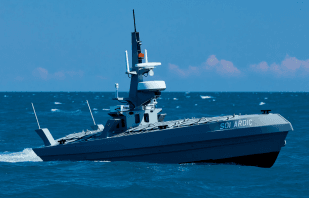
ALBATROS-S / Sürü Yetenekli İnsansız Deniz Aracı (Aselsan)
ALBATROS-S is among the unmanned marine vehicles developed according to the swarm mission concept. The platform has been designed to enable multiple vehicles to move in coordinated fashion within the same mission.【6】
Thanks to the communication infrastructure established between the vehicles, task sharing is possible, platforms can exchange data with each other, and they can simultaneously execute a common mission plan. Each vehicle within the swarm operates according to its assigned mission, while mission management is conducted through a centralized control structure.
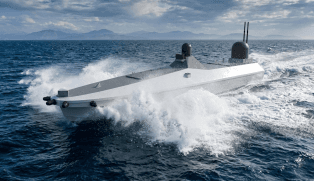
TUFAN- Kamikaze İnsansız Deniz Aracı (Aselsan)
TUFAN is one of the unmanned marine vehicles developed for kamikaze missions. The platform has been designed to carry a high-explosive insensitive warhead and is equipped with advanced autonomy and situational awareness capabilities.【7】
The vehicle can operate in swarm formation and create sub-groups within the same mission. It can conduct operations against mobile or stationary targets, execute evasive maneuvers, and autonomously sustain its mission plan.
In unmanned marine vehicles developed in Türkiye, remote command and autonomous mission capabilities are used together. On these platforms, the mission computer, communication system, electro-optical sensors, radar, artificial intelligence-supported control software, and various mission payloads operate as an integrated system.
Thanks to the modular design approach, platforms can be configured for different missions. Depending on mission requirements, systems for reconnaissance, surveillance, intelligence gathering, electronic warfare, anti-submarine warfare, mine countermeasures, force protection, and strategic facility security can be integrated onto the platforms. Additionally, some platforms feature infrastructure for swarm operations, joint mission management, and inter-vehicle data sharing.
ASELSAN. *ALBATROS-S İnsansız Deniz Aracı*. Broşür. Ankara: ASELSAN, n.d. Accessed August 7, 2026.https://cdn.aselsan.com/aselsanweb-prod/documents/capabilities/products/brochure/albatros-s/albatros-s-tr.pdf
ASELSAN. *MARLIN 100 ASW İnsansız Deniz Aracı*. Brochure. Ankara: ASELSAN, n.d. Accessed August 7, 2026.https://cdn.aselsan.com/aselsanweb-prod/documents/capabilities/products/brochure/marlin-100-asw/marlin-100-asw-tr.pdf
ASELSAN. *MARLIN 100 EW İnsansız Deniz Aracı*. Brochure. Ankara: ASELSAN, n.d. Accessed August 7, 2026.
ASELSAN. *TUFAN İnsansız Deniz Aracı*. Broşür. Ankara: ASELSAN, n.d. Accessed August 7, 2026.https://cdn.aselsan.com/aselsanweb-prod/documents/capabilities/products/brochure/tufan/tufan-tr.pdf
Anadolu Ajansı. "Türkiye'nin İlk Silahlı İnsansız Deniz Aracı Yerli Silahıyla Göreve Başladı." Anadolu Ajansı, November 22, 2024. Accessed August 7, 2026.https://www.aa.com.tr/tr/savunma-sanayisi/turkiyenin-ilk-silahli-insansiz-deniz-araci-yerli-silahiyla-goreve-basladi-/3834335
Anadolu Ajansı. "ULAQ SİDA'lar Deniz Savunmasına Güç Katacak." Anadolu Ajansı, March 8, 2024. Accessed August 7, 2026.https://www.aa.com.tr/tr/gundem/ulaq-sidalar-deniz-savunmasina-guc-katacak/3498356
Anadolu Ajansı. “STM'den İnsansız Su Altı Otonom Araç Hamlesi.” Anadolu Ajansı, July 26, 2023. Accessed August 7, 2026.https://www.aa.com.tr/tr/bilim-teknoloji/stmden-insansiz-su-alti-otonom-arac-hamlesi/2954446
Anadolu Ajansı. “Türkiye'nin İlk Silahlı İnsansız Deniz Aracı Füze Atışlarına Hazır.” Anadolu Ajansı, May 3, 2021. Accessed August 7, 2026.https://www.aa.com.tr/tr/turkiye/turkiyenin-ilk-silahli-insansiz-deniz-araci-fuze-atislarina-hazir/2233401
Canlı, Güray Ali, İsmail Kurtoğlu, M. Ozan Canlı, and Özgür Selman Tuna. “Dünyada ve Ülkemizde İnsansız Sualtı Araçları (İSAA-AUV & ROV) Tasarım ve Uygulamaları.” *GiDB|DERGi*, no. 4 (2015): 43–75.https://gidbdergi.itu.edu.tr/sayilar/04/0404.pdf
Ege, Börteçin. “İnsansız Deniz Araçları.” Bilim ve Teknik, May 2013, pp. 18–23. Accessed August 7, 2026.
T.C. Presidency of Communication. “Türkiye… HAVELSAN’sSANCAK İnsansız Maritime Vehicle Enters Service (Nova.news).” *Dış Basında Türkiye*. Accessed August 7, 2026.https://www.iletisim.gov.tr/turkce/dis_basinda_turkiye/detay/turkiye..-havelsanin-sancar-insansiz-deniz-araci-hizmete-girdi-nova.news
T.C. Presidency of Defense Industries. "İnsansız Deniz Araçları." Accessed August 7, 2026.https://www.ssb.gov.tr/proje/insansiz-deniz-araclari
Türkiye Silahlı Kuvvetlerini Güçlendirme Vakfı. "İnsansız Deniz Araçları." *Savunma Sanayii Gündem*. Accessed August 7, 2026.https://tskgv.org.tr/savunmasanayiigundem/insansiz-deniz-araclari
[1]
Börteçin Ege. “İnsansız Deniz Araçları.” Bilim ve Teknik, Mayıs 2013, 18–23. Erişim 7 Ağustos 2026. https://bilimteknik.tubitak.gov.tr/wp-content/uploads/sites/154/2025/09/d76af616-ed34-4a75-a0f2-6913f28ef193-1.pdf
[2]
Güray Ali Canlı vd., “Dünyada ve Ülkemizde İnsansız Sualtı Araçları (İSAA-AUV & ROV) Tasarım ve Uygulamaları,” GiDB|DERGi, no. 4 (2015): 43–75, https://gidbdergi.itu.edu.tr/sayilar/04/0404.pdf.
[3]
Güray Ali Canlı vd., “Dünyada ve Ülkemizde İnsansız Sualtı Araçları (İSAA-AUV & ROV) Tasarım ve Uygulamaları,” GiDB|DERGi, no. 4 (2015): 43–75, https://gidbdergi.itu.edu.tr/sayilar/04/0404.pdf.
[4]
Güray Ali Canlı vd., “Dünyada ve Ülkemizde İnsansız Sualtı Araçları (İSAA-AUV & ROV) Tasarım ve Uygulamaları,” GiDB|DERGi, no. 4 (2015): 43–75, https://gidbdergi.itu.edu.tr/sayilar/04/0404.pdf.
[5]
ASELSAN. MARLIN 100 EW İnsansız Deniz Aracı. Broşür. Ankara: ASELSAN, t.y. Erişim 7 Ağustos 2026. https://cdn.aselsan.com/aselsanweb-prod/documents/capabilities/products/brochure/marlin-100-ew/marlin-100-ew-tr.pdf
[6]
ASELSAN. ALBATROS-S İnsansız Deniz Aracı. Broşür. Ankara: ASELSAN, t.y. Erişim 7 Ağustos 2026. https://cdn.aselsan.com/aselsanweb-prod/documents/capabilities/products/brochure/albatros-s/albatros-s-tr.pdf
[7]
ASELSAN. TUFAN İnsansız Deniz Aracı. Broşür. Ankara: ASELSAN, t.y. Erişim 7 Ağustos 2026.
https://cdn.aselsan.com/aselsanweb-prod/documents/capabilities/products/brochure/tufan/tufan-tr.pdf


Definition | They are vehicles capable of performing tasks above or below water without requiring a human crew. | ||||||||
|---|---|---|---|---|---|---|---|---|---|
Application Areas | Military operations Scientific research Exploration and surveillance Mine detection and clearance Underwater investigation studies | ||||||||
Vehicle Types | Unmanned Surface Vehicles (USV) Unmanned Underwater Vehicles (ROV / AUV) | ||||||||
Working Environment | Surface / Subsurface | ||||||||
Working System | Remotely controlled Autonomous system | ||||||||
Early Historical Example | PUV (Programmed Underwater Vehicle) | ||||||||
Examples in Türkiye | ULAQ, MARLİN, ALBATROS-S, TUFAN | ||||||||
Basic Systems | Communication, navigation, control, sensing, and mission systems | ||||||||
Henüz Tartışma Girilmemiştir
"Unmanned Surface Vehicle (USV)" maddesi için tartışma başlatın
Historical Development
Classification
Unmanned Surface Vehicles (USVs)
Unmanned Underwater Vehicles (UUVs)
Remotely Operated Underwater Vehicles (ROVs)
Autonomous Underwater Vehicles (AUVs)
Technological Structure and Operating Principle
Hull Structure and Motion System
Propulsion and Energy Systems
Navigation and Positioning Systems
Communication and Control Systems
Sensing and Mission Systems
Autonomous Control Architecture
Application Areas
Military Applications
Scientific Research
Industrial Applications
Search, Rescue, and Security Operations
Environmental Monitoring and Other Applications
Development of Unmanned Marine Vehicles in Türkiye
Research and Development Activities
Development of Autonomous Systems
University and Research Institution Activities
Development of Technological Infrastructure
Platforms Developed in Türkiye
ULAQ
MARLİN
ALBATROS-S
TUFAN
Common Features of Developed Platforms