




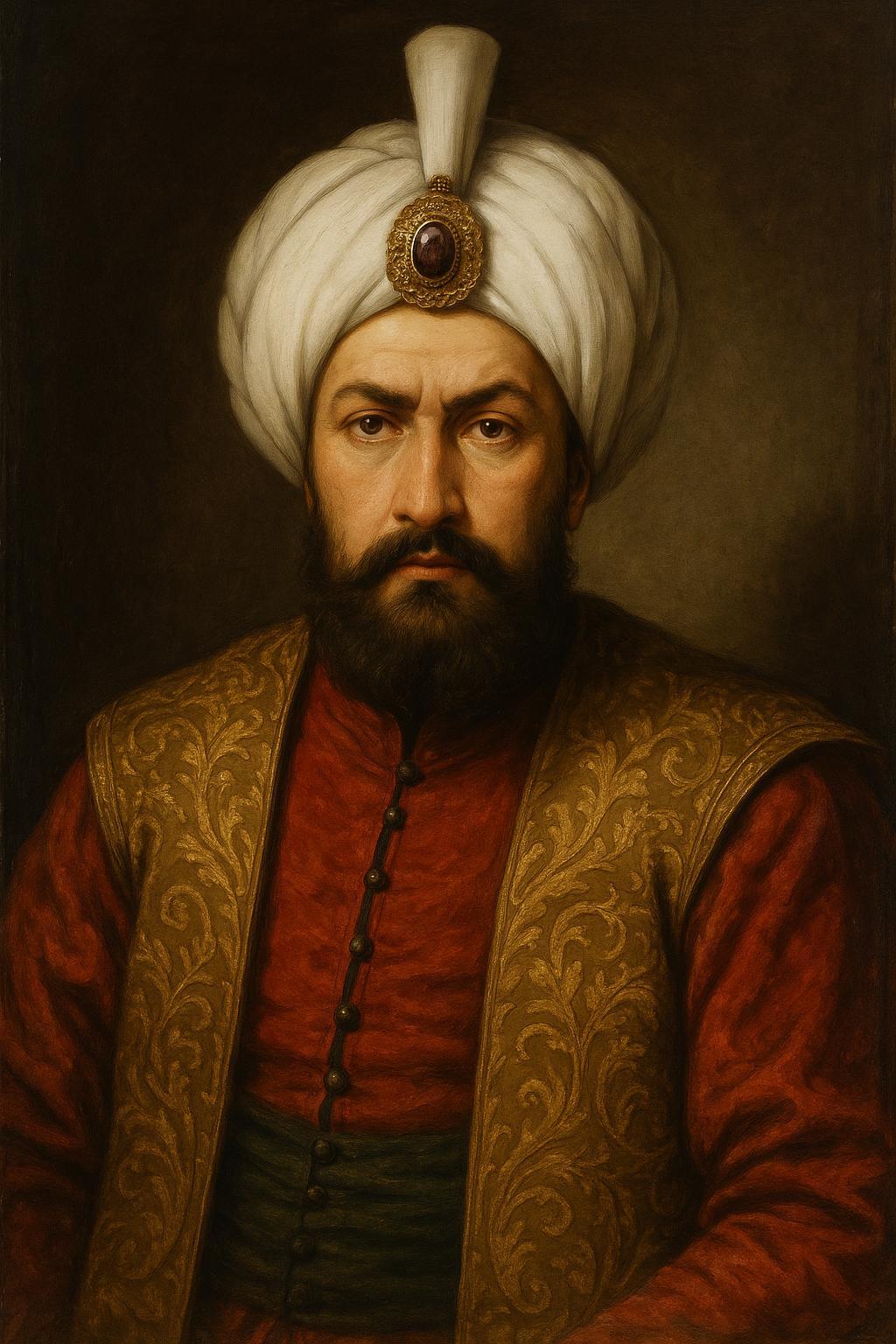
4. Who is Murat?
IV. Murat is one of the most severe and most notable sultans in Ottoman history. Ascending the throne at a young age, IV. Murat initially governed the state with the assistance of his mother, Kösem Sultan, before emerging as a strong leader in his own right, signing off on major reforms and military campaigns. He left deep marks in Ottoman history through both the internal reforms he implemented and the successful expeditions he led.
Accession to the Throne Amid Difficult Times
IV. Murat ascended the Ottoman throne in 1623 at the age of only eleven. Due to his youth, his mother, Kösem Sultan, was the dominant figure in state administration during the early years. However, increasing palace intrigues, Janissary indiscipline, and public discontent pushed IV. Murat toward becoming a more determined and authoritarian ruler.
Throughout his seventeen-year reign from 1623 to 1640, he took significant steps both domestically and abroad. He restored internal order to the Ottoman state and fought against the Celali rebellions in Anatolia.

(Generated by artificial intelligence)
Order Achieved Through Discipline and Prohibitions
IV. Murat launched a campaign of discipline that extended from the palace throughout the entire empire. In the capital, Istanbul, he particularly banned tobacco, alcohol, and coffeehouses, believing these venues had become centers of political opposition and sources of public disorder. It is said that he patrolled the streets at night disguised as a commoner to enforce these decrees.
The tobacco ban was especially harsh by the standards of the time; however, IV. Murat was resolute in maintaining public order. Punishments for crimes were intensified, and order was quickly restored in the city.
The Baghdad Campaign: Victory Against Shah Abbas
To secure lasting superiority in the Ottoman-Iranian struggle, IV. Murat launched a major military expedition. In 1638, he personally commanded the Baghdad Campaign. Despite harsh natural conditions, he maintained strict discipline within his army. As a result of the campaign, the city of Baghdad was incorporated into Ottoman territory, and the Ottoman-Iranian border was largely established in its modern form through the Treaty of Qasr-e Shirin, signed the following year.
This campaign is regarded as IV. Murat’s greatest achievement, both militarily and diplomatically.

(Generated by artificial intelligence)
Palace and Cultural Life
Despite his disciplined and stern character, IV. Murat was closely involved in the arts. He wrote poetry under the pen name “Muradi” and contributed to the tradition of court literature.
The sultan is also known for his passion for archery. His record shot at the Okmeydanı is still marked by a stone today. He also placed importance on architecture, overseeing various repairs and renovations within the palace.
Early Death and Aftermath
IV. Murat died in 1640 at the age of only twenty-eight. His death was caused by liver disease. He was succeeded by his brother, Ibrahim.
With his death, a period of disciplined and authoritarian rule on the Ottoman throne came to an end. However, his legacy remains highly valuable for restoring internal security and strengthening the eastern borders.
IV. Murat’s Legacy
- Restoration of security and public order in Istanbul
- Enforcement of palace discipline and combat against corruption
- Conquest of Baghdad and the border treaty with Iran
- Establishment of authority through prohibitions and reforms
References:
Halil İnalcık, The Ottoman Empire: The Classical Age 1300–1600, Türkiye İş Bankası Kültür Yayınları.
Feridun Emecen, IV. Murat ve Bağdat Seferi, Timaş Yayınları.
Ekrem Buğra Ekinci, Osmanlı Padişahları, Yeditepe Yayınları.
Ahmet Yaşar Ocak, Osmanlı'da Din, Toplum ve Devlet, İletişim Yayınları.
TDV İslam Ansiklopedisi, “IV. Murad” entry.