KURE Kids Header Line
badge icon

This content was originally written in Turkish for children and is automatically translated into English using artificial intelligence.

article-image

Bee Pollen

Last Updated: 01.12.2025

Bee pollen consists of small, colorful granules collected by honeybees from flowers. Bees transport this pollen to the hive, where they transform it into a nutritious food source for themselves and their young.


Properties of Bee Pollen

Bee pollen is rich in protein, vitamins, minerals, and energy. Therefore, it is also highly beneficial for humans. Bee pollen can serve as a natural supplement for healthy growth and increased energy.


(Generated by Artificial Intelligence.)


How Do Bees Collect Pollen?

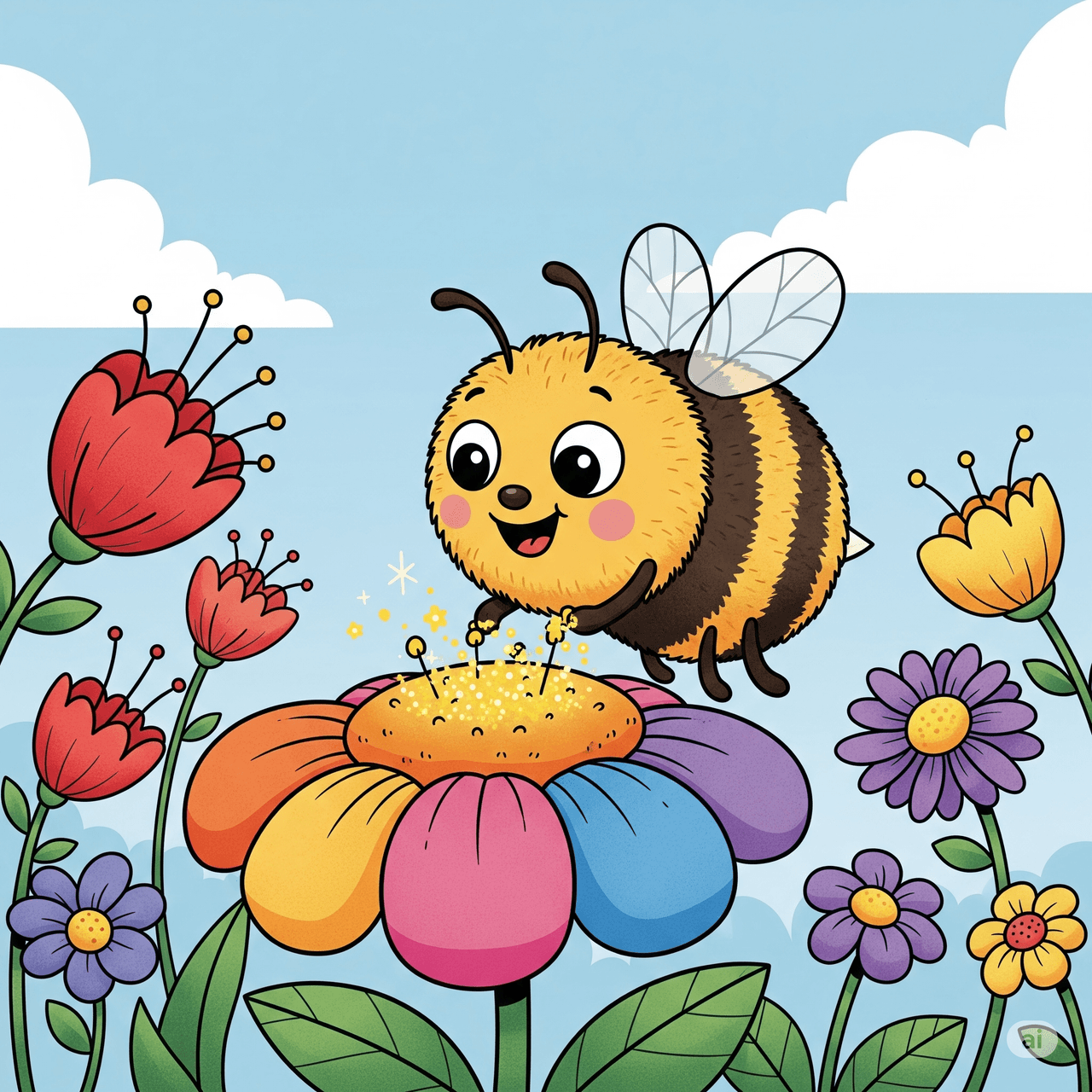
When collecting pollen from flowers, bees store it in specialized pollen baskets located on their hind legs.


They convert the collected pollen into bee bread inside the hive. Bee bread enables bees to remain healthy over extended periods.


(Generated by Artificial Intelligence.)


Benefits of Bee Pollen for Humans

It provides energy and strengthens the immune system. It helps protect the body against illness and is particularly beneficial for athletes and children in their growth phase.

Don't Forget to Look at These!
Science and Technology
cat img
History and Culture
cat img
Art and Literature
cat img
image
Most Read
Thomas Edison
arrow
image
Last Added
Kişisel Verileri Koruma Günü
arrow
ilham-notu-bg
INSPIRATION NOTE FOR CURIOUS KIDS!

Someday, by protecting nature, you too can be beneficial to the world like bees!


Who Wrote?
Kids Writing
Authorİbrahim FilizDecember 1, 2025
bottom-bg-effect-bottom
bottom-bg-effect-top

Bee pollen consists of small particles of dust collected by bees from flowers. It is highly nutritious and beneficial for both bees and humans. It provides energy and strengthens the immune system.

Bibliographies

Accessed November 26, 2025.

Bakkaloğlu, Zeynep. "Arı Poleni Proteinleri ve Fonksiyonel Özellikleri." Uludağ Arıcılık Dergisi - Uludağ Bee Journal. 21, no. 2 (2021): 247–256.

Eşerler, Sude, Sevilay Vardarlı, Güliye Savaş, and Ceren Mutlu. "Arı Poleninin Bazı Fiziksel, Fonksiyonel ve Kimyasal Özellikleri ve Biyolojik Etkileri." Uludağ Arıcılık Dergisi - Uludağ Bee Journal 23, no. 2 (2023): 280–295.

Nakilcioğlu-Taş, Emine and Eda Nurko. "Kovandaki Gizli Mucize: Arı Poleni ve Arı Ekmeği ile Gıdaların Zenginleştirilmesi." Gıda 47, no. 4 (2022): 604–615.

Silici, Sibel. "Arı Poleni ve Arı Ekmeği." Uludağ Arıcılık Dergisi - Uludağ Bee Journal. 14, no. 2 (2015): 99–105.

ilham-notu-bg
ilham-notu-bg
ilham-notu-bg
HEYY!
Did You Know?
These?
Lamb
Lamb
Ask to Küre