


This article was automatically translated from the original Turkish version.
+1 More
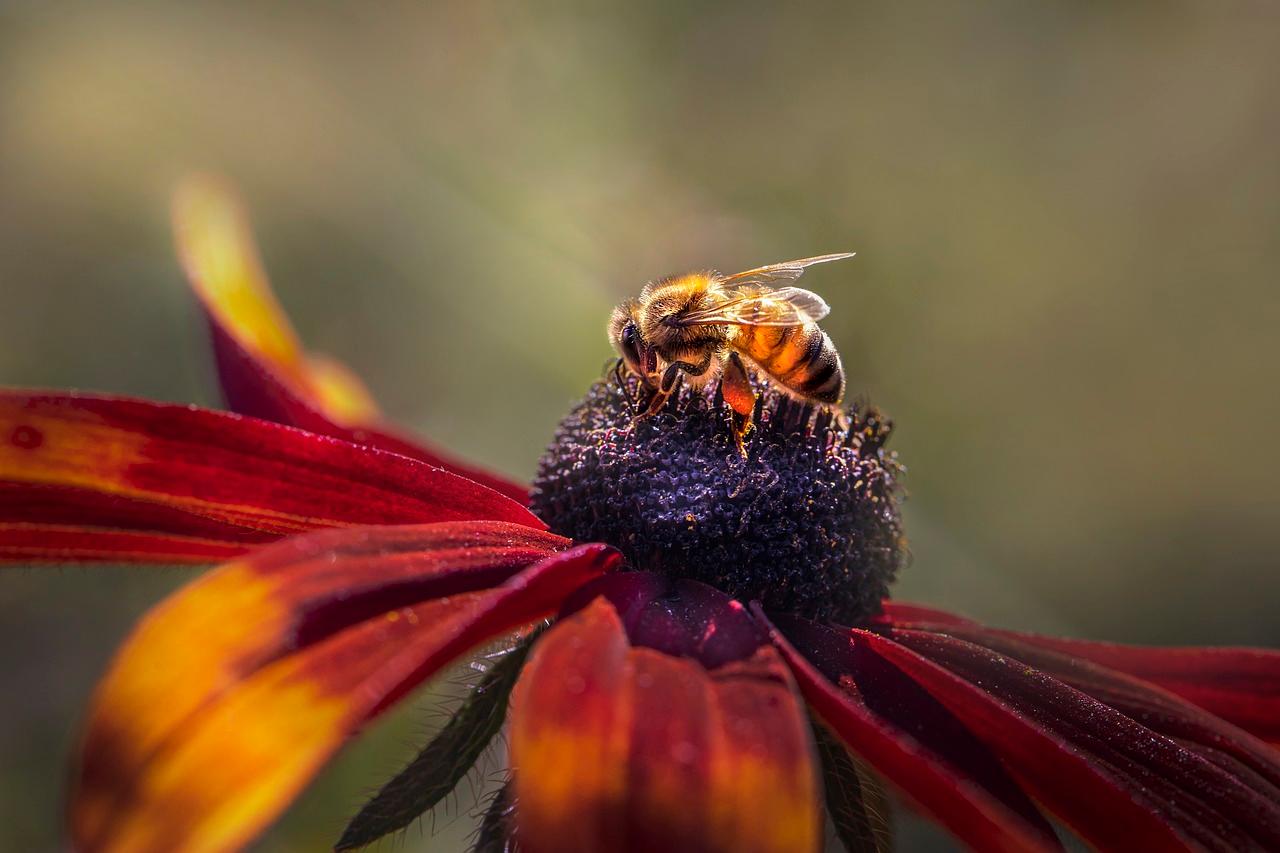
Bee (Apis spp.)
Class | Insects (Insecta) | ||||||||
|---|---|---|---|---|---|---|---|---|---|
Characteristics | Live in social structures, collect pollen and nectar, and perform the pollination role in ecosystems | ||||||||
Ecological Role | Enable plant reproduction and increase agricultural crop yields | ||||||||
Life Cycle | Consist of egg, larva, pupa and adult stages | ||||||||
Observed Problems | Habitat loss, pesticide use, diseases and climate change | ||||||||
Bees (Apidae) are insects belonging to the order Hymenoptera, with approximately 20,000 species worldwide. Their bodies consist of three parts: head, thorax and abdomen. The head contains antennae and highly developed sensory organs; the thorax supports wings and legs for flight; and the abdomen houses organs for digestion, reproduction and defense. The morphological structure of bees is specially adapted for pollen collection and nectar feeding. In some species, legs bear pollen baskets, structures that facilitate the transport of pollen gathered from plants.
Although bees vary morphologically among species, they generally possess a hairy body adapted for pollen transport and pollination. Their wings are thin and membranous, enabling high-frequency and rapid flight. The venom sac located in the abdomen is used for defense. Their life cycle follows complete metamorphosis: they develop from egg to larva, then to pupa, and finally emerge as adult bees. These stages are critical for the development of the individual and the continuity of the colony.
Bees are divided into social and solitary species. Social bees typically live in colonies with complex division of labor. In a colony, there is usually a single queen bee capable of reproduction. Worker bees undertake tasks such as foraging for food, caring for larvae and defending the colony. Male bees exist primarily for mating. Communication among bees occurs through chemical pheromones and, particularly in honey bees, through a behavior known as the “waggle dance,” which conveys the location and quality of food sources to other workers.

Image of a Honey Bee. (Pıxabay)
Bees play a critical role in the functioning of natural ecosystems through pollination. Most plants require pollen carried by bees to ensure genetic diversity and successful reproduction. Moreover, the productivity of agricultural crops depends largely on bee pollination activity. The pollination services provided by bees are indispensable for both wild plants and economically important crop species. Beekeeping also generates economic value through products such as honey, pollen and propolis.
Türkiye possesses a rich diversity of bee species due to its varied climate and diverse ecosystems. The most common species is Apis mellifera anatoliaca, native to Anatolia. Other species, such as wild bees and carpenter bees, are found in natural habitats. However, bee populations in Türkiye are threatened by pesticide use, diseases and habitat destruction. Conservation efforts must prioritize sustainable beekeeping practices, protection of natural habitats and restriction of harmful chemical use.

Image of a Wild Bee. (Pıxabay)
Pixabay. 2025. “Bal Arısı - Batı Bal Arısı.” Pixabay. Accessed June 17, 2025. https://pixabay.com/tr/photos/bal-ar%C4%B1s%C4%B1-bat%C4%B1-bal-ar%C4%B1s%C4%B1-7416162/.
Pixabay. 2025. “Batı Bal Arısı - Sarı Çiçek Tozlaşma.” Pixabay. Accessed June 17, 2025. https://pixabay.com/tr/photos/bat%C4%B1-bal-ar%C4%B1s%C4%B1-sar%C4%B1-%C3%A7i%C3%A7ek-tozla%C5%9Fma-7461851/.
Pixabay. 2025. “Yaban Arısı - Bal Arısı Kanatlar.” Pixabay. Accessed June 17, 2025. https://pixabay.com/tr/photos/yaban-ar%C4%B1s%C4%B1-bal-ar%C4%B1s%C4%B1-kanatlar-7348702/.
Özbek, H. 2002. “Arılar ve Doğa.” *Uludağ Arıcılık Dergisi* 3: 22–25. Accessed June 17, 2025. https://dergipark.org.tr/tr/download/article-file/143590.
Özbek, H. 2010. “Arılar ve İnsektisitler.” *Uludağ Arıcılık Dergisi* 10, no. 3: 85–95. Accessed June 17, 2025. https://dergipark.org.tr/tr/download/article-file/143502.

Bee (Apis spp.)
Class | Insects (Insecta) | ||||||||
|---|---|---|---|---|---|---|---|---|---|
Characteristics | Live in social structures, collect pollen and nectar, and perform the pollination role in ecosystems | ||||||||
Ecological Role | Enable plant reproduction and increase agricultural crop yields | ||||||||
Life Cycle | Consist of egg, larva, pupa and adult stages | ||||||||
Observed Problems | Habitat loss, pesticide use, diseases and climate change | ||||||||
Morphology and Biological Structure
Social Structure and Behavior
Ecological Role and Importance
Bee Species and Conservation in Türkiye