



Bilecik Museum
Bilecik Museum is located in the center of the city of Bilecik in Türkiye’s Marmara Region. This museum displays both ancient artifacts unearthed from the ground and objects used in recent history, enabling visitors to learn about the history of the civilizations in Bilecik and its surroundings.
🏢 History of the Museum Building
The museum building was constructed around 1794 toward the end of the 18th century. It was originally built for military purposes. During the War of Independence, the building sustained damage but was later reconstructed.

Bilecik Museum (Culture Portal)
⚖️ Use as a Prison and Courthouse
After its reconstruction, the building was used for various purposes over many years. The upper floor served as a courthouse, while the lower floor functioned as a prison. The building continued to operate in this manner until 1995. It was then transferred to the Ministry of Culture and Tourism, restored, and opened as a museum in 2007.

Bilecik Museum (Culture Portal)
⛏️ What Is Exhibited in the Archaeology Section?
The archaeology section of the museum displays artifacts spanning from prehistoric periods (Paleolithic, Neolithic, Bronze Age) through the Roman and Byzantine eras.
These artifacts include:
- Clay Vessels: Containers and various items made of fired clay.
- Coinage: Coins from different historical periods.
- Grave Steles: Stone slabs with inscriptions or carvings, used as tomb markers.
In the museum garden, large stone artifacts from the Roman and Byzantine periods such as sarcophagi (large stone or marble burial chests) and baptismal fonts, which are difficult to move, are also exhibited.

Bilecik Museum (Culture Portal)
🏺 What Is Exhibited in the Ethnography Section?
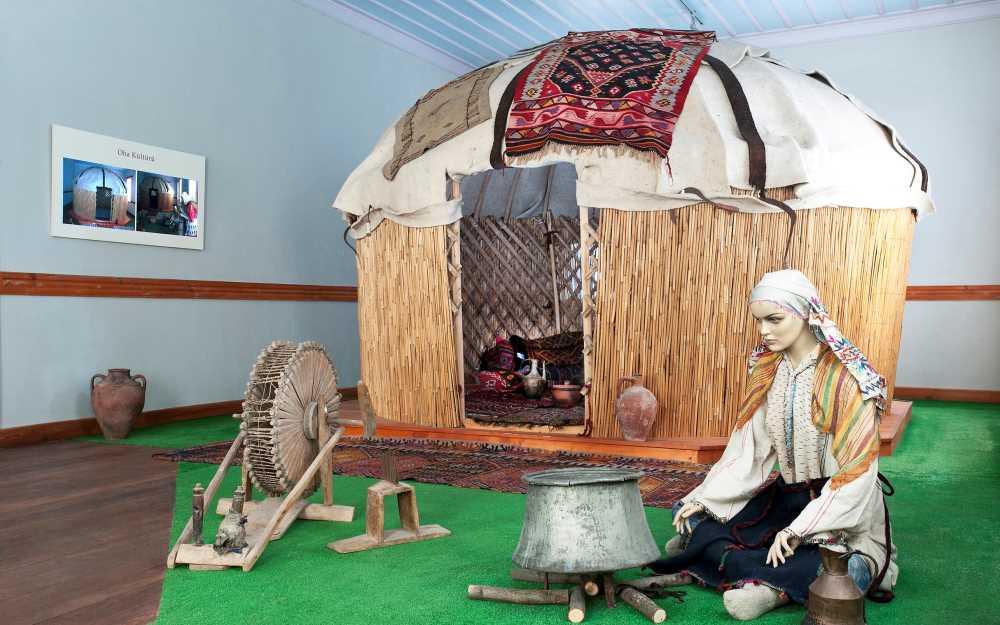
The ethnography section showcases artifacts that illustrate the daily life and culture of a region. This section particularly features reconstructions and objects related to the founding period of the Ottoman Empire.
Visitors can see:
- Traditional Clothing: Historic garments and adornments from the Bilecik region.
- Everyday Objects: Kitchen utensils made of ceramic and metal.
- Weapons: Various arms and tools from that era.