




Can Robots Think?
When we see robots with sparkling eyes, speaking, walking, or assembling car parts in factories, we feel excited as if they were living beings. These technological assistants, which help us, answer our questions, or clean our homes on their own, are becoming an integral part of our daily lives. But can these machines made of metal and wires truly think, or do they simply follow what they are told?
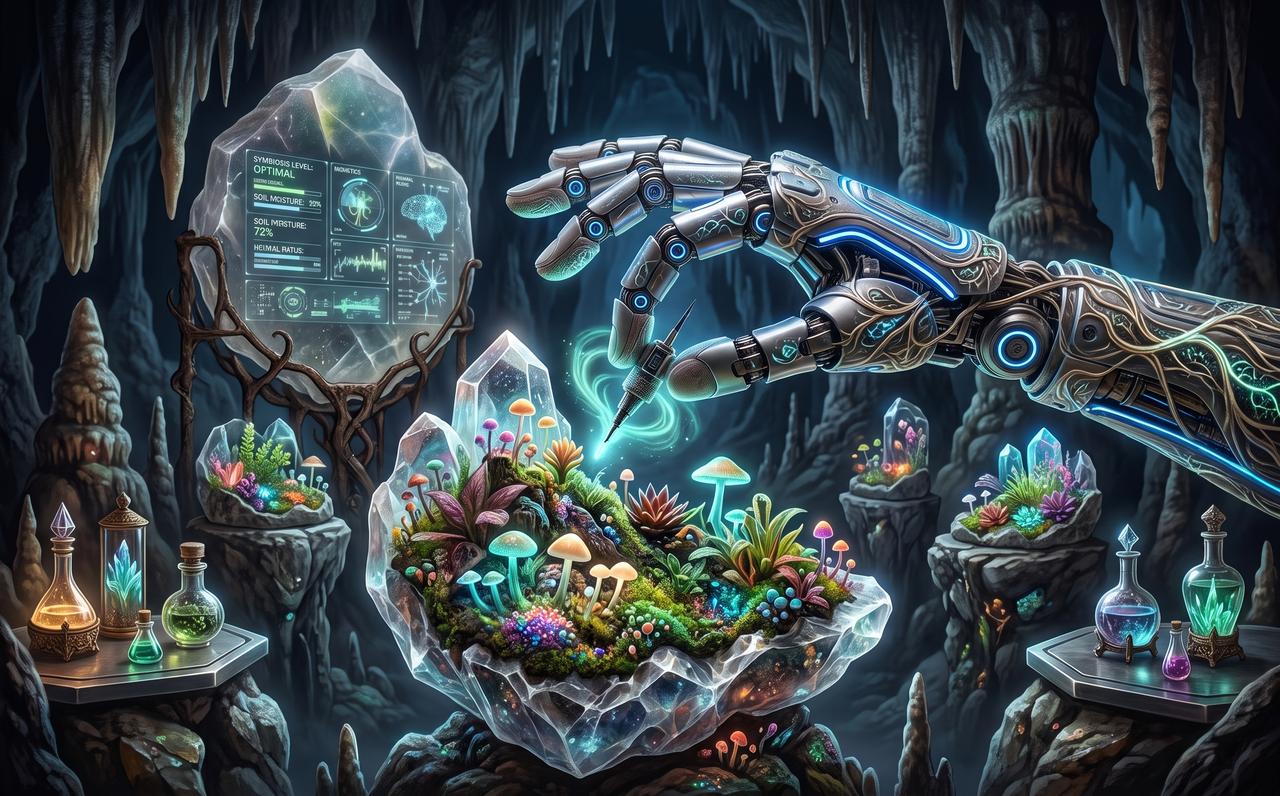
Can robots invent new things themselves? (Generated by artificial intelligence)
What Is a Robot and How Does It Work?
A robot is an automated machine that perceives its surroundings using sensors (sense organs), processes this information with a computer brain, and moves using motors.
For a robot to function, it requires three fundamental components:
- Sensors (Eyes and Ears): Components such as cameras, distance sensors, or thermometers enable the robot to understand what is happening around it.
- Control Board / Processor (Brain): It evaluates data received from sensors and decides what action to take.
- Actuators and Motors (Muscles): They move the robot’s arms, legs, or wheels according to commands from the brain.
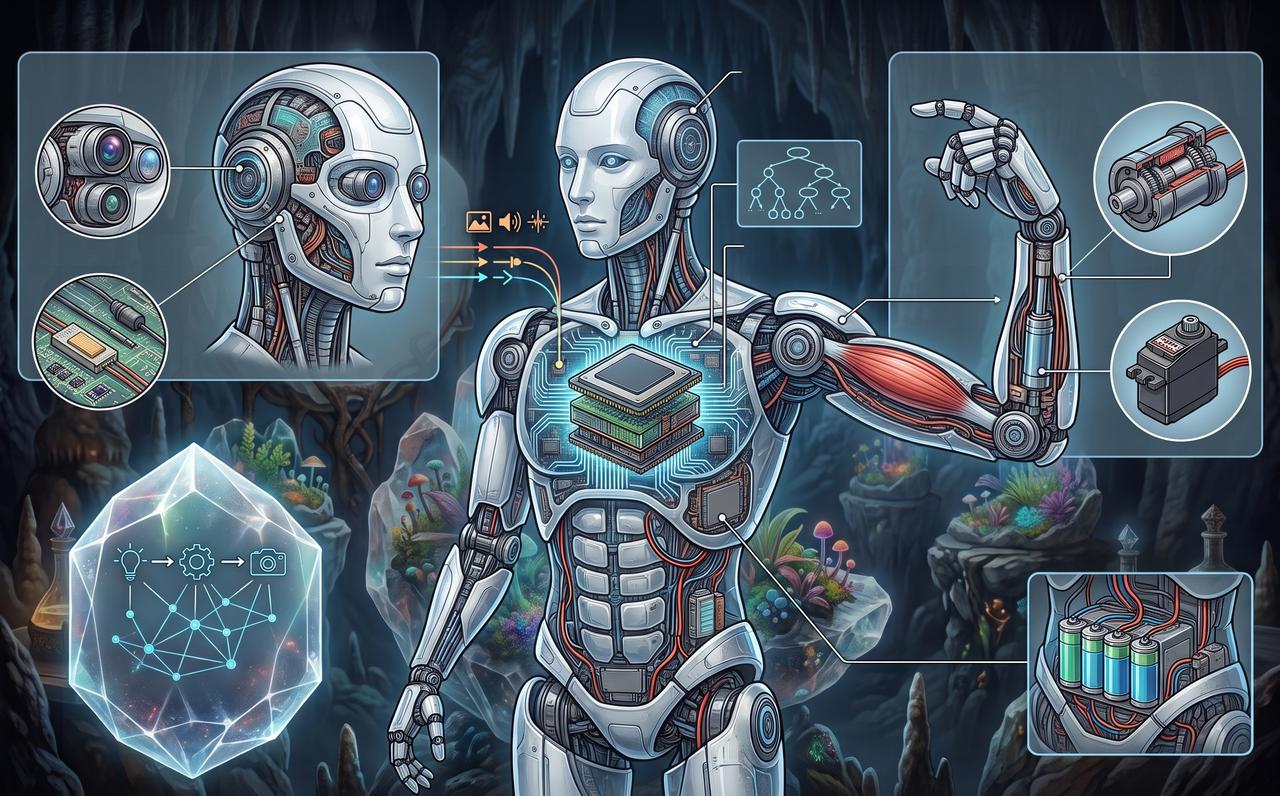
The mechanism of robots. (Generated with artificial intelligence)
Can Robots Really Think?
Short answer: No, they cannot think by feeling or imagining freely as humans do.
Humans feel joy, sadness, hunger, curiosity, and make decisions based on their own will. Robots, however, simply follow the programs and algorithms they have been coded with. A robot may defeat the world chess champion or solve thousands of mathematical calculations in a second. Yet, while doing so, it does not exclaim “I won!” in delight or derive pleasure from playing chess. It merely calculates mathematical probabilities.
Artificial Intelligence and Logical Reasoning
Today, thanks to “Artificial Intelligence” (AI) technology, robots can learn by analyzing thousands of pieces of information and make decisions that resemble human reasoning. For example, while cleaning, a robot may detect an obstacle in its path and say, “I cannot pass here, I must go around it.”
However, this does not mean the robot is thinking; it means it is rapidly applying rules and methods taught to it by computer engineers. In other words, artificial intelligence learns, recognizes patterns, and solves complex problems, but it does not possess consciousness or emotions.
A Brief History of Robots
The idea of robots is much older than we think!
- Al-Jazari’s Automata: The Muslim scientist Al-Jazari, who lived 800 years ago, designed the first water-powered automated machines and mechanical human-like automata, becoming a pioneer of robotics.
- Modern Robots: In the mid-20th century, the first industrial robots began to be used in factories. Today, we use robots in every field, from space exploration to medical surgery.
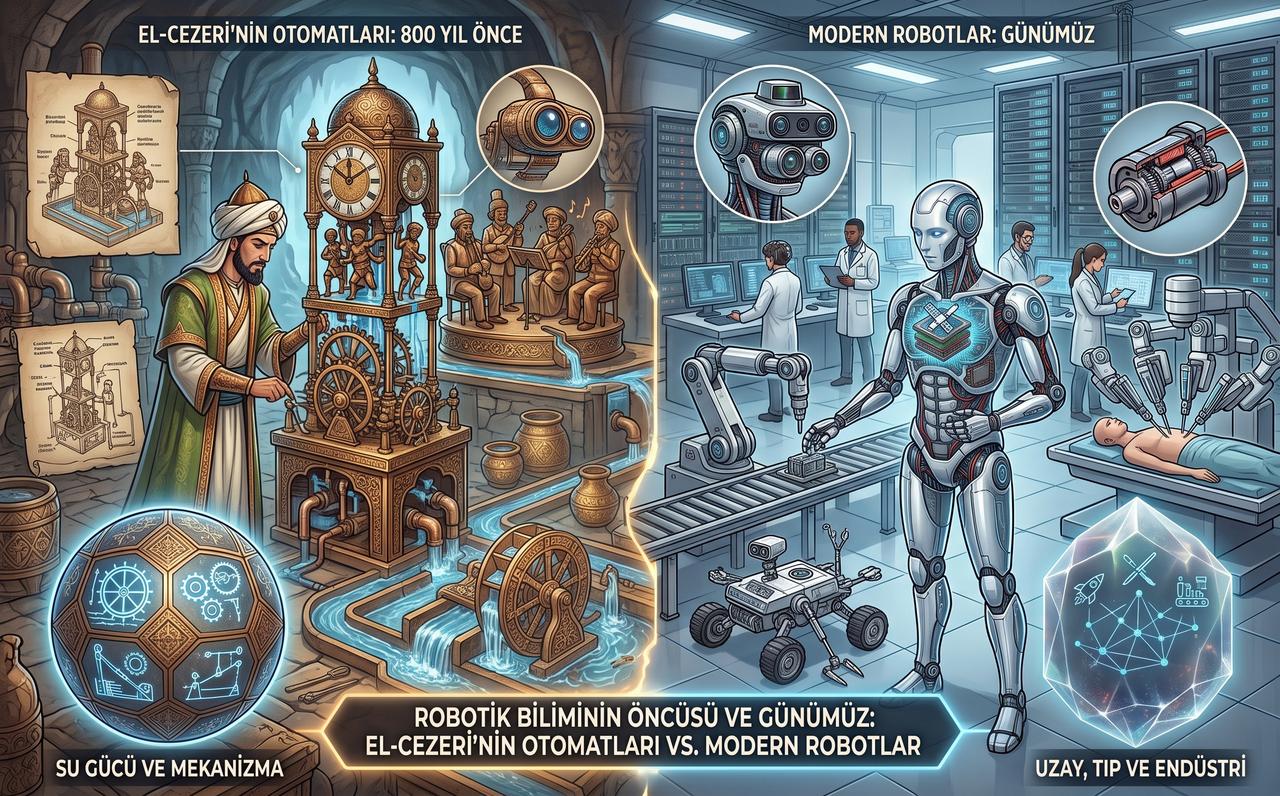
The historical transformation of robots. (Generated by artificial intelligence)