



Carnation: Tiny But Brave!
Gelinciks are among the smallest predatory mammals found in Türkiye. Thanks to their slender and elongated body structure, they can move swiftly and agilely between trees and shrubs. Their flexible bodies grant them the ability to bend easily in almost any direction and navigate through narrow spaces. Though tiny, they are complete hunters.
What Do They Look Like?
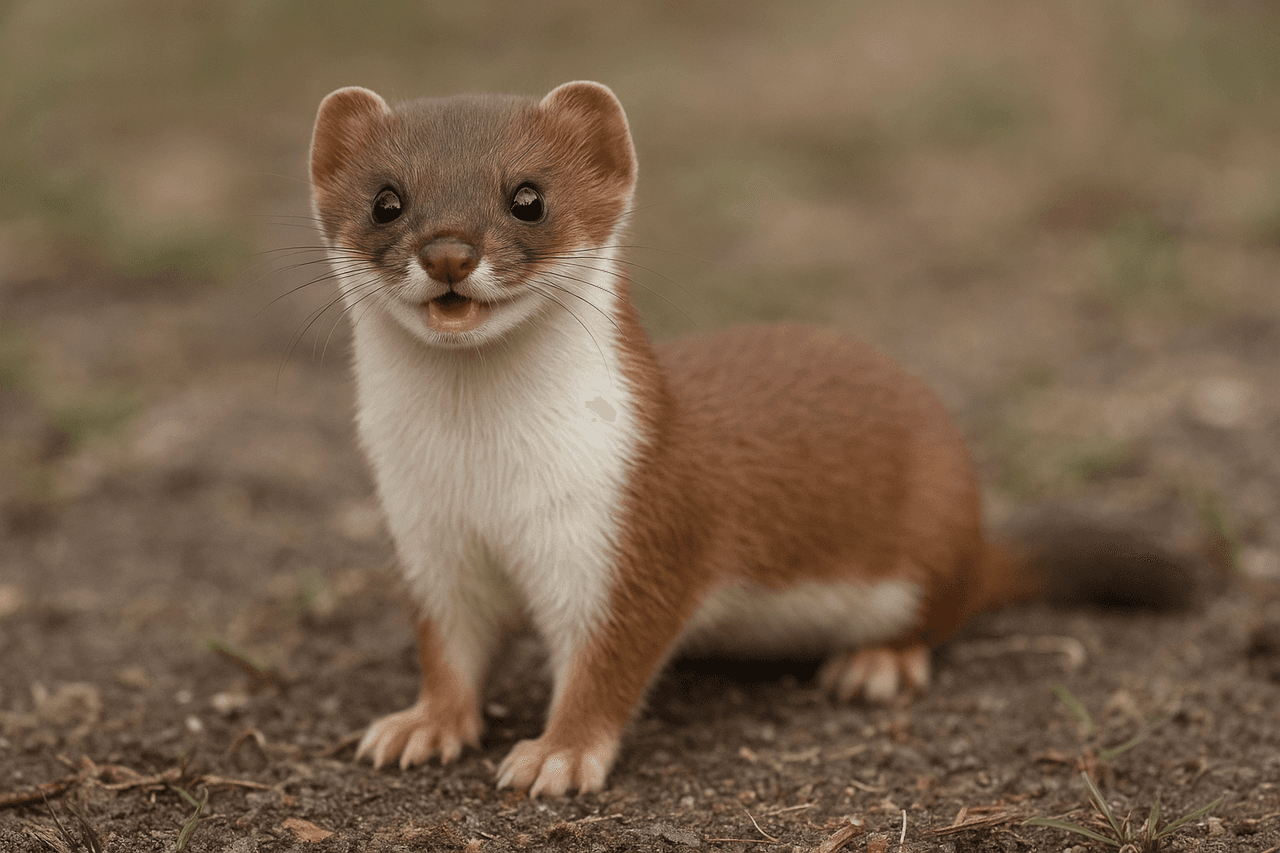
Their body length ranges from 15 to 19 cm, and they weigh only between 40 and 56 grams. Their bodies are slender and long, with short tails. Their backs are brown, their bellies are white, and sometimes they have brown spots on the abdominal area.

Gelincik (pexels)
What Do They Eat?
Their sense of smell, hearing, and vision are highly developed, allowing them to easily locate prey. Their favorite food consists of small rodents such as mice. However, when food is scarce, they also eat birds, eggs, young rabbits, squirrels, moles, lizards, frogs, and even fish. They are even capable of hunting animals larger than themselves!

A Gelincik Placing Bird Feathers into a Tunnel Created by Mice (Generated by Artificial Intelligence.)
Where Do They Live?
Gelinciks inhabit Eurasia, North Africa, and North America; in Türkiye, they are found in many regions. Their preferred habitats include forest edges, agricultural fields, grasslands, and vineyards. They avoid dense forests, deserts, and mountains higher than 3,000 meters.
Seasonal Fur Color Change!
As summer ends, daylight hours begin to decrease. This change affects hormone levels in gelinciks. With the arrival of autumn, their winter fur gradually emerges, and the dark summer coat sheds. As winter approaches, their fur becomes completely white. In spring, as days grow longer again, brown fur returns. This color-changing cycle repeats every year.
Lifestyle
Gelinciks prefer hunting at night but can also be active during the day. They typically use abandoned mouse tunnels for nesting and line them with soft bird feathers. Some individuals migrate, while those that stay behind sleep more during winter. They curl up in their dens and slow down their metabolism.
Family Life
Gelinciks give birth one to two times per year. Gestation lasts 37 days, and each litter produces one to seven young. Newborns are pink, hairless, and blind. They nurse from their mother for about 18 days and reach adulthood between four and eight months of age.

Female Gelincik and Her Young (Generated by Artificial Intelligence.)
Superpowers in the Ecosystem
Gelinciks help control rodent populations, thereby maintaining ecological balance. Without them, mice and other small rodents could multiply and cause damage to agricultural fields.
🎨 Activity: Coloring the Seasonal Fur
Draw or print two images of gelinciks. Color one with the summer fur pattern: brown back, white belly, and brown spots on the abdomen. Color the other with the winter fur pattern: pure white from head to tail!