



Coral Reefs: The Colorful Cities of the Ocean
Have you ever imagined a city thousands of feet beneath the sea, teeming with life and as colorful as a rainbow? Coral reefs are exactly such places! These reefs, the most crowded and lively neighborhoods of the ocean, are actually massive structures built by tiny animals. Come, let us uncover the secrets of these underwater cities together!
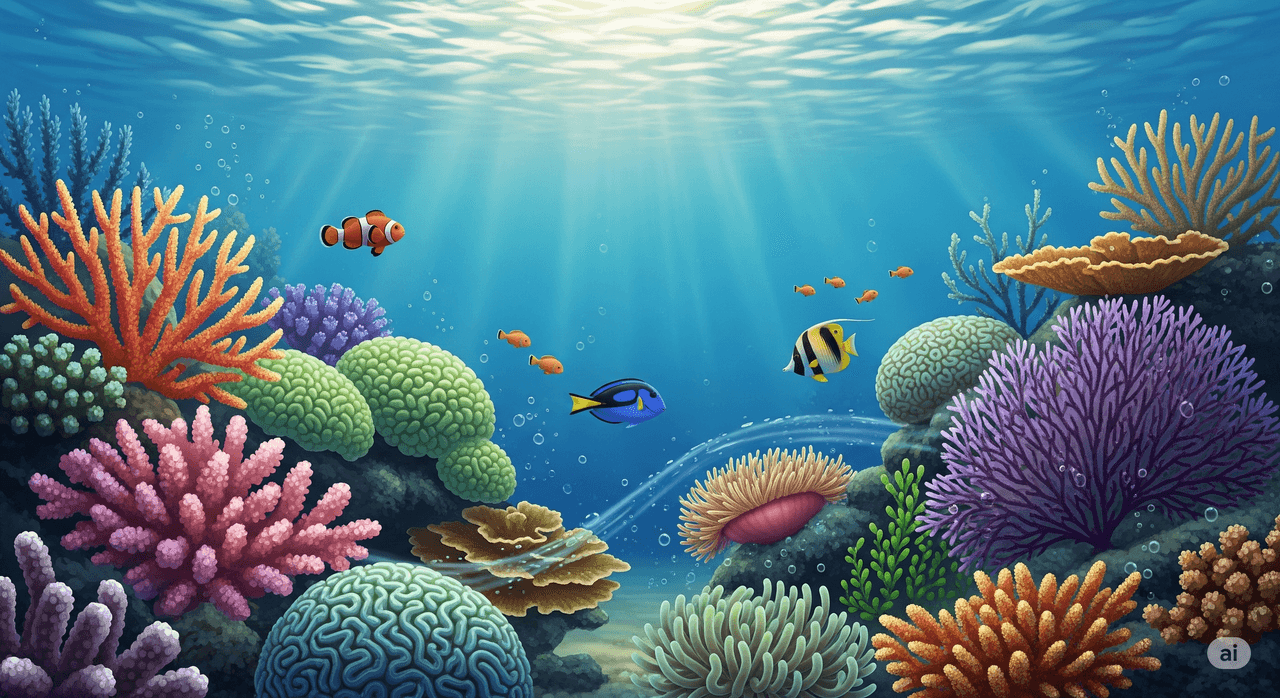
Colorful Corals (Generated by Artificial Intelligence)
What Exactly Are Corals: Plant or Animal?
Although their colorful appearance resembles underwater flowers, corals are not plants—they are animals! Each individual coral animal is called a polyp. A polyp is a tiny sac-like creature with small arms, called tentacles, at its top, which it uses to catch food. Millions of polyps come together to form a vast coral colony, essentially a huge family.
How Do They Build These Colorful Homes?
Polyps build a hard shelter to protect themselves from ocean waves and other creatures, much like a snail’s shell. They construct this home using calcium carbonate dissolved in seawater. Over generations, millions of polyps stack these hard structures on top of one another. When a polyp dies, it leaves its home as an inheritance to the next generation. Like LEGO bricks stacked one upon another, these homes gradually merge over time to form enormous coral reefs. This is why they are also called the “architects of the ocean”!
Who Is the Coral’s Best Friend?
There is a delightful secret behind why corals are so colorful and can feed so easily: tiny algae called Zooxanthellae (pronounced zooks-an-THEL-ee). These algae live inside the polyps, giving them their beautiful colors and producing food through photosynthesis. This relationship is like the best friendship: the polyp provides a safe home for the algae, and the algae, in return, prepares delicious meals for the polyp!

The Tiny, Hardworking Algal Friends Inside a Coral Polyp (Generated by Artificial Intelligence)
Why Are Coral Reefs So Important?
Coral reefs are not only beautiful—they are vital to the entire ocean.
- Habitat for Life: One in four marine species lives in coral reefs. They serve as both shelter and playground for fish, crabs, starfish, and octopuses.
- Coastal Protectors: Reefs located near shorelines break the force of giant waves, protecting beaches and coastal cities from storms. They act like a natural shield!
Why Are These Colorful Cities in Danger?
Unfortunately, these amazing underwater cities are under threat.
- Warming Oceans: When ocean waters become too warm, corals experience stress and expel their colorful algal friends. This is called “coral bleaching”. Without their color and primary food source, corals cannot survive.
- Pollution: Trash and especially plastics dumped into the sea cover the surface of corals, blocking their ability to breathe.
- Acidifying Waters: Due to air pollution, the oceans are becoming slightly acidic, like vinegar. This acidic water makes it harder for corals to build their hard homes and can even dissolve them.