



What is an Ocean?
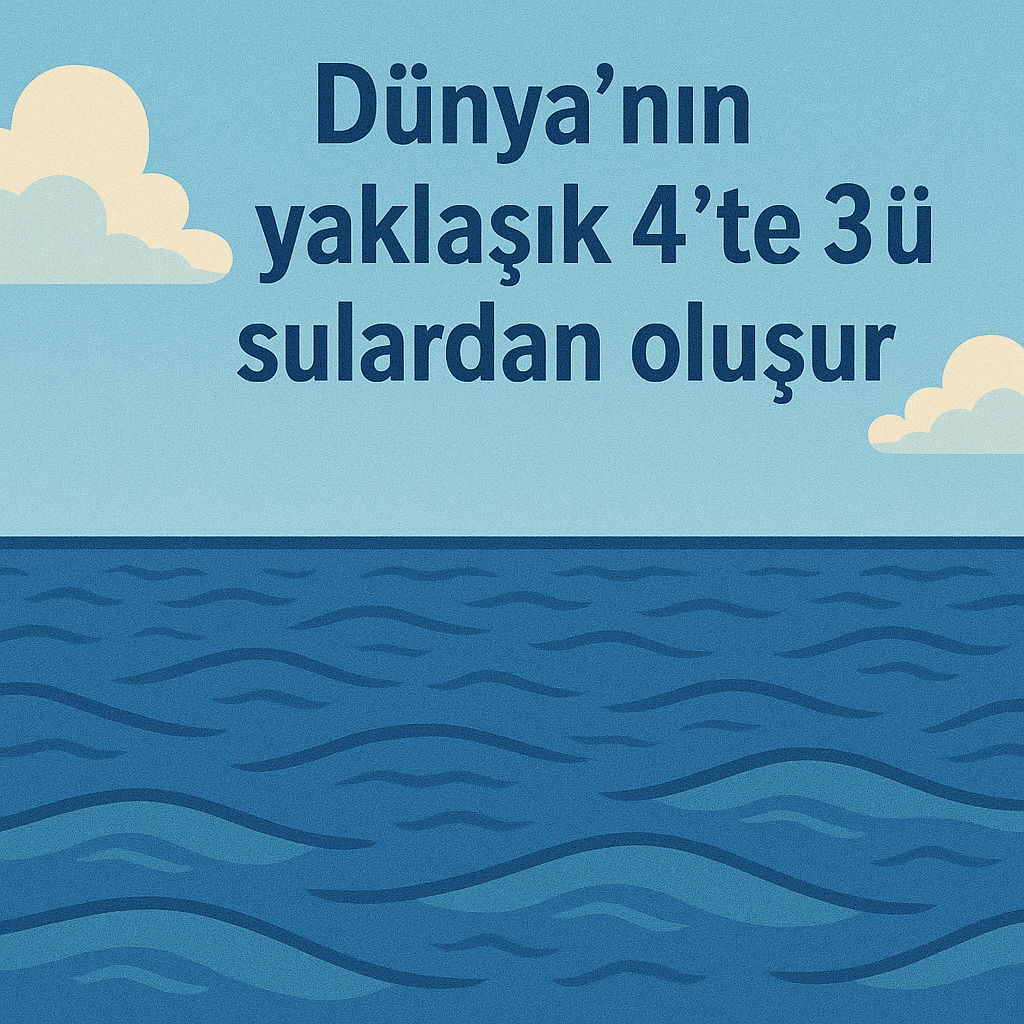
The ocean is the name given to the largest bodies of saltwater on Earth. Approximately 71% of the planet’s surface is covered by water, and most of this water is contained in the oceans. Oceans are vast water areas that separate the continents.
(Generated by artificial intelligence)
What Are the Names of the Oceans?
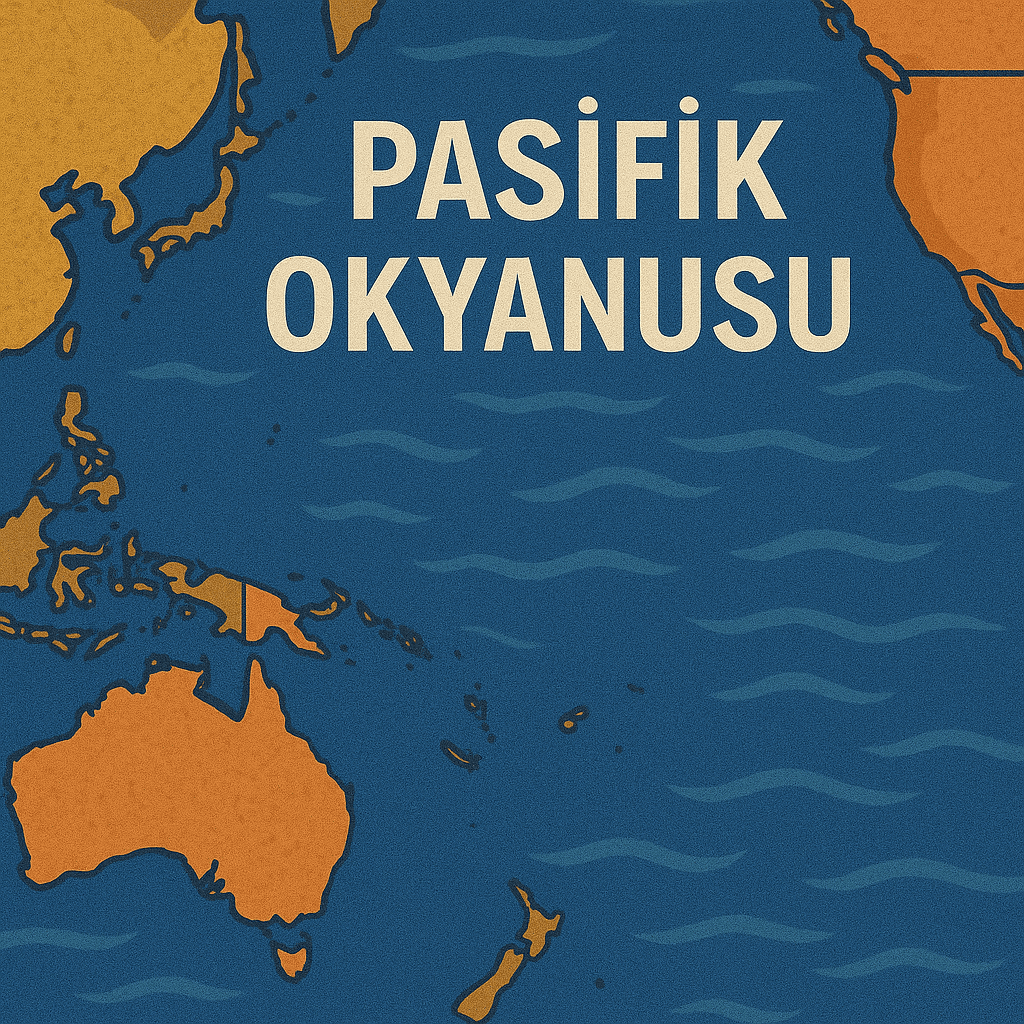
- Pacific Ocean (largest)
- Indian Ocean
- Southern (Antarctic) Ocean
- Arctic Ocean (smallest)
(Generated by artificial intelligence)
Characteristics of the Oceans
- They consist of saltwater.
- Their depths can reach several kilometers.
- They contain massive waves and strong currents.
- Mountains, trenches, and volcanoes are found on the ocean floor.
What Lives in the Oceans?
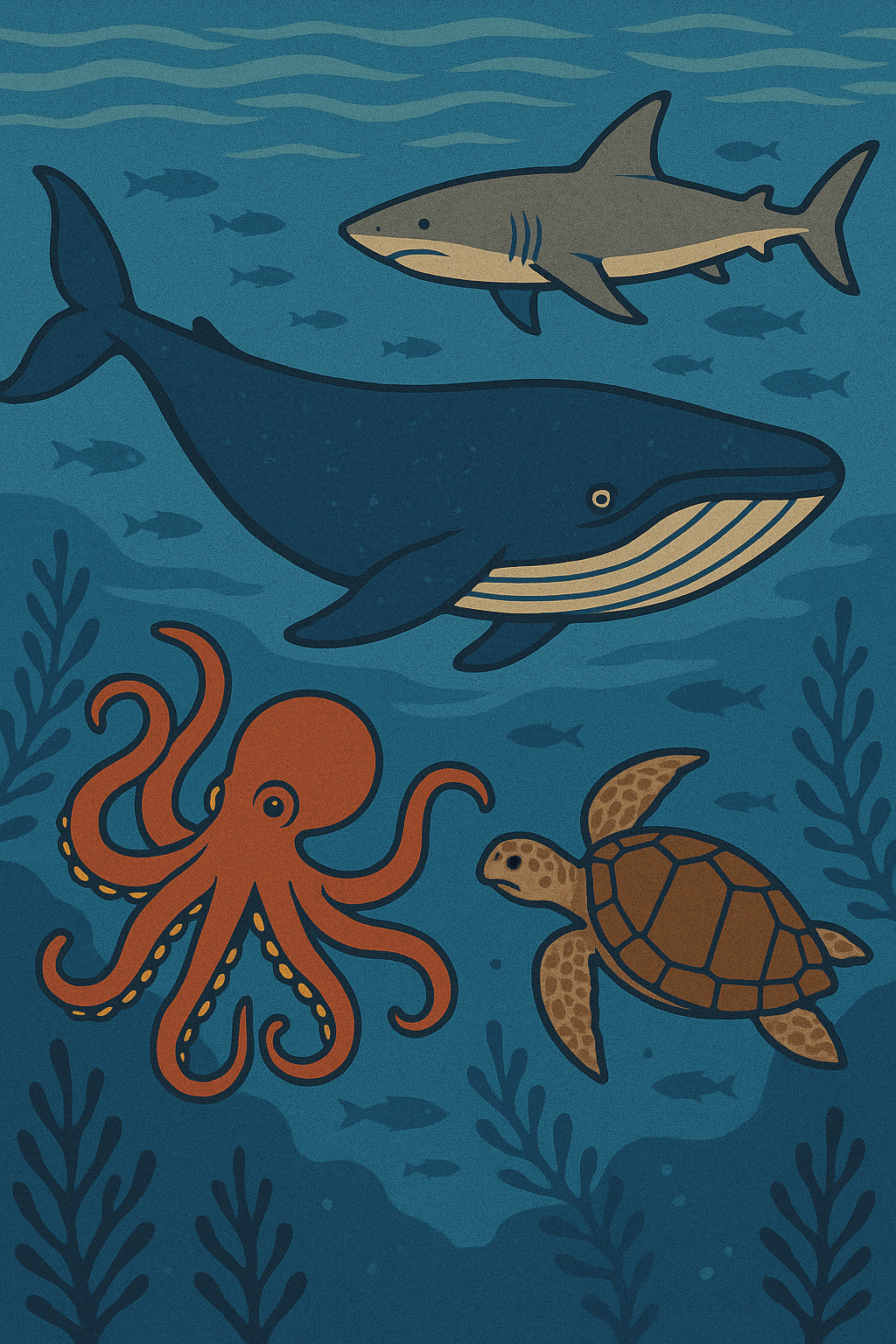
- Large animals such as whales, sharks, octopuses, and sea turtles
- Corals, sea anemones, and millions of different fish species
- Microscopic plankton are also vital to ocean life
(Generated by artificial intelligence)
The Importance of the Oceans to Humans
- They regulate the climate and influence weather patterns.
- Most of the oxygen in the atmosphere is produced by marine organisms in the oceans.
- They provide food, salt, medicines, and energy resources.
- They offer routes for transportation and trade.
- They are highly valuable for marine tourism and scientific research.
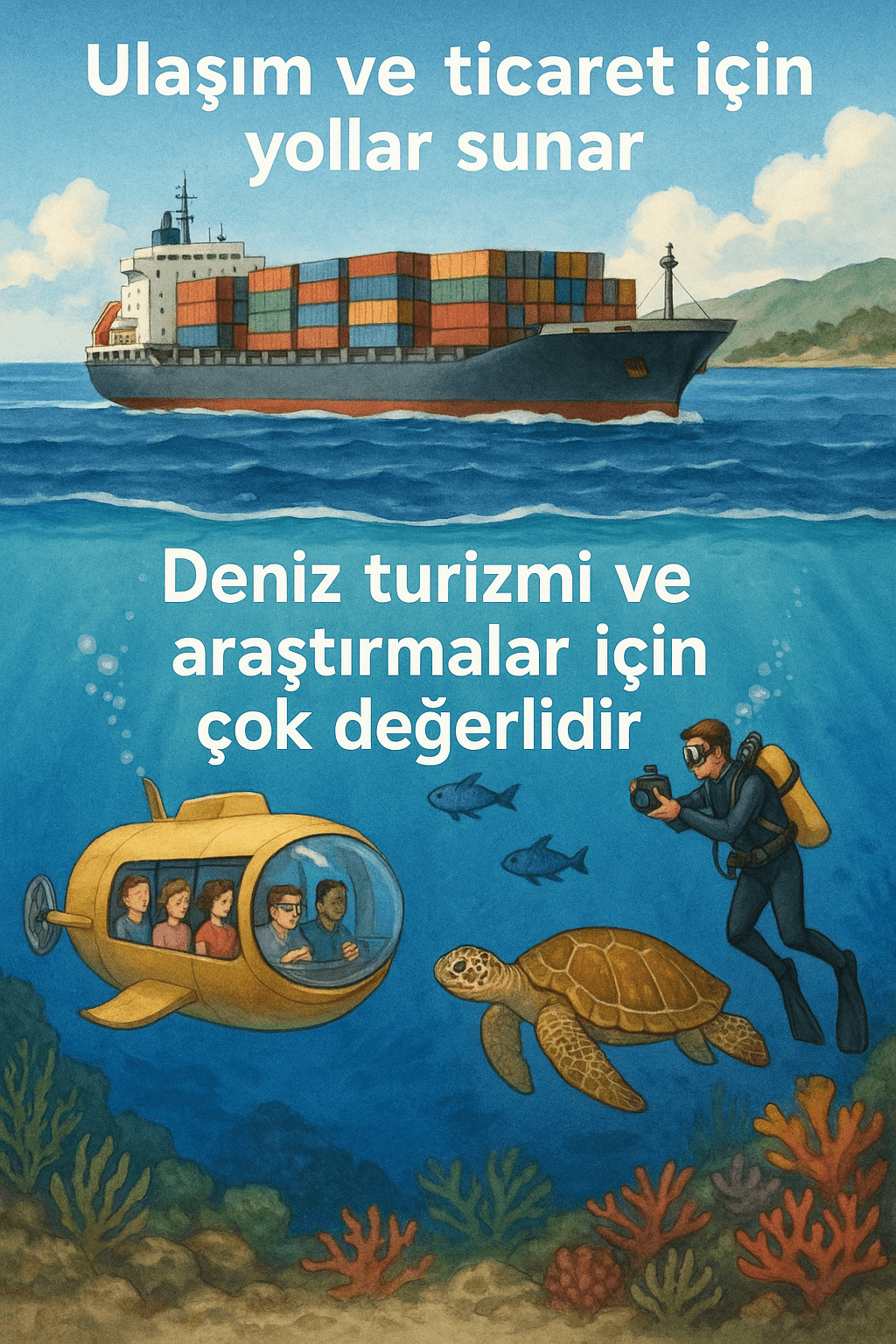
(Generated by artificial intelligence)
Oceans and Science
- Scientists use specialized submarines and robots to explore the deep ocean.
- Satellite imagery is used to monitor ocean temperatures and currents.
- The effects of problems such as climate change and pollution are also observed in the oceans.
Life in the Ocean
While some organisms live near the surface, others thrive in darkness at depths of thousands of meters. Each layer hosts a different type of life. As depth increases, pressure rises and temperature decreases.
References
National Geographic Kids. “Ocean Facts for Kids.” https://www.natgeokids.com/uk/discover/geography/physical-geography/ocean-facts/
NOAA. “What is the Ocean?” National Ocean Service. https://oceanservice.noaa.gov/facts/ocean.html
TÜBİTAK Bilim Genç. “Dünya’nın Mavi Yüzü: Okyanuslar.” https://bilimgenc.tubitak.gov.tr/makale/dunyanin-mavi-yuzu-okyanuslar
UNESCO Ocean Literacy Portal. “What is the Ocean?” https://oceanliteracy.unesco.org/ocean-literacy/what-is-the-ocean/