




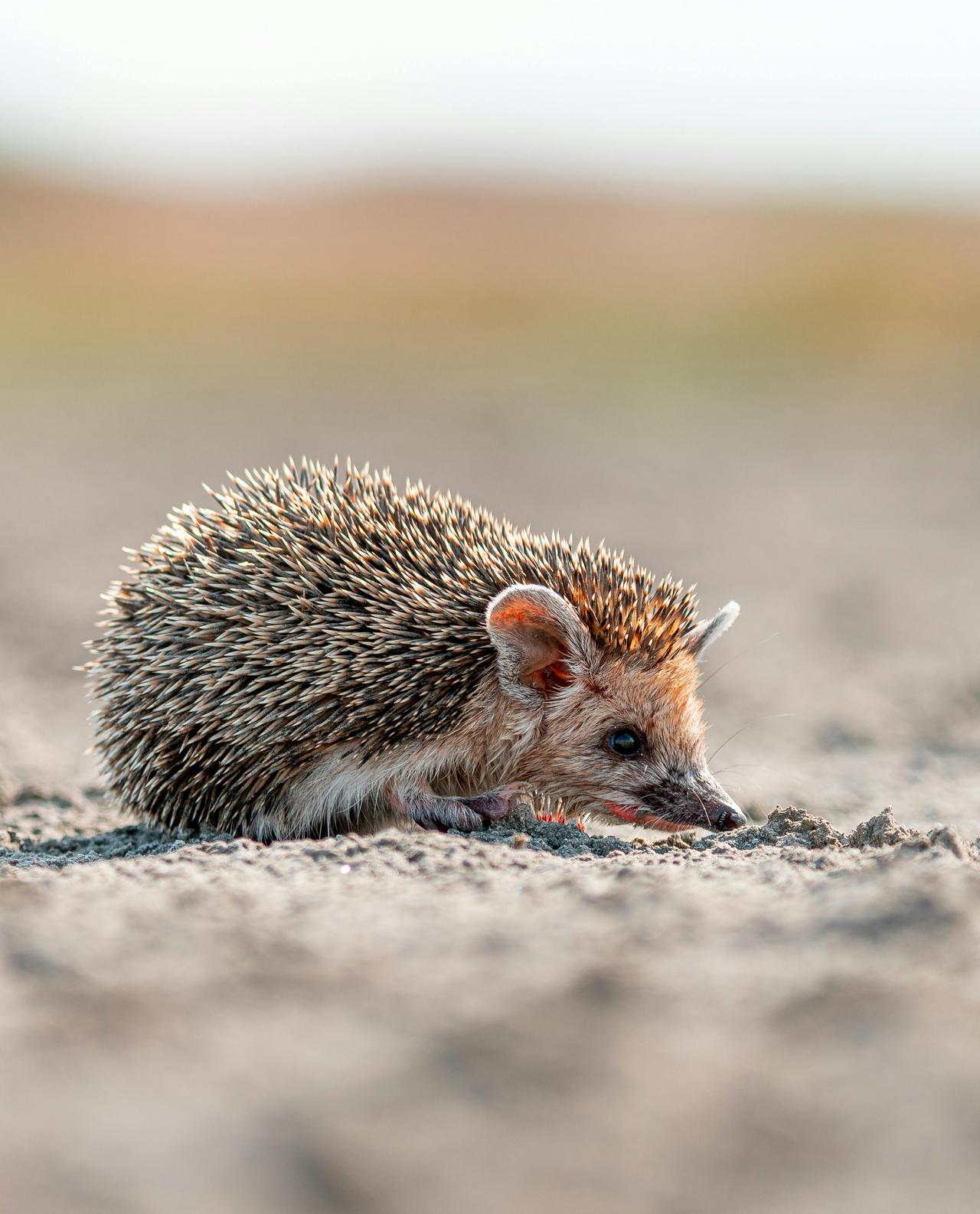
Desert Hedgehog
The desert hedgehog (Paraechinus aethiopicus) belongs to the family Erinaceidae. It is one of the resilient and distinctive animals of desert environments. One of its most notable features distinguishing it from other hedgehogs is that the spines covering its back are relatively shorter and more widely spaced. Its sharp spines serve as its primary defense mechanism when threatened.
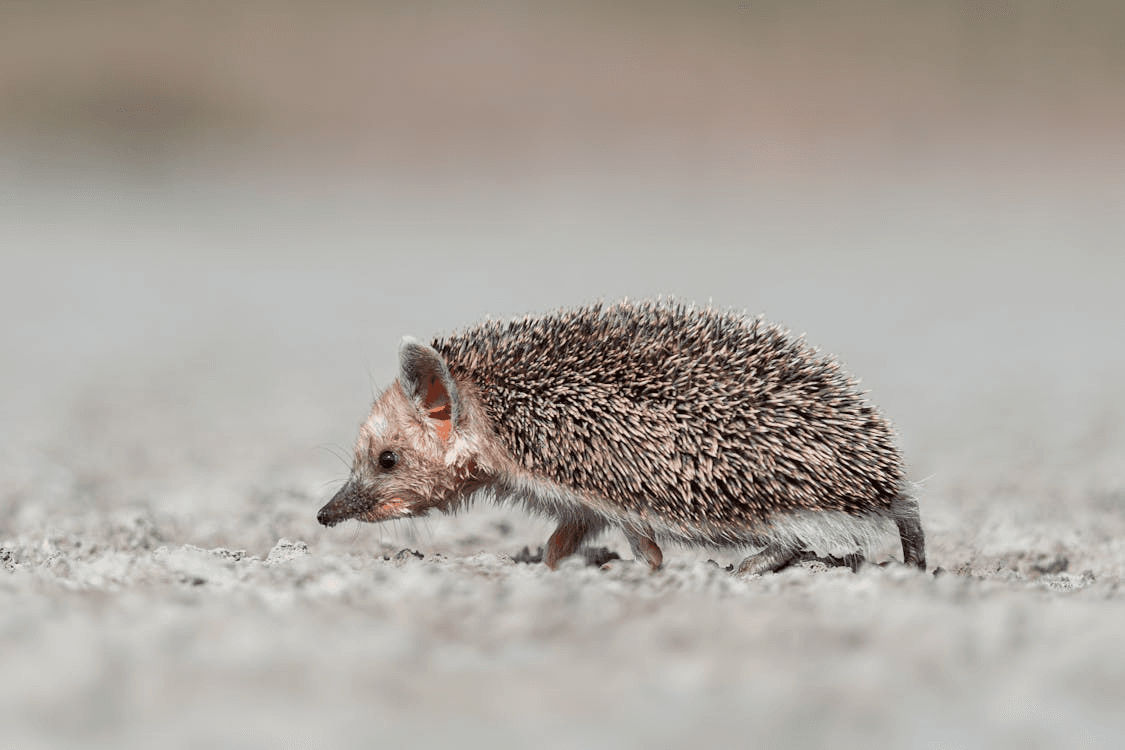
A desert hedgehog walking on sand (Pexels)
What Colors Do They Have?
The color of the desert hedgehog’s spines and fur can vary to match its surrounding environment.
Spines: Typically light brown, yellowish, or gray in color, with tips that are darker, approaching dark brown.
Fur: The parts of the body not covered by spines are covered with softer fur that is pale yellow, gray, or sandy in color.
It is not found in Türkiye; in its natural desert habitats, its coloration provides camouflage by blending with sand and rocks. The underside is generally light-colored, close to white.
How Large Do They Grow?
The body length of the desert hedgehog, from head to tail, ranges from approximately 14 to 29 cm. Their weight typically falls between 280 and 510 grams.
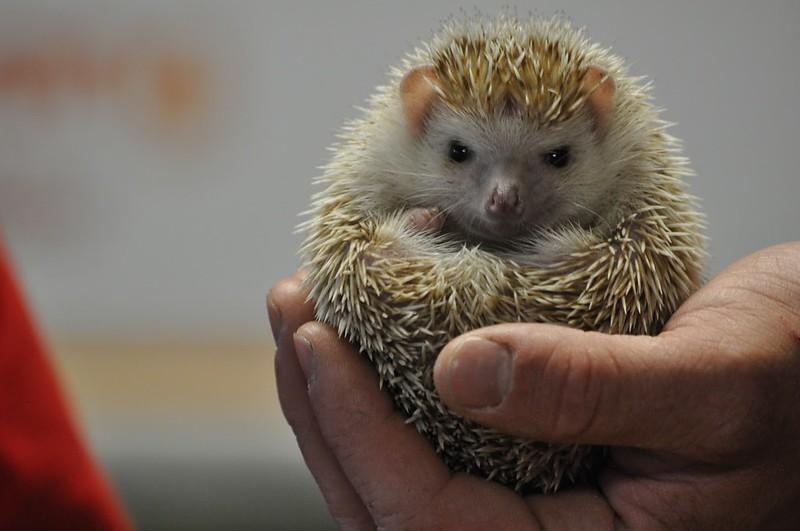
A yellowish-spined desert hedgehog (Flickr)
What Do They Eat?
In the wild, desert hedgehogs feed on:
Insects, small invertebrates, lizards, and bird eggs.
They also consume plant seeds and fruits whenever the opportunity arises.
Where Do They Live?
Desert hedgehogs are primarily found in the arid regions of North Africa and the Middle East, most commonly in:
- The Sahara Desert,
- The Arabian Peninsula and surrounding areas of Iran.
They select habitats such as rock crevices, scrublands, and sandy areas. To escape the heat of the day, they typically take shelter in caves, fissures, or burrows they dig themselves.

A desert hedgehog curling into a ball for protection (Flickr)
Contributions to the Ecosystem
Desert hedgehogs help maintain natural balance by reducing populations of insects and other small animals they consume, thereby preventing the overpopulation of harmful pests. Additionally, seeds dispersed through their droppings aid in the germination of new plants. In this way, they contribute to the continuity of the desert ecosystem.
Conservation Status
Desert hedgehogs are classified by the International Union for Conservation of Nature (IUCN) as “Least Concern.” This indicates that their wild populations are currently not at risk, although the protection of their habitats remains important.