



Why Are Desert Nights Cold?
Deserts are vast land areas that receive very little rainfall and have sparse vegetation. A region is considered a desert if its annual precipitation is below 250 mm. However, the term desert does not only refer to high temperatures but also means aridity.

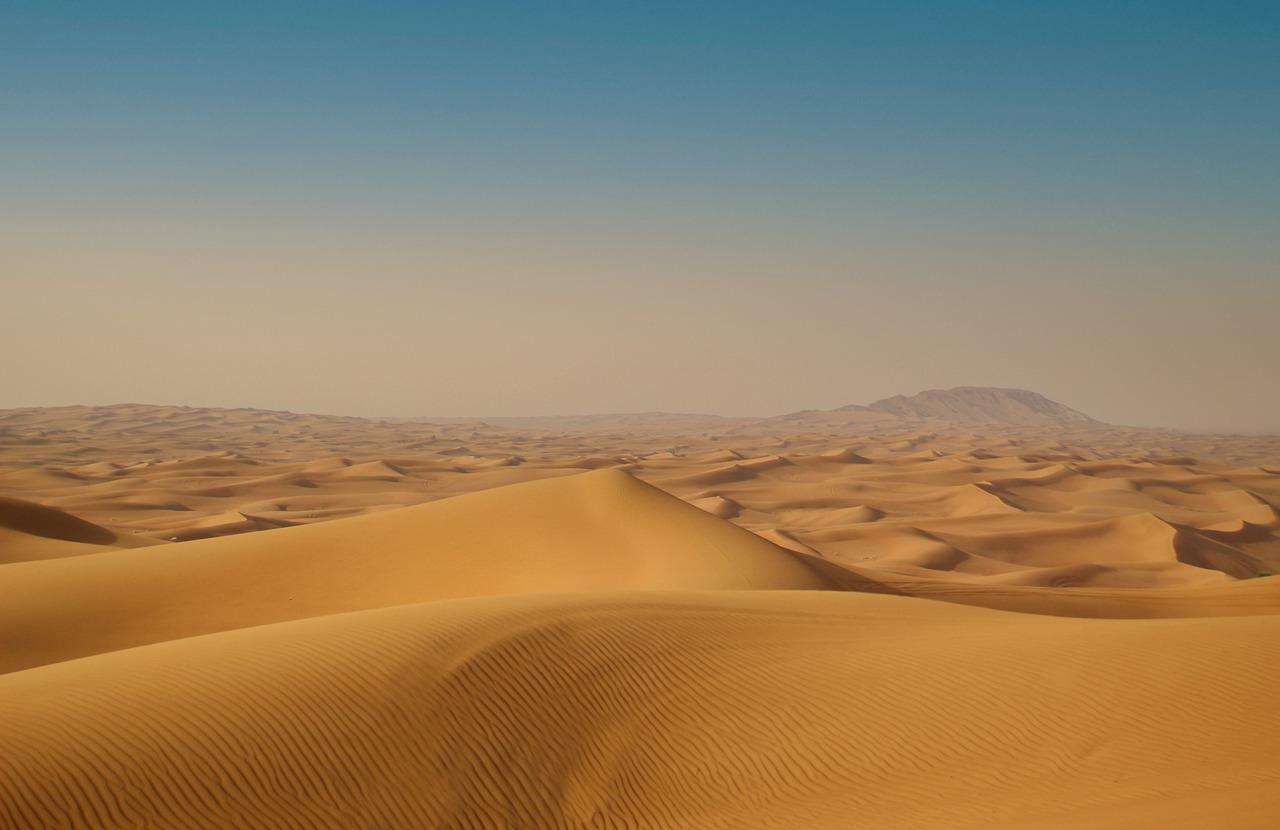
Desert Image. (Pixabay)
What Are the Characteristics of a Desert Climate?
In desert climates there is a large temperature difference between day and night. During the day, sunlight directly reaches the ground and the air heats up significantly. However, when night falls, this heat rapidly dissipates.
Why Is the Air in Deserts Dry?
Deserts are typically located between 20° and 30° latitude. In these regions, sinking dry air dominates. This air carries no moisture. Without moisture, rain cannot form and the air remains dry.
What Happens When There Is No Water Vapor?
Normally, water vapor in the atmosphere retains the heat absorbed during the day throughout the night. But in deserts, water vapor is very scarce. As a result, the heat accumulated in the soil during the day rapidly escapes into space at night.
Why Can’t the Soil Retain Heat?
Desert soils are generally sandy. Sand absorbs heat quickly but also releases it quickly. Additionally, because there is no vegetation cover in deserts, the soil surface is completely exposed. This causes the soil to cool rapidly at night.
How Do Plants Affect Temperature?
Plants produce water vapor, which creates humidity in the air. They also provide shade and help balance the temperature difference between the soil and the air. However, in deserts there are insufficient plants to establish this balance.
How Much Do Night Temperatures Drop?
In some hot deserts, night temperatures can fall below 0°C. For example, in the Sahara Desert, daytime temperatures of 45°C during summer months can drop to as low as 5°C at night. This represents a dramatic change even for the human body.
Animals Living in Deserts
Because deserts are extremely hot and dry, life there is difficult. However, some animals survive these harsh conditions by developing special adaptations. Most of these animals are nocturnal. During the day, when temperatures are extreme, they hide in the shade or in underground burrows. At night, when the air cools, they emerge.
Some Desert Animals
Snakes – They hide underground during the day to keep their bodies cool.
Scorpions – They come out at night and hide under rocks or in cracks during the day.
Lizards – Their sand-colored skin helps them blend in, and by remaining motionless they minimize water loss.
Desert fox (fennec) – Its large ears enable excellent hearing and help regulate body temperature.
Insects – They can survive for long periods without water.
Camels – They are among the animals best adapted to desert life. Their humps store fat, not water. They can endure long periods without food or water. Long eyelashes, closable nostrils, and broad feet provide perfect adaptation to desert conditions, including sandstorms.
How Do Animals Adapt to This Environment?
-They hide during the day and become active at night.
-They consume very little water.
-Their skin or shells prevent water loss.
-Their color matches the sand and sun, making them hard to spot.
-Their bodies are resistant to heat. For example, the camel is resistant to both heat and dehydration.

Camel Image. (Pixabay)
Are There Cold Deserts?
Yes! Places like Antarctica and Greenland are also classified as cold deserts due to low precipitation. In these regions, the difference between day and night temperatures is also very pronounced.