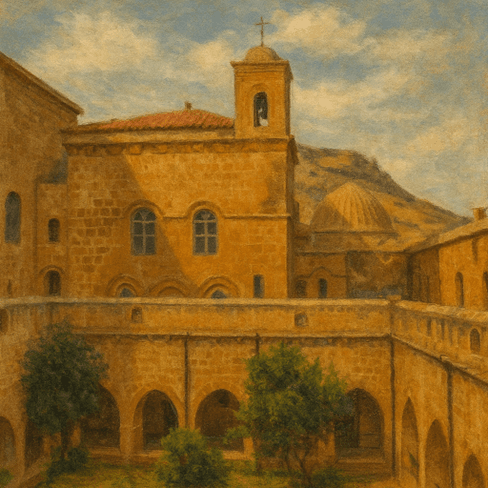




Deyrulzafaran Monastery
The Journey from the Sun to Saffron
The Deyrulzafaran Monastery is situated on a high hill overlooking the Mardin Plain, four kilometers east of Mardin. This magnificent structure has existed since the 5th century. When first built, it was a Sun Temple. Later, the Romans used it as a fortress. Over the centuries, as additional sections were added, the monastery gradually expanded and took its present form in the 18th century.
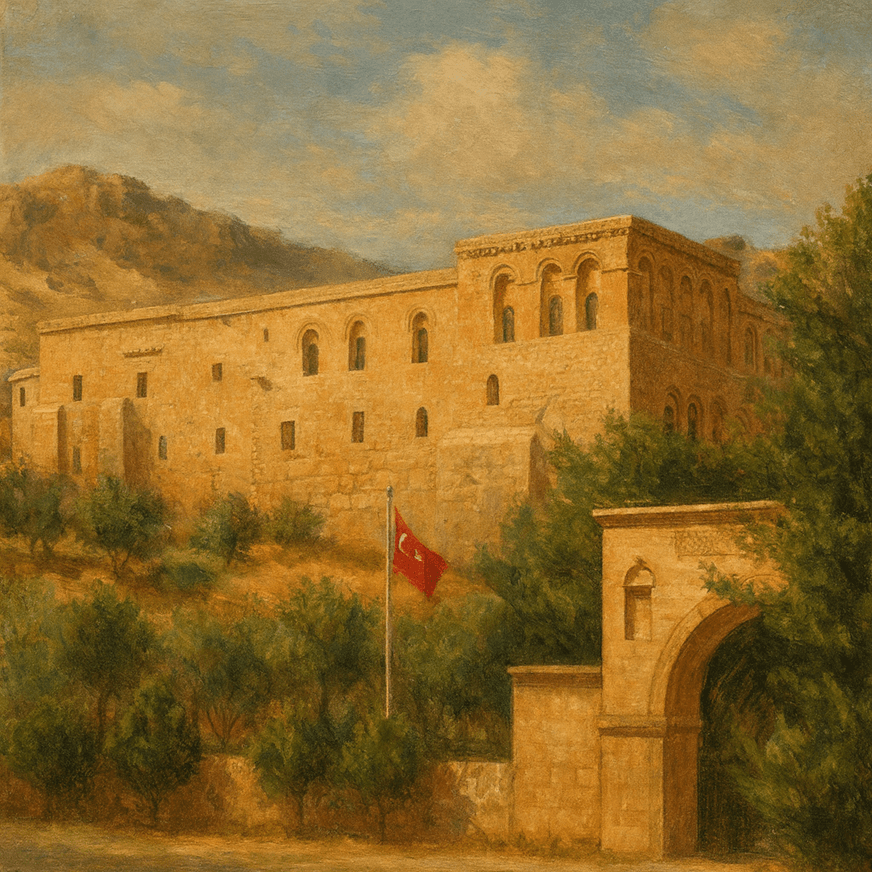
(Generated by Artificial Intelligence)
The Story of the Names
In its early years, the monastery was known as the Monastery of Mor Shleymun, named after Saint Shleymun, who transformed the site into a monastery. In the 8th century, Saint Hananyo undertook major renovations. Afterward, the structure became known as the Monastery of Mor Hananyo. Beginning in the 15th century, the local population began calling it Deyrulzafaran due to the saffron plants growing around it. The word “Deyr” means “monastery”.
Deyrulzafaran and the Printing Press
The monastery was not only a place of worship but also a major educational center of the Syriac Church. In 1874, Patriarch Peter IV brought a printing press from England. Books were printed there until 1969. These publications were produced not only in Syriac but also in Arabic, Ottoman Turkish, and Modern Turkish. A periodical named Öz Hikmet was published until 1953. Some parts of the printing press are still on display today within the monastery and at the Kırklar Church in Mardin.
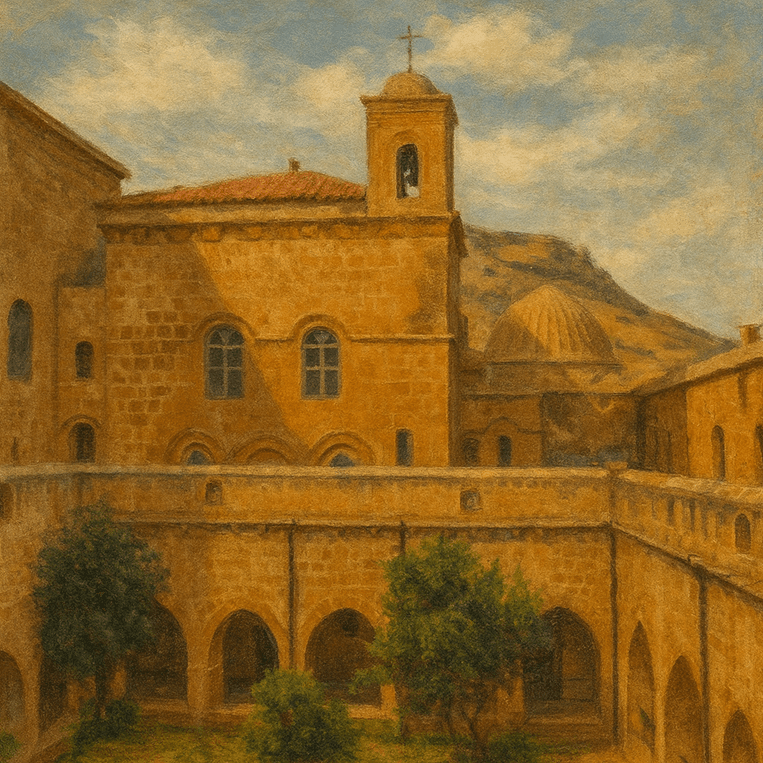
(Generated by Artificial Intelligence)
Deyrulzafaran Today
Today, the Deyrulzafaran Monastery remains one of the most important centers of the Syriac Church. The Metropolitan of Mardin resides here. Syriacs scattered across the world visit the site to pray and seek blessings. Local and international tourists also come to admire its stonework, domes, and rich history.