



ENES ibn MÂLİK
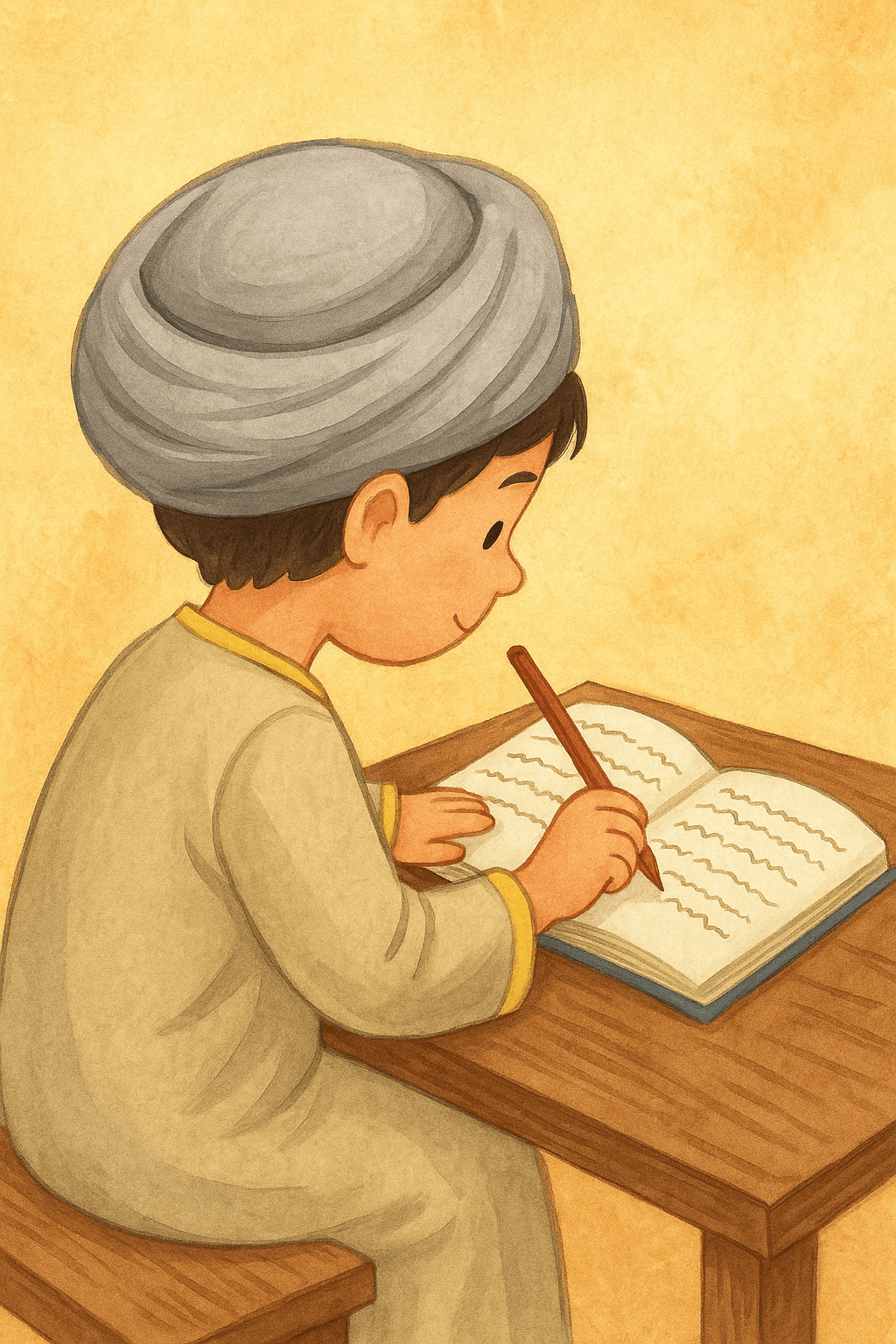
Anas ibn Mālik was one of the closest companions of the Prophet Muhammad. At the age of just ten, a bright and curious child, he entered the service of the Prophet in Medina. Throughout the years he spent with him, he played games and learned and taught Islam. Anas’s story shows how beautiful learning and being a good person can be!
Who Was Anas ibn Mālik?
Anas ibn Mālik was born in Medina in 612. His mother, Umm Sulaym, was among the earliest converts to Islam. Anas was brought to the Prophet by his mother and began helping in his household. The Prophet gave him the nickname “Abū Hamza,” derived from a type of sour bean he collected. Anas was a literate, intelligent, and cheerful child.
Some of His Adventures
Anas accompanied the Prophet Muhammad in many important events, including the Treaty of Hudaybiyyah, the Conquest of Mecca, and the Farewell Pilgrimage. Although he was too young to fight in the Battle of Badr, he never left the Prophet’s side.
One day, as a child, he caught a rabbit and brought it to his stepfather, Abū Talḥah. They cooked the rabbit and offered it to the Prophet Muhammad.
The Prophet was always very kind to Anas. Even when Anas made a mistake, he never scolded him, saying, “Let the child be; he does what Allah wills.” This taught Anas the importance of treating others with love and compassion.
What Anas ibn Mālik Taught
Anas transmitted everything he learned from the Prophet Muhammad throughout his life. The hadiths he narrated—the sayings of the Prophet—are still highly valued today. Anas lived for more than a hundred years and taught Islam to people in Basra. He wrote down what he had learned in notebooks and showed them to his students. He always paid close attention to truthfulness, often wondering, “Did I perhaps say something wrong?” The Prophet Muhammad prayed for Anas’s long life and blessings; indeed, the trees in Anas’s garden bore fruit twice a year!
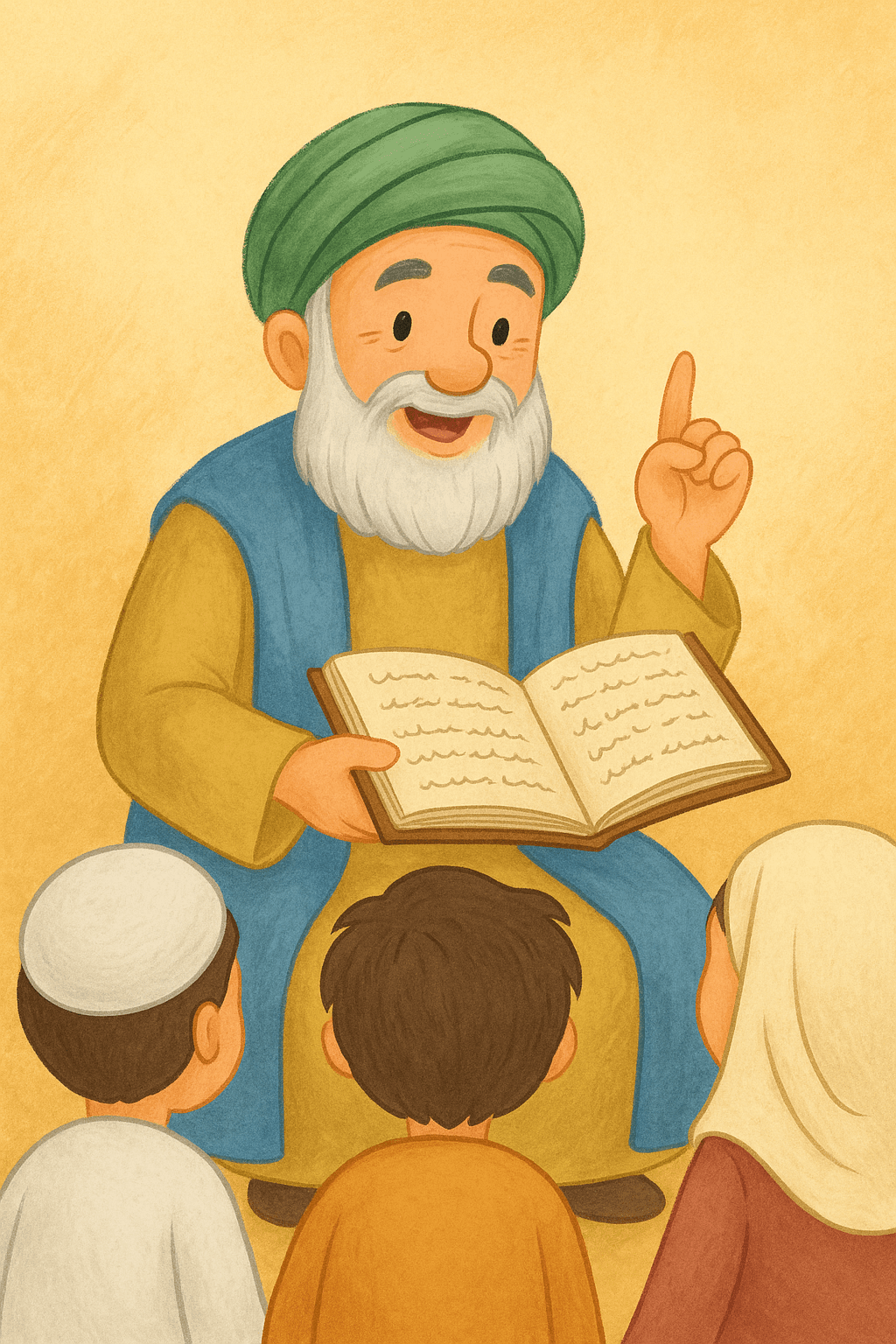
(Image generated by artificial intelligence.)
His Final Years
After the death of the Prophet Muhammad, Anas settled in Basra and continued teaching Islam there. He passed away at the age of 103 in the years 711–712. Anas always carried with him a stick and a hair strand belonging to the Prophet. Upon his death, as per his will, these items were buried with him. Anas’s life demonstrates how important loyalty and learning truly are.