




Frog
Frogs belong to a group of animals called amphibians, which can live both on land and in water. The word "amphibian" comes from the Greek for "two lives". These animals spend the first stage of their lives in water, growing and developing before moving onto land to continue their lives.
Where Do They Live?
Frogs live on nearly every continent except Antarctica. You can find frogs in a wide variety of habitats, from deserts to forests, high mountains to riverbanks. However, most prefer moist and wet environments. Some frogs live in trees, while others dig burrows underground. Certain frog species even lay their eggs in foam nests on the water’s edge.
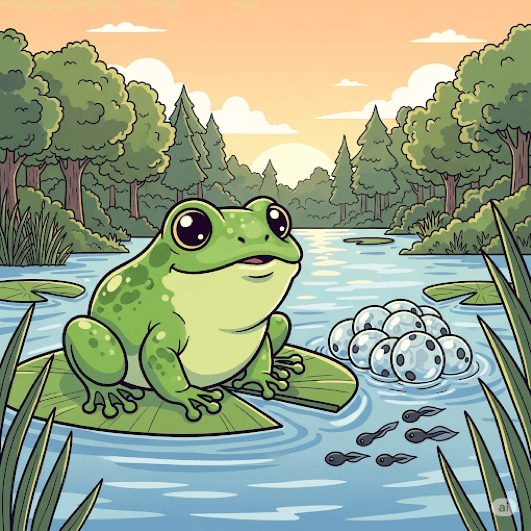
(Generated by artificial intelligence)
How Do They Grow?
The growth process of frogs involves a remarkable transformation called metamorphosis. This is a major change in an organism’s body, similar to how a caterpillar turns into a butterfly. Have you ever imagined a fish slowly transforming into an animal that walks on land? That is exactly what frogs do.
A female frog lays hundreds or even thousands of eggs in water. These eggs are called tadpoles. Tadpoles are small, tail-equipped creatures with gills that resemble fish. They swim in water and feed on algae and aquatic plants. Over time, tadpoles develop hind legs, then front legs. Their tails gradually disappear, and their gills are replaced by lungs, allowing them to breathe air. Once this transformation is complete, a tiny froglet is ready to emerge onto land.
What Do They Eat?
Adult frogs are carnivorous, meaning they feed on other animals. Using their long, sticky tongues, they catch small creatures such as flies, insects, and worms very quickly. Some large frog species can even eat mice or small reptiles. Frog larvae, or tadpoles, typically feed on algae, aquatic plants, and other small organisms in the water.

(Generated by artificial intelligence)
Body Features
Frogs have body features that help them live both in water and on land. Thanks to their long hind legs, they can jump up to 20 times their own body length. Their skin is smooth and moist, allowing them to breathe through it in addition to using their lungs. Some frogs have poisonous skin. These species display bright colors to warn predators of their toxicity.