




Fuat Sezgin: Pioneer of the History of Islamic Science
Fuat Sezgin is a Turkish academic recognized as one of the leading figures in the history of Islamic science. He has brought to light the scientific and technical heritage developed in the medieval Islamic world and challenged long-standing assumptions in Western historiography of science. He dedicated his life to documenting and promoting the scientific contributions of Islamic civilization.
🏡 Who is Fuat Sezgin?
Professor Dr. Fuat Sezgin was born on 24 October 1924 in Bitlis. He completed his primary education in Doğubeyazıt and his secondary education in Erzurum. He studied at the Institute of Oriental Studies, Faculty of Letters, Istanbul University. Between 1950 and 1956, he worked under Professor Dr. Hellmut Ritter in Germany, completing his doctoral thesis titled “The Sources of al-Bukhari.” He continued his academic work in Germany for many years and passed away in Istanbul in 2018.
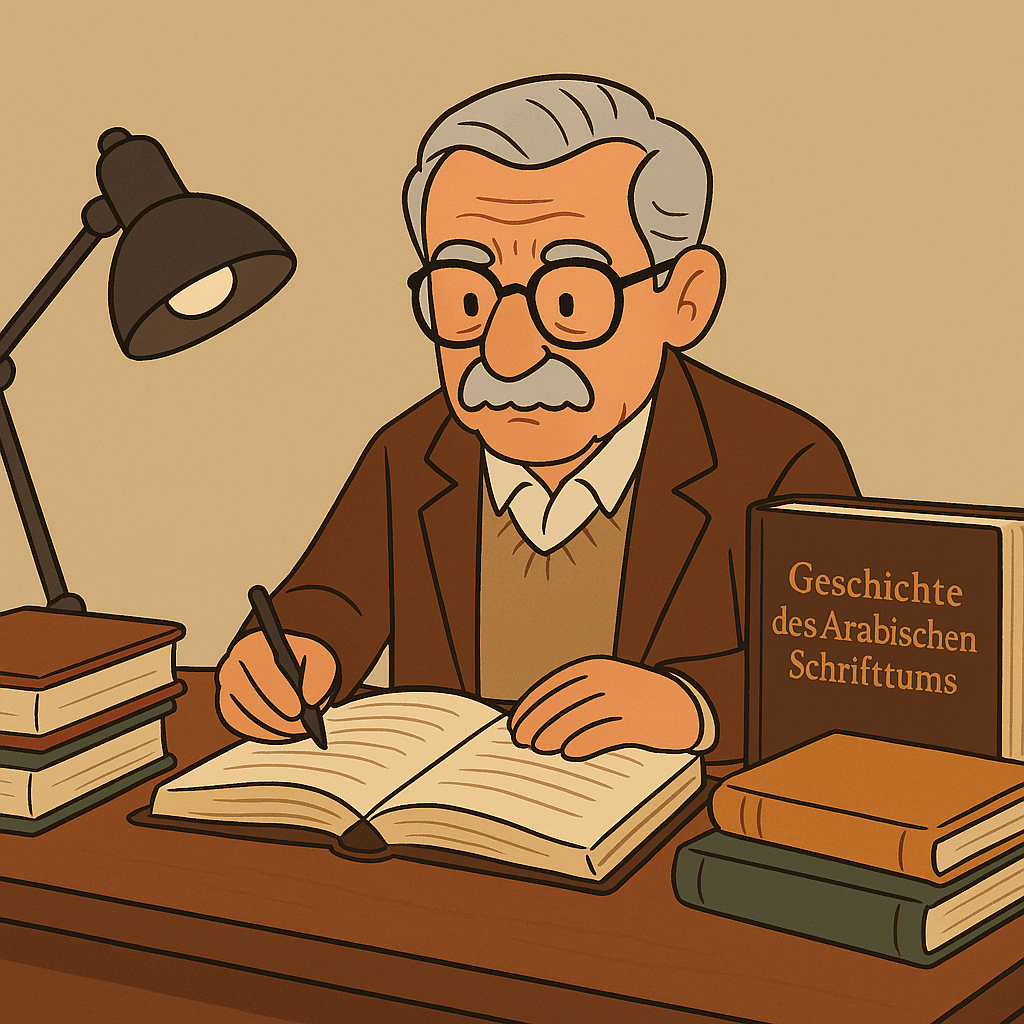
Fuat Sezgin (Generated by Artificial Intelligence.)
🔬 Curiosity in the History of Science
Fuat Sezgin developed his interest in the history of science through lectures and seminars. He deepened his focus on the history of science rather than mathematics. To read ancient manuscripts, he studied numerous languages including Arabic, Persian, and Latin, ultimately mastering a total of 27 different languages.
🇩🇪 The German Journey
Fuat Sezgin moved to Germany after completing his doctoral studies in the 1950s. He continued his research and teaching at the University of Frankfurt. His goal was to uncover the contributions of Islamic civilization to the world of science. His work in Germany focused particularly on the history of Arabic-Islamic natural sciences. In 1965 he wrote a thesis on Jabir ibn Hayyan and received the title of professor one year later.
📚 His Works
Fuat Sezgin compiled the history of Arabic-Islamic science in a 17-volume work titled History of Arabic-Islamic Sciences. This work covers numerous subjects including Quranic sciences, medicine, chemistry, astronomy, mathematics, astrology, jurisprudence, and grammar, and has become a standard reference in the scientific community. In addition, he produced a series of approximately 1,300 volumes and a comprehensive study titled Science and Technology in Islam. This work introduces scientific developments within the Islamic cultural sphere and is closely linked to the instruments displayed in museums.

Fuat Sezgin and Children in the Museum (Generated by Artificial Intelligence.)
🏛️ Museums and Institutes He Founded
In 1982, he established the Institute of Arabic-Islamic History of Science in Frankfurt. In 1983, he opened a museum within this institute, displaying more than 800 replicas of scientific instruments. In 2008, he opened the Museum of the History of Islamic Science and Technology in Istanbul. This museum exhibits around 570 instruments and models in fields such as astronomy, medicine, optics, architecture, and cartography. Its garden features the Ibn Sina Botanical Garden and a replica of Caliph al-Ma'mun’s world map.
🏅 Awards and Recognition
Fuat Sezgin received numerous international awards. In 1978 he was honored with the King Faisal Prize, and in the 1980s and in 2001 he received various German merit medals and the Frankfurt Goethe Plaque. In 2013 he was awarded the Turkish Republic Presidency Culture and Arts Grand Prize. In 2012, a square in Ankara was named after him. Additionally, in 2019, Türkiye officially declared the year as “Professor Dr. Fuat Sezgin Year.”