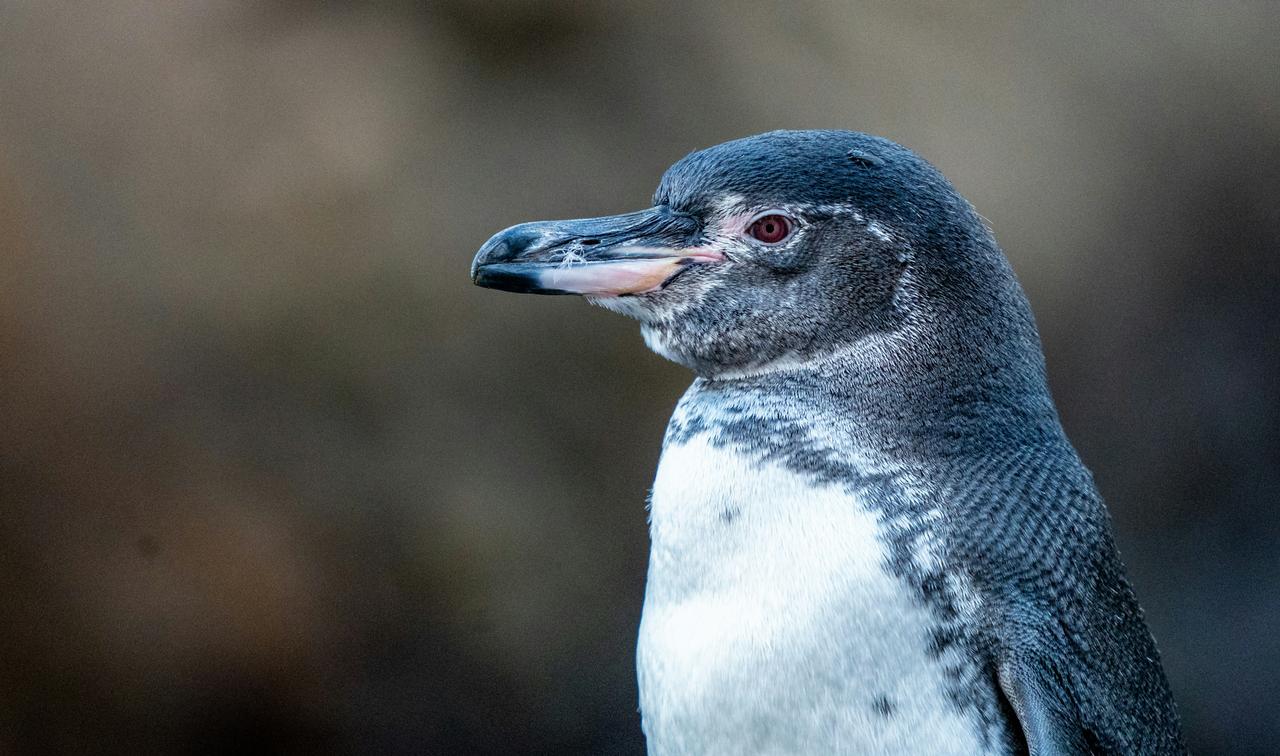




Galápagos Penguin
The Galápagos penguin (Spheniscus mendiculus) is a species belonging to the family Spheniscidae. This penguin is the only one found exclusively on the Galápagos Islands and is the northernmost-dwelling representative of its kind. One of its most distinguishing features is its habitat along the equatorial line.
What Do They Look Like?
Galápagos penguins have glossy black backs and entirely white undersides. A thin black band runs along the sides of their chests and beneath their heads. Prominent white stripes extend from near their beaks, curving backward around their eyes to the rear of their heads. Their beaks are black with a slightly lighter tip. This coloration provides camouflage while hunting underwater and helps regulate body temperature in sunny environments.

Galápagos Penguin (Unsplash)
How Large Do They Grow?
Galápagos penguins typically measure between 49 and 53 centimeters in height and weigh between 1.7 and 2.6 kilograms. They are among the smallest penguin species. Their small size helps them adapt to the warm climate of the equatorial region.
How Long Do They Live?
In the wild, Galápagos penguins have an average lifespan of 15 to 20 years. However, under favorable conditions, some individuals may live up to 15 years. High temperature stress, food shortages, and predators are among the main factors that shorten their lifespan. Rising sea temperatures due to climate change also significantly reduce their chances of survival.

Galápagos Penguins (Pexels)
What Do They Eat?
In the wild, Galápagos penguins primarily feed on small fish and marine organisms. They favor species such as sardines, anchovies, and mullet. Occasionally, they also consume crustaceans and small cephalopods. They hunt efficiently in the water with swift and agile movements, usually near coastal areas.
Where Do They Live?
Galápagos penguins live only on the Galápagos Islands, located near the equator. They are especially concentrated along the western coasts influenced by the cold Humboldt Current, particularly around the islands of Isabela and Fernandina. Their primary habitats include rocky shorelines, lava beaches, and sea caves. These areas provide shelter from the sun and ideal conditions for hunting.

Galápagos Penguins (Unsplash)
Conservation Status
The Galápagos penguin is classified as “Endangered” by the International Union for Conservation of Nature (IUCN). This classification reflects a significant decline in its wild population and an elevated risk of extinction. The greatest threats include climate change, food shortages caused by El Niño events, and habitat loss. Invasive species such as cats and dogs further reduce survival rates by damaging their nests.
What Can We Do to Protect Them?
To protect Galápagos penguins, we must avoid disturbing their nests and refrain from dumping waste into the ocean. Keeping the seas clean and preserving fish and marine life is also crucial. If you are curious, you can watch nature documentaries, read books, or support conservation projects dedicated to these animals. Even small actions can help save the lives of these charming penguins! 🐧💙