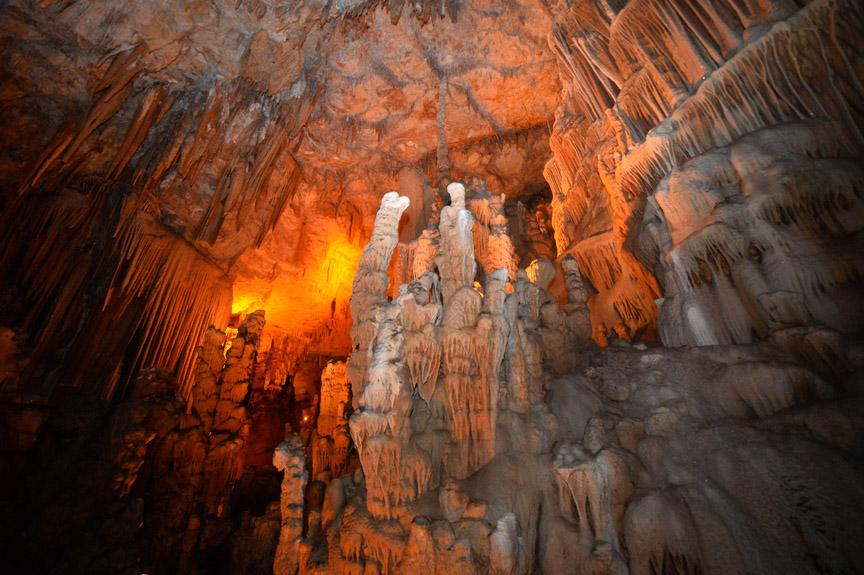




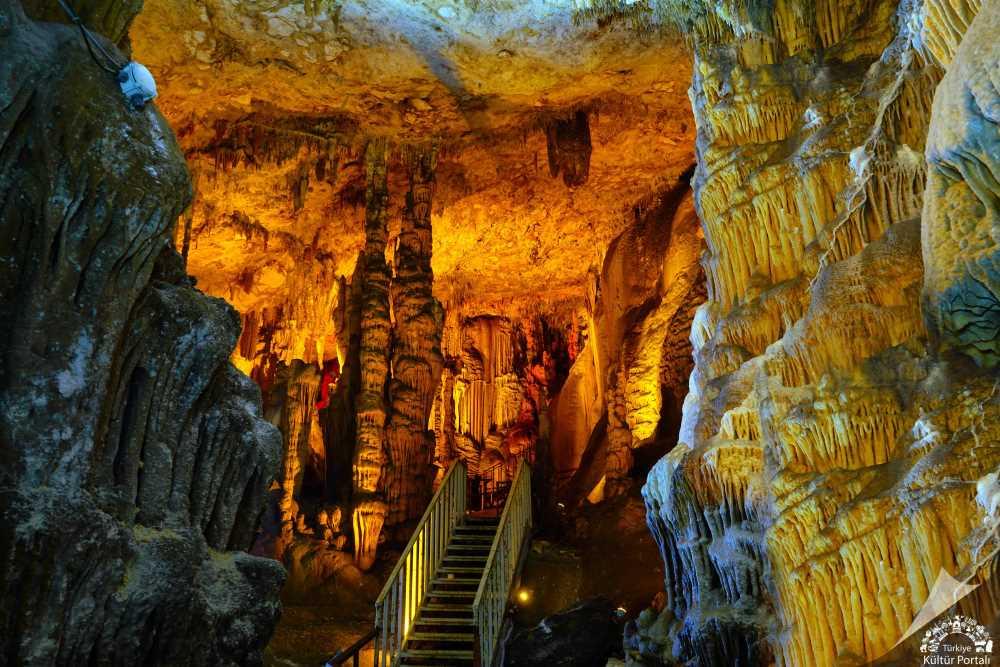
Gilindire Cave (Aynalıgöl)
In the Aydıncık district of Mersin, there is a mysterious place straight out of a fairy tale: Gilindire Cave! Here, visitors are greeted as if by a hidden treasure nestled both beside the sea and deep within the earth. Have you ever wished to see the lake that lies at the end of its massive stalactites?
A Discovery Chasing a Hedgehog
This enormous cave was actually discovered very recently, in 1999. The story behind it is quite fascinating: A shepherd, while grazing his flock, encountered a hedgehog. When the hedgehog disappeared into a rocky crevice where no shrubs grew, the shepherd, curious, followed it. Through a narrow opening, he found himself facing an endless, mesmerizing underground world.
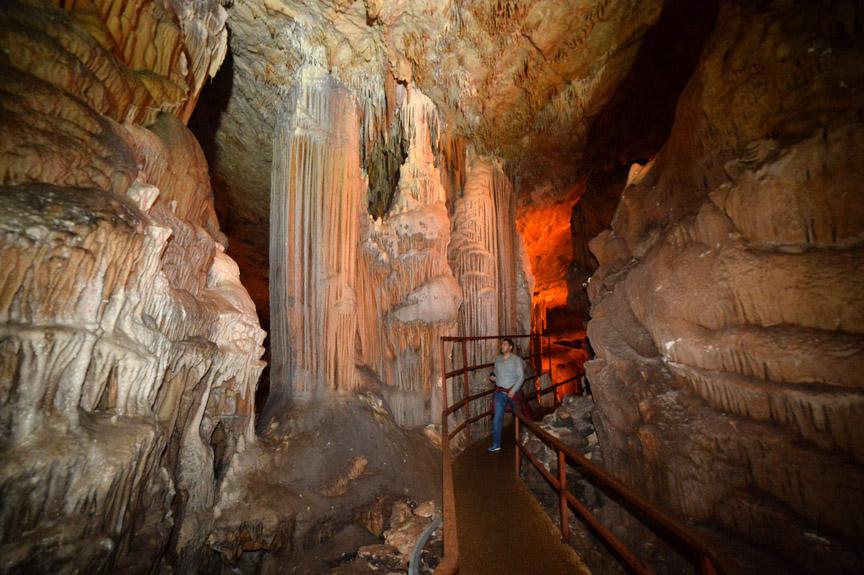
Gilindire (Aynalıgöl) Cave(Anadolu Ajansı)
A Grand Journey Into the Earth
At the entrance of the cave, you are met by a staircase of exactly 560 steps. As you descend, the air changes and you are surrounded by stalactites formed over thousands of years. The total length of the cave is 555 meters, and its interior resembles a labyrinth. Dripping “curtain stalactites” on the walls and hanging formations resembling ice stalactites turn the cave into an art gallery.
Why Is It Called “Aynalıgöl”?
At the very end of the cave lies a vast lake that leaves visitors in awe. The seepage water is so still and smooth that it gives the impression of looking into a mirror, as if the stalactites above are continuing below. For this reason, people named it Aynalıgöl. Some parts of the lake are so deep that its water level lies even below sea level.
A Time Machine from the Ice Age
Gilindire Cave is not only a beautiful sight but also functions like a time machine. The formations inside preserve clues about the climate of the Ice Age from thousands of years ago. Scientists study the submerged sections of the cave to understand how the Earth’s environment has changed over time. Because of this, Gilindire is recognized as the only and most significant “recording site” in the Eastern Mediterranean.
Time Travel
Excavations within the cave have uncovered pottery fragments and animal bones dating back 7,000 years, to the Neolithic period. This proves that humans were aware of this cave in ancient times!