



Göbeklitepe Archaeological Site
Located near Göbeklitepe and Şanlıurfa, Göbeklitepe is the oldest known temple site in human history. Approximately 12,000 years ago, humans constructed massive stone structures here. This demonstrates that people were capable of collaborating and building temples even before adopting a settled lifestyle. Göbeklitepe is a profoundly significant site that has helped us reinterpret human history.
Discovery and Research
Göbeklitepe was first noted in the 1960s, but its importance was only recognized following excavations conducted in 1995. Turkish and international scholars discovered T-shaped monumental stone pillars, animal reliefs, and temple remains during these excavations. The significance of these findings was so great that in 2018 Göbeklitepe was inscribed on the UNESCO World Heritage List. The year 2019 was officially declared the “Year of Göbeklitepe” in Türkiye.

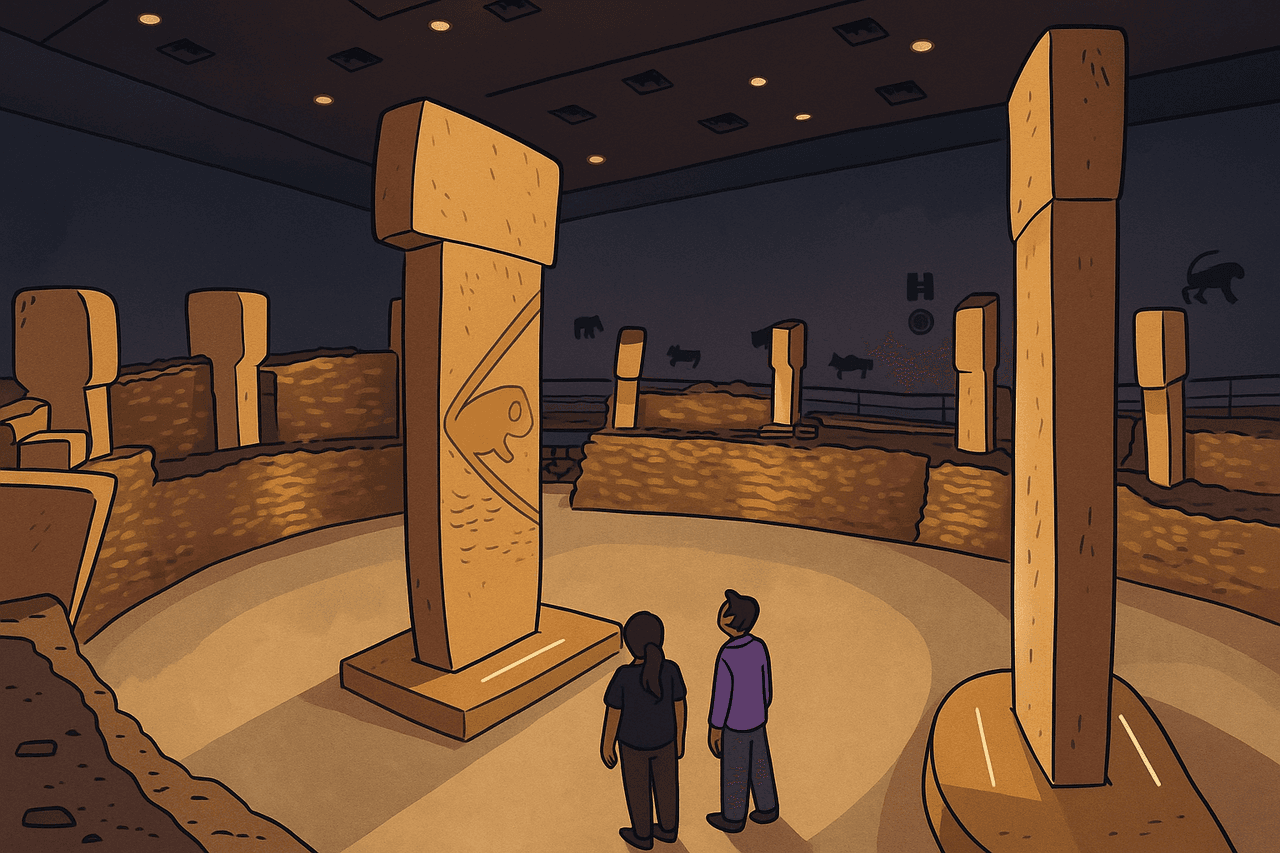
Culture PortalGenerated by Artificial Intelligence based on this photograph.
Architectural and Symbolic Features
The stone structures at Göbeklitepe are circular, with some measuring over 20 metres in diameter. The T-shaped stone pillars rising in the center are each more than five metres tall and extremely heavy. Carvings of animals such as lions, snakes, foxes, scorpions and birds adorn these stones. These decorations reveal that people of the time were deeply engaged in both art and religious beliefs.
Historical Significance
Göbeklitepe provides evidence that humans were capable of collective labor long before the advent of settled life. For this reason, it is not merely a temple but also one of the earliest known centers of communal living and belief in human history.
Preservation and Visitation
Today, Göbeklitepe is protected by the Ministry of Culture and Tourism. Walking paths have been constructed for visitors, and the site has been covered with a protective canopy. Additionally, those who wish may explore Göbeklitepe virtually through a virtual museum accessible via computer.