This article was automatically translated from the original Turkish version.
+2 More
Architectural Feature(s) | two T-shaped stelae 5–6 m high at the center monumental structures 8–30 m in diameter Oval and circular plan megalithic structures | ||||||||
|---|---|---|---|---|---|---|---|---|---|
Elevation(s) | Approximately 770–800 m above sea level | ||||||||
Area(s) | Approximately 9 hectares a man-made mound 300 m in diameter | ||||||||
Discovery and Excavation Chronology | 2019 onwards: Work under the leadership of Necmi Karul 1995–2014: Excavations under the leadership of Klaus Schmidt 1986: Statue discovered by Şavak Yıldız 1963: Surface survey | ||||||||
Key Findings | large numbers of animal bones in fill layers stone vessels animal relief carvings Anthropomorphic T-shaped stelae | ||||||||
Stratification | Layer II (PPNB): Rectangular plan structures Layer III (PPNA): Circular plan structures | ||||||||
Dating | Approximately 9600–8200 BC (calBC) Pre-Pottery Neolithic B (PPNB) Pre-Pottery Neolithic A (PPNA) | ||||||||
Location | Şanlıurfa / Türkiye | ||||||||
UNESCO Process | 2011: UNESCO World Heritage Tentative List, 2018: UNESCO World Heritage List | ||||||||
Project Scope | Conducted under the Taş Tepeler Project | ||||||||
Göbeklitepe is an archaeological site dating to the early Neolithic period, located on the Germuş Mountain Range in the northeastern part of Şanlıurfa city center, in southeastern Türkiye. The mound, covering approximately nine hectares, contains architectural remains from the Pre-Pottery Neolithic A (PPNA) and Early Pre-Pottery Neolithic B (EPPNB) phases, dated between 9600 and 8200 BCE.
Long regarded solely as a ritual center, recent geophysical and geoarchaeological research has revealed rectangular structures interpreted as dwellings, indicating a more complex settlement pattern.
First identified during surface surveys in 1963, the site began to be systematically excavated in 1995. In 2018, Göbeklitepe was inscribed on the UNESCO World Heritage List and is recognized as a crucial center for prehistoric research due to its early examples of social organization, symbolic thought, and monumental architecture.【1】.
Göbeklitepe is referred to as the “zero point of history” due to its monumental architecture and symbolic carvings from the early Neolithic period. In 2019, President Recep Tayyip Erdoğan declared the year as “Göbeklitepe Year.”

Göbeklitepe (Türkiye Kültür Portalı)
Göbeklitepe was identified in 1963 during surface surveys conducted by researchers from Istanbul and Chicago Universities in the Şanlıurfa region. The dense flint artifacts scattered across the mound’s surface indicated it was a significant Neolithic settlement. However, the monumental T-shaped pillars were not recognized during these initial investigations.
In 1986, a statue found by Şavak Yıldız while plowing his field near Örencik Village provided concrete evidence of the site’s archaeological significance. This discovery served as a precursor to the systematic excavations that followed in later years【2】.
The site was re-evaluated in 1994 by Klaus Schmidt, and in 1995, excavations began under the coordination of the Ministry of Culture and Tourism’s Directorate of Cultural Heritage and Museums, in collaboration with the German Archaeological Institute and the Şanlıurfa Museum. The excavations, led by Professor Klaus Schmidt, continued until 2014. During this period, circular and oval monumental structures dating to the Pre-Pottery Neolithic A and Early Pre-Pottery Neolithic B phases were uncovered. T-shaped pillars placed at the center of the structures and smaller ones embedded in the surrounding walls were documented.
In the early phase of excavations, research focused primarily on the monumental structures and T-shaped pillars, leading to the long-standing interpretation of Göbeklitepe as exclusively a ritual center. Geomagnetic surveys and surface investigations revealed that circular megalithic structures were distributed across different sections of the mound and may number up to twenty【3】.
During the 2000s, stratigraphic analyses, investigations of filling processes, and architectural documentation were carried out. Stone fragments, flint artifacts, animal bones, and limited human bone fragments found within the fill layers of the monumental structures were recorded. Geomagnetic surveys and ground-penetrating radar applications were also conducted during this period, identifying buried structural traces in various parts of the mound.
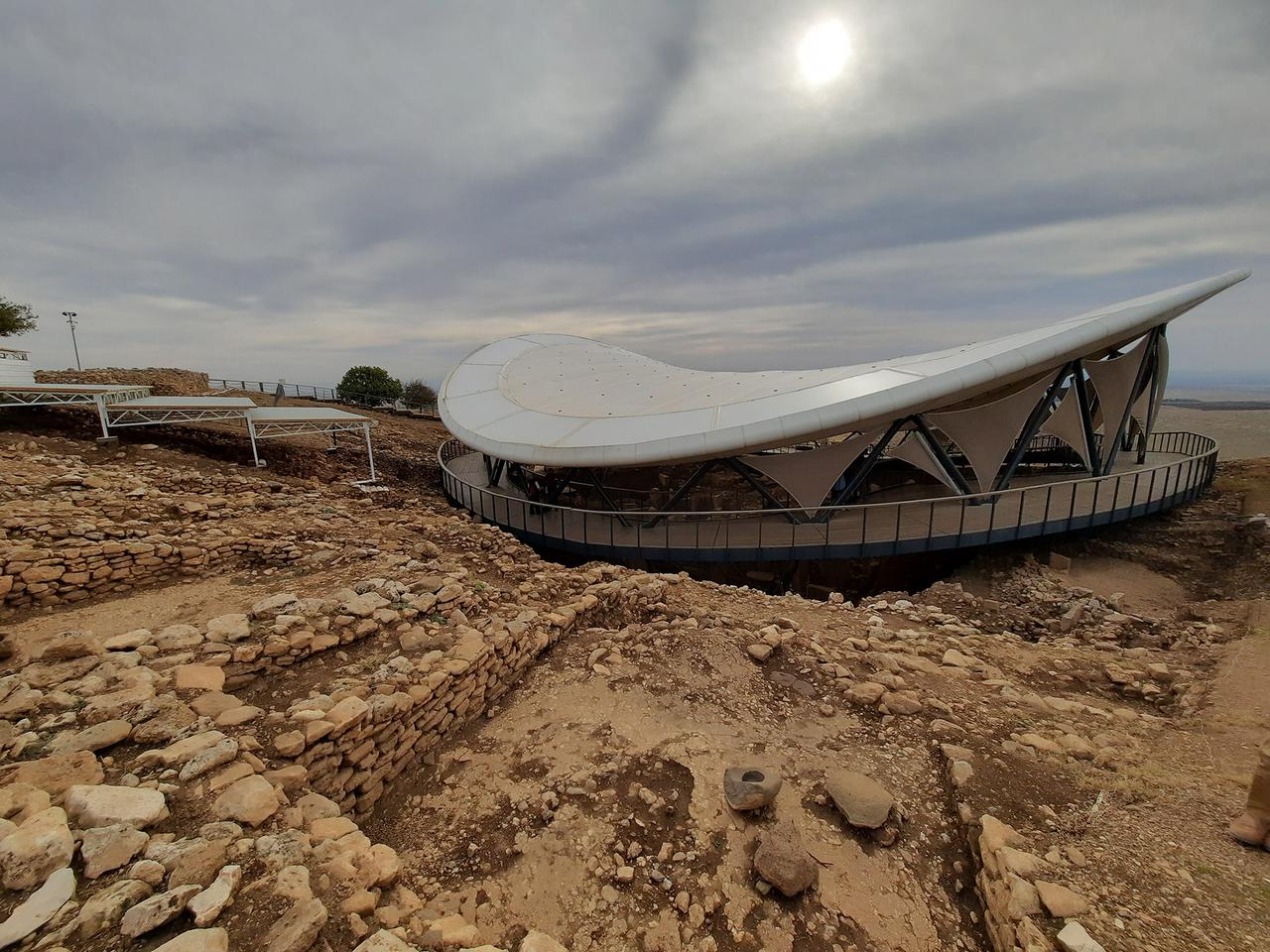
In 2011, Göbeklitepe was added to the UNESCO World Heritage Tentative List. By 2017, two permanent protective roofs had been completed over the site; the Göbeklitepe Excavation Area 1 (GT1), covered by a white roof, was opened to visitors. On 1 July 2018, during the 42nd session of the World Heritage Committee in Bahrain, the site was officially inscribed on the UNESCO World Heritage List.
Since 2014, excavations have been conducted under the leadership of the Şanlıurfa Archaeology Museum. Since 2019, the excavation directorship has been led by Professor Dr. Necmi Karul from the Department of Prehistoric Archaeology at Istanbul University. The German Archaeological Institute has continued to contribute to field and research activities. Since the autumn of 2014, Dr. Lee Clare has served as the field and research director on behalf of the German Archaeological Institute.
In recent years, the scope of research has expanded. Under the Taş Tepeler Project, geomagnetic, ground-penetrating radar, and LiDAR measurements have been conducted in areas not yet excavated. These studies have identified rectangular structures interpreted as possible dwellings, in addition to the known circular monumental buildings. These rectangular structures are concentrated particularly in the eastern and southern sections of the mound.
Göbeklitepe's History (TRT Belgesel)
Geoarchaeological research has been conducted by the Austrian Archaeological Institute, with the data collected intended to inform future excavation strategies. Measurements across much of the mound have been made possible by relocating olive trees, accelerating boundary delineation efforts.
Excavation and documentation work at Göbeklitepe is currently carried out under the coordination of the Ministry of Culture and Tourism, in collaboration with Istanbul University, the German Archaeological Institute, the Free University of Berlin, and other international institutions. A new visitor area, designated GT2 and covered by a green roof, is planned for opening. Research continues simultaneously through both excavation and documentation activities.
Göbeklitepe is located in southeastern Türkiye, approximately 15–18 kilometers northeast of Şanlıurfa city center, near the rural village of Örencik. The site sits on the Germuş Mountain Range at an elevation of about 770–800 meters above sea level.
The settlement is an artificial mound measuring approximately 300 meters in diameter and covering an area of about nine hectares. It was formed by human-made accumulations of fill material over time. The current topography reflects the underlying natural bedrock relief.
The elevation on which Göbeklitepe is situated consists of limestone. This limestone forms both the primary bedrock and the main building material used in the construction of architectural elements. Limestone quarries and working areas have been identified in the immediate vicinity of the settlement.
The site commands a dominant position overlooking the Harran Plain to the south and the Eastern Taurus Mountains to the north. This elevated location provides a wide panoramic view. However, the hill itself lacks natural features favorable for habitation, and no permanent water source is found in the surrounding area.
The region where Göbeklitepe is located lies in the northern part of the Fertile Crescent in the Near East. It corresponds to the northern arc formed by the Zagros Mountains to the east, the Taurus Mountains to the north, and the Amanos range extending along the eastern Mediterranean coast. This broad geographical zone offered a rich environment of wild cereals and various animal species during the prehistoric period.
Göbeklitepe occupies a high point within the regional settlement network and exhibits a topographic profile distinct from the surrounding valleys and plateaus.
Geoarchaeological and geophysical research at Göbeklitepe has complemented excavation efforts, providing detailed data on the mound’s topography, subsurface structures, and the morphology of the underlying bedrock surface.
For a long time, the site was described as a homogeneous mound approximately 15 meters high, entirely formed by human activity【4】. However, recent deep boreholes, foundation excavations, and geoarchaeological investigations have revealed that the current topography follows the underlying natural limestone bedrock surface【5】. Boreholes opened in the Southeastern Hollow and the Northwest area have identified bedrock surfaces at varying elevations. These surfaces rise in stepped terraces and natural thresholds.
Geoarchaeological studies have shown that the fill layers cannot be explained solely by intentional burial practices. Colluvial deposits, slope failures, and erosion processes have also played significant roles in fill formation. Pressure from the surrounding slopes in the Southeastern Hollow has left deformation and collapse traces on some walls. Terraced retaining walls and compacted stone fill layers have been identified as slope stabilization measures.
The geological structure of the site consists of Oligocene–Lower Miocene limestone layers. In some areas, Upper Miocene basalt formations and Eocene–Oligocene sedimentary rocks have been identified. Geological reports note that the limestone exhibits high strength under dry conditions but may lose structural integrity when exposed to water【6】.
Geoarchaeological and geophysical research has demonstrated that Göbeklitepe is not a homogeneous fill mound rising from a flat plateau, but rather a settlement whose layout and stratigraphic depth were shaped by the underlying natural bedrock topography. These findings serve as a fundamental data source for planning future excavation strategies.
The architecture of Göbeklitepe reveals a settlement pattern combining monumental structures from the Pre-Pottery Neolithic A (PPNA) and Pre-Pottery Neolithic B (PPNB) phases with rectangular structures interpreted as possible dwellings. The architectural layout is closely related to the stepped bedrock relief formed by the underlying limestone.
Two primary plan types have been identified at Göbeklitepe:
The circular or oval monumental structures constitute the most striking architectural feature of the site. These buildings, with diameters ranging from approximately 8 to 30 meters, consist of two large T-shaped pillars at the center and smaller T-shaped pillars embedded in surrounding walls. Geomagnetic surveys suggest the presence of nearly twenty such monumental structures across the mound【7】. To date, eight monumental structures have been excavated.

A Study Depicting the Construction of the Structures (Türkiye Kültür Portalı)
Rectangular structures became more widespread during the Early and Middle PPNB phases. Recent geomagnetic, ground-penetrating radar, and LiDAR surveys have identified traces of rectangular structures interpreted as possible dwellings. These structures are concentrated particularly in the eastern and southern sections of the mound.
The defining feature of Göbeklitepe’s architecture is its T-shaped limestone pillars. These pillars range in height from 3 to 6 meters and weigh between 40 and 60 tons【8】. The two large central pillars are taller and more monumental than the smaller ones placed along the surrounding walls.
Some pillars feature carved arms, hands, belts, and sashes in relief. Animal figures such as snakes, foxes, wild boars, bulls, gazelles, wild asses, cranes, storks, ibises, and ducks are carved in relief on the pillar surfaces. Some reliefs are executed in high relief technique.

T-Shaped Pillar with Animal Reliefs (Taş Tepeler)
Multiple concentric stone wall rings have been identified within the monumental structures. For example, Structure C contains three or four concentric wall sequences. The T-shaped pillars are integrated into these walls. Stone benches are found along the interior perimeters of the structures.

Structure C (Taş Tepeler)
Floors were mostly created by leveling the natural bedrock surface. In some structures, terrazzo-like floor treatments have been documented. In Structures C and D, carved bases were cut into the bedrock to support the central pillars.
Access to some structures appears to have been through narrow staircases or passages. In the large monumental Structure H located in the Northwest area, a staircase descending into the interior space has been identified.
The structures were built using stone material sourced from local limestone quarries. The natural bedrock surfaces were leveled, and in some areas, direct interventions were made into the bedrock. Structure K10-55 represents a different architectural approach, as its volume was carved directly out of the bedrock. Its interior surfaces were carefully smoothed.
The stepped natural terraces on the bedrock determined the placement of the structures. It has been documented that Structures C and D in the Southeastern Hollow were built on bedrock terraces at different elevations.
The site includes slopes with an incline of approximately 20 degrees. This topography led to the development of slope architecture in some structures. In the Southeastern Hollow, it is evident that outer walls were reinforced against pressure from the slope, and terraced retaining walls were constructed during certain phases.
Stabilization layers composed of fist-sized stones have been identified around the structures. Terraced walls were also used to stabilize the slopes.
Evidence from some rectangular structures dating to the Early Pre-Pottery Neolithic B phase suggests the possible existence of upper floors. The preservation of lower wall sections and the presence of fill material above them indicate the possibility of two-story architecture.
Since 1995, excavations and research at Göbeklitepe have yielded numerous architectural elements, carved pillars, statues, stone vessels, flint artifacts, and faunal remains. These finds have been recovered both within the interiors of monumental structures and in the fill layers.

Human Figure (Anadolu Ajansı)
The stone statues and human representations recovered at Göbeklitepe consist of independent sculptural pieces found within and around the monumental structures, as well as anthropomorphic elements carved on the T-shaped pillars. Some of the T-shaped pillars within the monumental buildings feature human anatomical elements rendered in relief.
On the central pillars of Structure D, arms and hands are clearly depicted. The arms extend downward from the sides, and the hands meet at the waist. Belt and sash reliefs are also present on the same pillars. The belt features H- and C-shaped symbols. A garment resembling a fox pelt is shown hanging downward from the sash. On some pillars, human-related symbols and figure compositions are arranged alongside animal depictions.

Fox-Relief T-Shaped Pillar (Taş Tepeler)
Animal depictions at Göbeklitepe are rendered in relief and three-dimensional forms on architectural elements, primarily the T-shaped pillars. Figures appear on the interior surfaces of monumental structures, on the shafts of pillars, and on some horizontal stone blocks.
Reliefs were executed using both low and high relief techniques. In some cases, the animal figure and the pillar were carved from a single stone block. The animal species depicted at Göbeklitepe include:
In some structures, specific species are concentrated.

Gazelle and Wild Ass Relief Pillar (Taş Tepeler)
In 2009, a stone statue composition approximately 1.92 meters in length was uncovered, featuring a predator figure at the upper section【9】. Large snake depictions are found on the side surfaces of the composition.
Excavations at Göbeklitepe have uncovered various stone vessels and objects beyond the monumental architecture and pillars. These finds were recovered both within structures and in fill layers. All examples were manufactured from local limestone and other stone materials.
Stone vessels have been found in various structures. In Structure C, stone vessels were recovered beneath one of the central pillars alongside a wild boar statue. Stone vessel fragments and complete examples were also found in the fill layers. Stone vessels are part of artifact groups associated with the use phases and filling processes of the monumental structures.

Wild Boar Statue (Taş Tepeler)
In 2009, a monumental portal stone was discovered. On this stone block, three four-legged animals and a snake are rendered in high relief. Two openings are present on the stone.
Wall stones, benches, and integrated stone architectural elements have been identified within the monumental structures.
Large quantities of animal bones have been recovered from the fill layers of the monumental structures and associated stratigraphic deposits. The fill layers contain fist-sized limestone fragments, stone chips, and flint flakes alongside faunal remains.
According to excavation data, numerous animal bones are present within the fill. These bones are documented in layers associated with the use and filling phases of the structures【10】.
Osteological analyses have revealed no evidence of animal husbandry at the site. The findings indicate a hunting-based economy【11】. A small number of fragmented human bones have also been found in the fill layers.
Faunal remains have been evaluated in conjunction with the filling processes of the monumental structures and recorded as part of accumulations from different phases.
Göbeklitepe is interpreted within a cultural context of early Neolithic settlements and sacred sites in Upper Mesopotamia. Its material culture and symbolic repertoire show shared elements with other contemporary sites.
T-shaped pillars were first documented in the 1980s at Nevalı Çori. Similar smaller pillars to those found in Göbeklitepe’s Layer II have been identified at Sefer Tepe, Karahantepe, and Hamzan Tepe. Comprehensive excavations have not yet been carried out at these sites.
Similar symbolic elements and stone artifacts are also found at other Upper Mesopotamian sites such as Jerf el Ahmar, Tell Qaramel, Körtik Tepe, Hallan Çemi, Çayönü, Tell ‘Abr, Mureybet, Dja’de, Nemrik, and Qermez Dere. At these sites, animal-decorated stone vessels, stone bowls, and arrow shaft straighteners have been discovered. Nemrik-type zoomorphic maces are also considered part of this shared symbolic repertoire.

Sefer Tepe Arrowheads (Taş Tepeler)
The Taş Tepeler Project is a research program coordinated by the Ministry of Culture and Tourism, encompassing early Neolithic sites including Göbeklitepe and Karahantepe. Within this project, both excavations and geoarchaeological and geophysical investigations are ongoing at Göbeklitepe.
The Taş Tepeler Project is led by Istanbul University, with participation from the German Archaeological Institute, the Free University of Berlin, and the Austrian Archaeological Institute.
Through the Taş Tepeler Project, comparative analysis of Göbeklitepe and surrounding settlements aims to determine the distribution of monumental and domestic structures and to understand the regional settlement pattern.
In recent years, the joint study of Göbeklitepe and Karahantepe has made the region one of the focal points for early Neolithic research. Visitor statistics indicate that the combined number of visitors to Göbeklitepe, Karahantepe, and other excavation sites has exceeded one million【12】.
Following its inscription on the UNESCO World Heritage List, Göbeklitepe has been introduced internationally through exhibitions and cultural diplomacy initiatives coordinated by the Ministry of Culture and Tourism in collaboration with various international institutions.

“The Discovery of Society: Göbeklitepe, Taş Tepeler and Life 12,000 Years Ago” Exhibition (Anadolu Ajansı)
On 11 February 2026, the exhibition “The Discovery of Society: Göbeklitepe, Taş Tepeler and Life 12,000 Years Ago” opened at the James Simon Gallery in Berlin, Germany. The exhibition was prepared through collaboration between the Ministry of Culture and Tourism and the Museum of the Ancient Near East under the Berlin State Museums. It features 89 artifacts selected from the Şanlıurfa Museum, 44 of which were displayed for the first time, along with four replicas【13】. The exhibition remained open to the public until 19 July 2026.
The Berlin exhibition displayed Neolithic stone artifacts, statues, and everyday objects. It presented archaeological evidence regarding the Neolithic people’s value systems, relationship with nature, social structure, and symbolic world.
The opening ceremony was conducted by Turkey’s Minister of Culture and Tourism Mehmet Nuri Ersoy and Germany’s Minister of State for Culture and Media Wolfram Weimer. It was stated that Turkey is pursuing a new strategy in cultural diplomacy by sharing its archaeological discoveries with the international public.

Isabel Muñoz’s Photographs of Göbeklitepe and Its Surroundings Exhibition (Anadolu Ajansı)
Before the Berlin exhibition, a similar exhibition in Rome attracted over six million visitors. A comparable number of visitors is anticipated in Berlin.
As part of the Berlin exhibition, photographs by Spanish photographer Isabel Muñoz depicting Göbeklitepe and surrounding archaeological sites were also presented to the public. These photographs were previously exhibited in Istanbul at the Pera Museum in 2023 under the title “Isabel Muñoz: A New Story – Photographs from Göbeklitepe and Its Surroundings,” followed by displays at the Ankara Museum of Anatolian Civilizations and in 2024 at the National Museum of Anthropology in Spain.
Göbeklitepe has become a fundamental reference point in Neolithic research due to its monumental architecture dating to the Early and Middle Pre-Pottery Neolithic periods.
The initial focus of excavations on monumental structures and T-shaped pillars led to the long-standing interpretation of Göbeklitepe as exclusively a ritual and public center. However, recent geophysical and geoarchaeological studies have identified traces of rectangular structures interpreted as possible dwellings. The abundance of arrowheads among lithic finds and the absence of evidence for animal husbandry in osteological analyses suggest the site was associated with a hunter-gatherer community.
The monumental architecture, symbolic reliefs, and human representations uncovered at Göbeklitepe document the existence of complex symbolic systems and public structures in the early Neolithic period. The human-like features of the T-shaped pillars—carved belts, arms, hands, and animal pelts—reflect an abstract and anthropomorphic iconographic system.
The site provides key evidence regarding the emergence of monumental religious architecture in the early Neolithic. The widely cited phrase “First came the temple, later the city” is based on Göbeklitepe’s findings. This framework suggests that public and ritual structures were constructed before the advent of agriculture and animal husbandry【14】.
Göbeklitepe is recognized as an archaeological site that provides foundational data on social organization, symbolic thought, public architecture, and regional interaction networks in the early Neolithic period.
Anadolu Ajansı. "Almanya'da 'Tarihin sıfır noktası' Göbeklitepe 2025'te 781 bin ziyaretçi ağırladı." Accessed February 12, 2026. https://www.aa.com.tr/tr/kultur/tarihin-sifir-noktasi-gobeklitepe-2025te-781-bin-ziyaretci-agirladi/3793137
Anadolu Ajansı. "Göbeklitepe ve Karahantepe'de yeni heykeller bulundu." Accessed February 12, 2026. https://www.aa.com.tr/tr/kultur/gobeklitepe-ve-karahantepede-yeni-heykeller-bulundu/3004440
Anadolu Ajansı. "Göbeklitepe'de 30 yıldır süren kazılarla tarihin sırları gün yüzüne çıkarılıyor." Accessed February 12, 2026. https://www.aa.com.tr/tr/kultur/gobeklitepede-30-yildir-suren-kazilarla-tarihin-sirlari-gun-yuzune-cikariliyor/3740643
Anadolu Ajansı. "Göbeklitepe'de konut olduğu değerlendirilen yeni yapıların izleri tespit edildi." Accessed February 12, 2026. https://www.aa.com.tr/tr/kultur/gobeklitepede-konut-oldugu-degerlendirilen-yeni-yapilarin-izleri-tespit-edildi/3710785
Anadolu Ajansı. "Göbeklitepe'de yeni kazı alanı ziyarete açılıyor." Anadolu Ajansı. Accessed February 12, 2026. https://www.aa.com.tr/tr/kultur/gobeklitepede-yeni-kazi-alani-ziyarete-aciliyor/3724456
Anadolu Ajansı. "Isabel Munoz'un Göbeklitepe fotoğrafları Berlin'de sanatseverlerle buluşuyor." Accessed February 12, 2026. https://www.aa.com.tr/tr/kultur/isabel-munozun-gobeklitepe-fotograflari-berlinde-sanatseverlerle-bulusuyor/3825666
Anadolu Ajansı. "Toplumun Keşfi: Göbeklitepe, Taş Tepeler” sergisi açıldı." Accessed February 12, 2026. https://www.aa.com.tr/tr/kultur/almanyada-toplumun-kesfi-gobeklitepe-tas-tepeler-sergisi-acildi/3826578
Bozbay, Heval. "Kim, nerede, ne zaman, nasıl ve neden yaptı? Göbekli Tepe." *Bilim ve Gelecek* 146, (2016): 48-56. Accessed February 12, 2026. https://dergipark.org.tr/tr/download/article-file/436487
Dietrich, Oliver, Köksal Schmidt, Çiğdem, Notroff, Jens, Schmidt, Klaus, and Cihat Kürkçüoğlu. "First came the temple. later the cily." *Actual Archaeology Magazine Anatolia* 2, no. 4.95 (2012): 33–51. Accessed February 12, 2026. https://www.researchgate.net/publication/235799759_Gobekli_Tepe_-_A_Stone_Age_ritual_center_in_southeastern_Turkey
Kinzel, Moritz, Lee Clare, and Devrim Sönmez. "Built on Rock – Towards a Reconstruction of the ›Neolithic‹ Topography of Göbekli Tepe." Istanbuler Mitteilungen 70, (2020): 9-45. Accessed February 12, 2026. https://publications.dainst.org/journals/istmitt/article/view/4708
Kurt, Ali Osman, and Mehmet Emin Göler. "Anadolu’da İlk Tapınak: Göbeklitepe." *Cumhuriyet İlahiyat Dergisi* 21, no. 2 (2017): 1107–1138. Accessed February 12, 2026. https://dergipark.org.tr/tr/download/article-file/374877
Schmidt, Klaus. "Göbekli Tepe – the Stone Age Sanctuaries. New results of ongoing excavations with a special focus on sculptures and high reliefs." *Documenta Praehistorica XXXVII*, (2010): 239-256. Accessed February 12, 2026. Accessed Adresi
Schmidt, Klaus. Göbekli Tepe En Eski Tapınağı Yapanlar. Çev. Rüstem Arslan. İstanbul: Arkeoloji ve Sanat Yayınları, 2007.
TRT Belgesel. "Gizemli Tarih: Göbeklitepe | TRT Belgesel." YouTube, 39:14. Accessed February 12, 2026. https://www.youtube.com/watch?v=s35TW70K4CU&t=2065s
Taş Tepeler. "Galeri." T.C. Kültür ve Turizm Bakanlığı. Accessed February 12, 2026. https://tastepeler.org/galeri
Taş Tepeler. "Göbeklitepe." T.C. Kültür ve Turizm Bakanlığı. Accessed February 12, 2026. https://tastepeler.org/yerlesmeler/gobeklitepe
Türkiye Kültür Portalı. "Göbeklitepe Nerede?" T.C. Kültür ve Turizm Bakanlığı. Accessed February 12, 2026. https://www.kulturportali.gov.tr/portal/gobeklitepe-nerededir-
Türkiye Kültür Portalı. "Göbeklitepe Örenyeri - Şanlıurfa." T.C. Kültür ve Turizm Bakanlığı. Accessed February 12, 2026. https://www.kulturportali.gov.tr/turkiye/sanliurfa/gezilecekyer/gobeklitepe-
UNESCO. "Göbekli Tepe." UNESCO World Heritage Convention. Accessed February 12, 2026. https://whc.unesco.org/en/list/1572/
Özalp, Hasan. "İNSANLIĞIN EN ESKİ TAPINAĞI GÖBEKLİTEPE TEOLOJİK OLARAK BİZE NE SÖYLER?" *bilimname XXX*, no. 1 (2016): 59-74. Accessed February 12, 2026. https://dergipark.org.tr/tr/download/article-file/436487
[1]
Oliver Dietrich, Çiğdem Köksal Schmidt, Jens Notroff, Klaus Schmidt, ve Cihat Kürkçüoğlu, ''First came the temple. later the cily,'' Actual Archaeology Magazine Anatolia 2, no. 4.95, (2012): syf 39, https://www.researchgate.net/publication/235799759_Gobekli_Tepe_-_A_Stone_Age_ritual_center_in_southeastern_Turkey
[2]
Anadolu Ajansı, ''Göbeklitepe'de 30 yıldır süren kazılarla tarihin sırları gün yüzüne çıkarılıyor,'' Anadolu Ajansı, Son erişim: 12 Şubat 2026, https://www.aa.com.tr/tr/kultur/gobeklitepede-30-yildir-suren-kazilarla-tarihin-sirlari-gun-yuzune-cikariliyor/3740643
[3]
Oliver Dietrich, Çiğdem Köksal Schmidt, Jens Notroff, Klaus Schmidt, ve Cihat Kürkçüoğlu, ''First came the temple. later the cily,'' Actual Archaeology Magazine Anatolia 2, no. 4.95, (2012): syf 35, https://www.researchgate.net/publication/235799759_Gobekli_Tepe_-_A_Stone_Age_ritual_center_in_southeastern_Turkey
[4]
A.e., 9
[5]
A.e., 12
[6]
A.e., 19
[7]
Oliver Dietrich, Çiğdem Köksal Schmidt, Jens Notroff, Klaus Schmidt, ve Cihat Kürkçüoğlu, ''First came the temple. later the cily,'' Actual Archaeology Magazine Anatolia 2, no. 4.95, (2012): syf 35, https://www.researchgate.net/publication/235799759_Gobekli_Tepe_-_A_Stone_Age_ritual_center_in_southeastern_Turkey
[8]
Anadolu Ajansı, ''Göbeklitepe'de yeni kazı alanı ziyarete açılıyor,'' Anadolu Ajansı, Son erişim: 12 Şubat 2026, https://www.aa.com.tr/tr/kultur/gobeklitepede-yeni-kazi-alani-ziyarete-aciliyor/3724456
[9]
Oliver Dietrich, Çiğdem Köksal Schmidt, Jens Notroff, Klaus Schmidt, ve Cihat Kürkçüoğlu, ''First came the temple. later the cily,'' Actual Archaeology Magazine Anatolia 2, no. 4.95, (2012): syf 47-49, https://www.researchgate.net/publication/235799759_Gobekli_Tepe_-_A_Stone_Age_ritual_center_in_southeastern_Turkey
[10]
A.e., 51
[11]
A.e., 35
[12]
Anadolu Ajansı, ''"Tarihin sıfır noktası" Göbeklitepe 2025'te 781 bin ziyaretçi ağırladı,'' Anadolu Ajansı, Son erişim: 12 Şubat 2026, https://www.aa.com.tr/tr/kultur/tarihin-sifir-noktasi-gobeklitepe-2025te-781-bin-ziyaretci-agirladi/3793137
[13]
Anadolu Ajansı, ''Almanya'da "Toplumun Keşfi: Göbeklitepe, Taş Tepeler” sergisi açıldı,'' Anadolu Ajansı, Son erişim: 12 Şubat 2026, https://www.aa.com.tr/tr/kultur/almanyada-toplumun-kesfi-gobeklitepe-tas-tepeler-sergisi-acildi/3826578
[14]
Oliver Dietrich, Çiğdem Köksal Schmidt, Jens Notroff, Klaus Schmidt, ve Cihat Kürkçüoğlu, ''First came the temple. later the cily,'' Actual Archaeology Magazine Anatolia 2, no. 4.95, (2012): syf 51, https://www.researchgate.net/publication/235799759_Gobekli_Tepe_-_A_Stone_Age_ritual_center_in_southeastern_Turkey


Architectural Feature(s) | two T-shaped stelae 5–6 m high at the center monumental structures 8–30 m in diameter Oval and circular plan megalithic structures | ||||||||
|---|---|---|---|---|---|---|---|---|---|
Elevation(s) | Approximately 770–800 m above sea level | ||||||||
Area(s) | Approximately 9 hectares a man-made mound 300 m in diameter | ||||||||
Discovery and Excavation Chronology | 2019 onwards: Work under the leadership of Necmi Karul 1995–2014: Excavations under the leadership of Klaus Schmidt 1986: Statue discovered by Şavak Yıldız 1963: Surface survey | ||||||||
Key Findings | large numbers of animal bones in fill layers stone vessels animal relief carvings Anthropomorphic T-shaped stelae | ||||||||
Stratification | Layer II (PPNB): Rectangular plan structures Layer III (PPNA): Circular plan structures | ||||||||
Dating | Approximately 9600–8200 BC (calBC) Pre-Pottery Neolithic B (PPNB) Pre-Pottery Neolithic A (PPNA) | ||||||||
Location | Şanlıurfa / Türkiye | ||||||||
UNESCO Process | 2011: UNESCO World Heritage Tentative List, 2018: UNESCO World Heritage List | ||||||||
Project Scope | Conducted under the Taş Tepeler Project | ||||||||
Discovery and Research History
Geographical Features
Geoarchaeological and Geophysical Research
Architectural Features
Plan Types and Building Groups
T-Shaped Pillars
Wall Systems and Interior Layout
Rock Carving and Material Use
Slope Architecture and Terracing
Artifacts
Stone Statues
Animal Reliefs and Iconography
Stone Vessels and Other Stone Objects
Bone and Faunal Remains
Regional Context and the Taş Tepeler Project
Exhibitions and Cultural Diplomacy Activities
Scientific Significance