




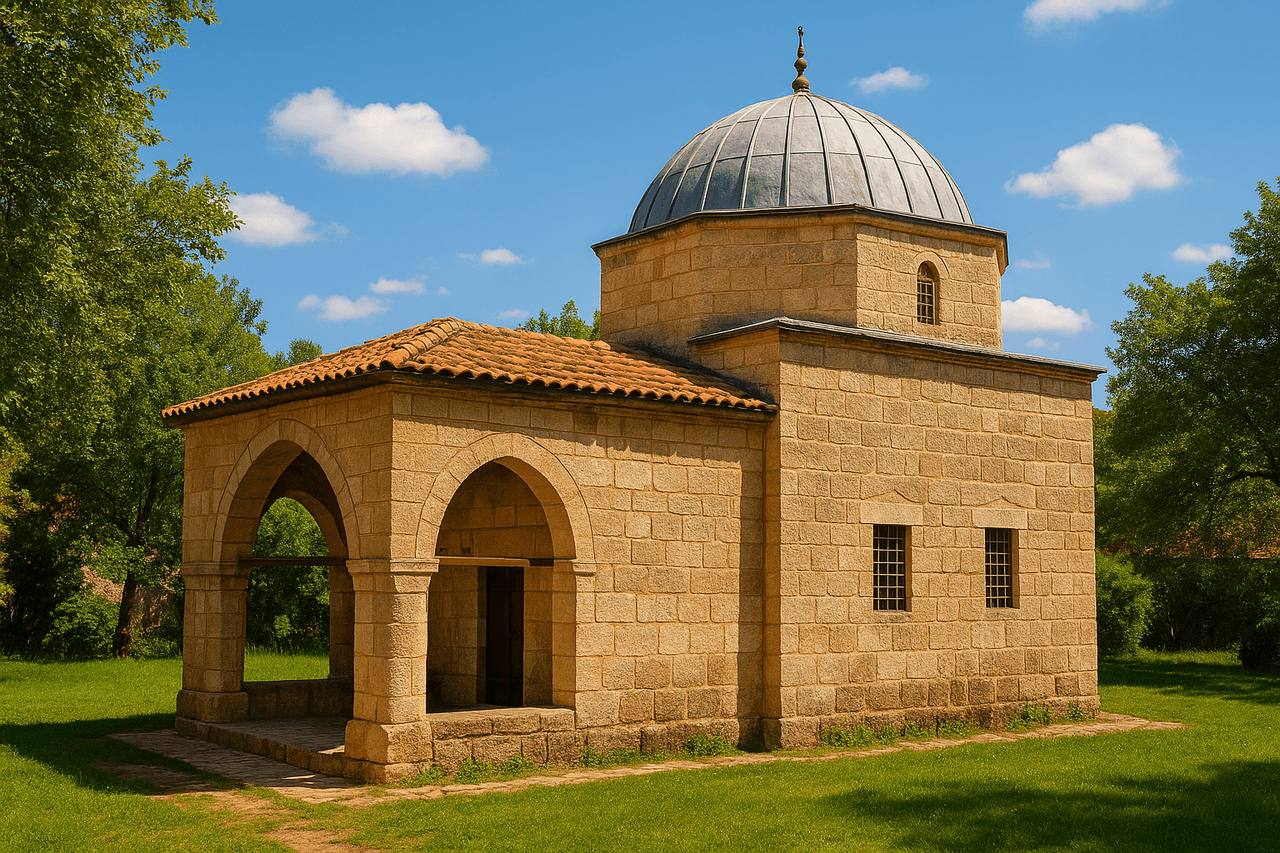
Halef Sultan Zaviyesi
Halef Sultan Zaviyesi is an old Ottoman structure located in the province of Tokat. The term “zaviye” refers to a place where worship is performed and guests are accommodated. Thus, it is both a space for prayer and a guesthouse that opens its doors to travelers. Halef Sultan Zaviyesi is precisely such a place, serving both religious and social purposes.
Who Was Halef Sultan?
Halef Sultan was a beloved Sufi mystic who taught people love, mutual aid, and spiritual peace. This zaviye, built in his name, is a spiritual symbol for the people of Tokat. Even today, on certain days, people visit the site to pray.
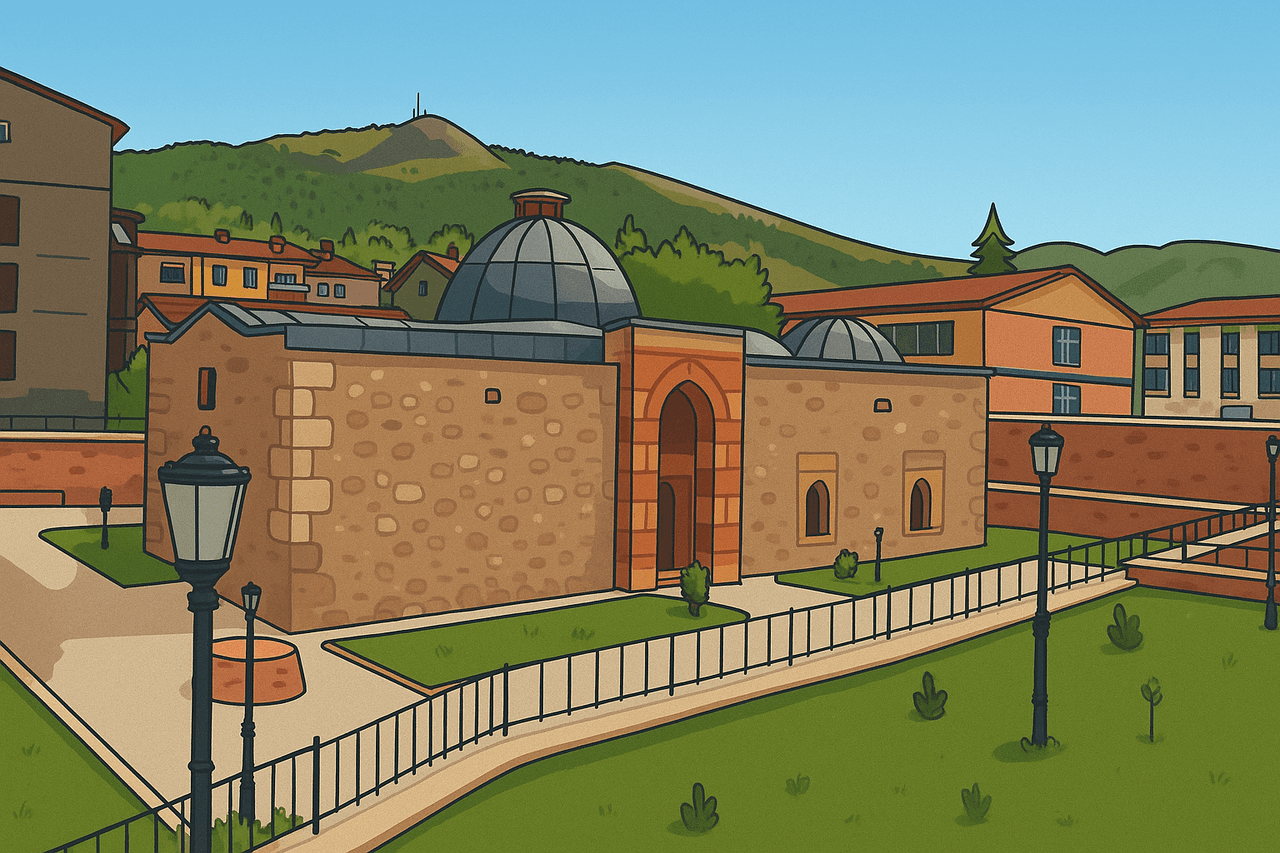
Culture PortalGenerated from the photograph using artificial intelligence.
Where and Why Is It Important?
The zaviye is located near the center of the city of Tokat. It takes its name from Halef Sultan, a wise Sufi mystic known for teaching kindness, sharing, and good moral conduct. For this reason, the zaviye holds great respect among the local population.
Architectural Features
Halef Sultan Zaviyesi was constructed using traditional Ottoman materials of stone and wood. It contains areas for worship, rooms where guests could eat and rest, and quarters for dervishes. Externally, it is not ornate, as simplicity is the defining characteristic of this structure. Its small windows, dome, and sturdy stone walls exemplify typical Ottoman architecture.

Culture PortalGenerated from the photograph using artificial intelligence.
Center for Assistance and Sharing
The zaviye was not merely a place of worship. Here, food was distributed to the poor, lodging was provided to travelers, and knowledge was shared through conversation. These services were sustained through the waqf system, funded by public donations. Thus, both hearts and stomachs were satisfied.
Restoration Efforts
Over time, the structure deteriorated and remained unused for many years. However, in recent years, it was restored by the Tokat Provincial Directorate and cultural institutions. Thanks to these efforts, Halef Sultan Zaviyesi has been preserved and carried forward from the past into the future.