

This article was automatically translated from the original Turkish version.
+2 More
Halef Sultan Zaviyesi is a religious and social structure located within the boundaries of Tokat province and one of the significant examples of Ottoman-era Turkish-Islamic architecture. Zaviyes were buildings where Sufi life was sustained, providing lodging for travelers and serving the public; Halef Sultan Zaviyesi stands out as a historical institution fulfilling these functions.
Halef Sultan Zaviyesi is situated in a settlement area under the city center of Tokat, in a location that attracts particular attention within the context of historical and devotional tourism. The zaviye derives its name from a Sufi figure known locally as “Halef Sultan.” The spiritual activities of this figure in the region and his influence on the local population have enhanced the spiritual significance of the structure.
The building is among the many zaviyes established in Tokat during the Ottoman period and holds importance both architecturally and socio-culturally. Within the tradition of zaviyes that became widespread in Anatolia from the 13th century onward, Halef Sultan Zaviyesi stands out for its regional significance.

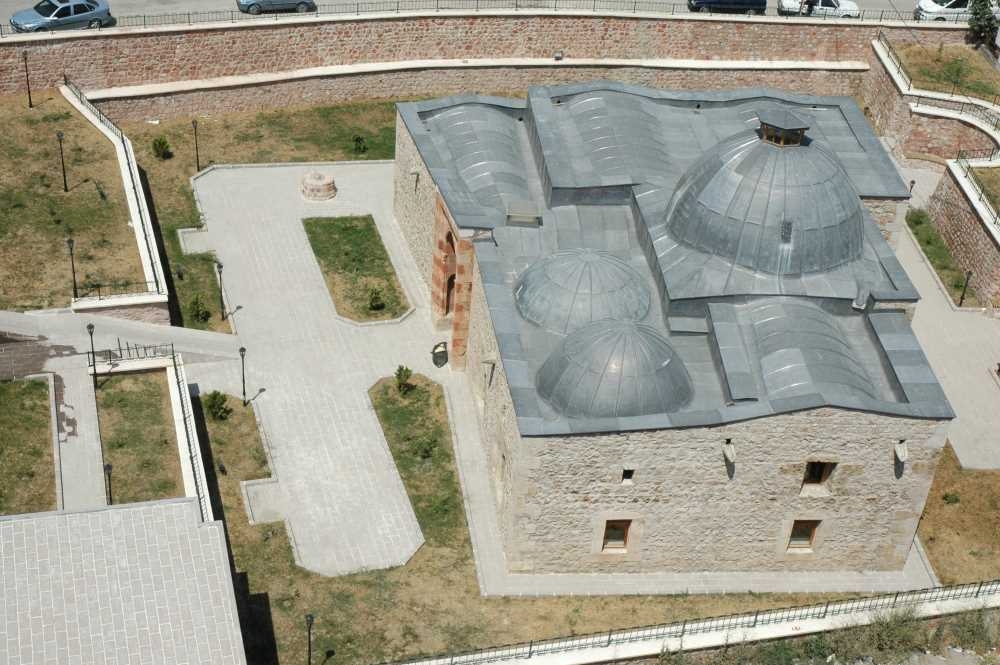
Halef Sultan Zaviyesi (Culture Portal)
Halef Sultan Zaviyesi is constructed using a combination of stone and wood, in accordance with traditional Ottoman architectural practices. The internal spatial organization is designed to accommodate both worship and guest lodging functions. Certain sections of the building are used for prayer, while other areas serve as accommodation, dining, and resting spaces for travelers and dervishes.
The architectural simplicity of the façade reflects the prioritization of functionality. Stone walls, small window openings, and modest dome elements convey a typical Ottoman zaviye architectural style.
Halef Sultan Zaviyesi functioned not only as a religious center but also as a hub for social assistance and educational activities. The waqf system associated with the zaviye supported services such as providing meals to the poor, sheltering travelers, and hosting scholarly gatherings. Examination of the period’s waqf deeds reveals detailed information regarding the zaviye’s income sources and service domains.
After years of disuse, the zaviye underwent various restoration efforts. Supported by the Tokat Provincial Directorate and relevant cultural institutions, these initiatives have gradually revived both the physical structure and its cultural functions. Comprehensive repairs carried out in recent years have contributed to preserving the building’s historical identity for future generations.
Although historical sources provide limited information about the individual known as Halef Sultan, it is well established that he was a respected Sufi figure. The beliefs and devotion that formed around this person strengthened the zaviye’s influence on the local community. Today, the structure is still visited on certain days and remains an integral part of the spiritual values of the local population.

Halef Sultan Zaviyesi (Culture Portal)
No Discussion Added Yet
Start discussion for "Halef Sultan Zaviyesi" article
Location and Historical Background
Architectural Features
Socio-Cultural Function and Waqf System
Restoration and Conservation Status
The Identity and Influence of Halef Sultan