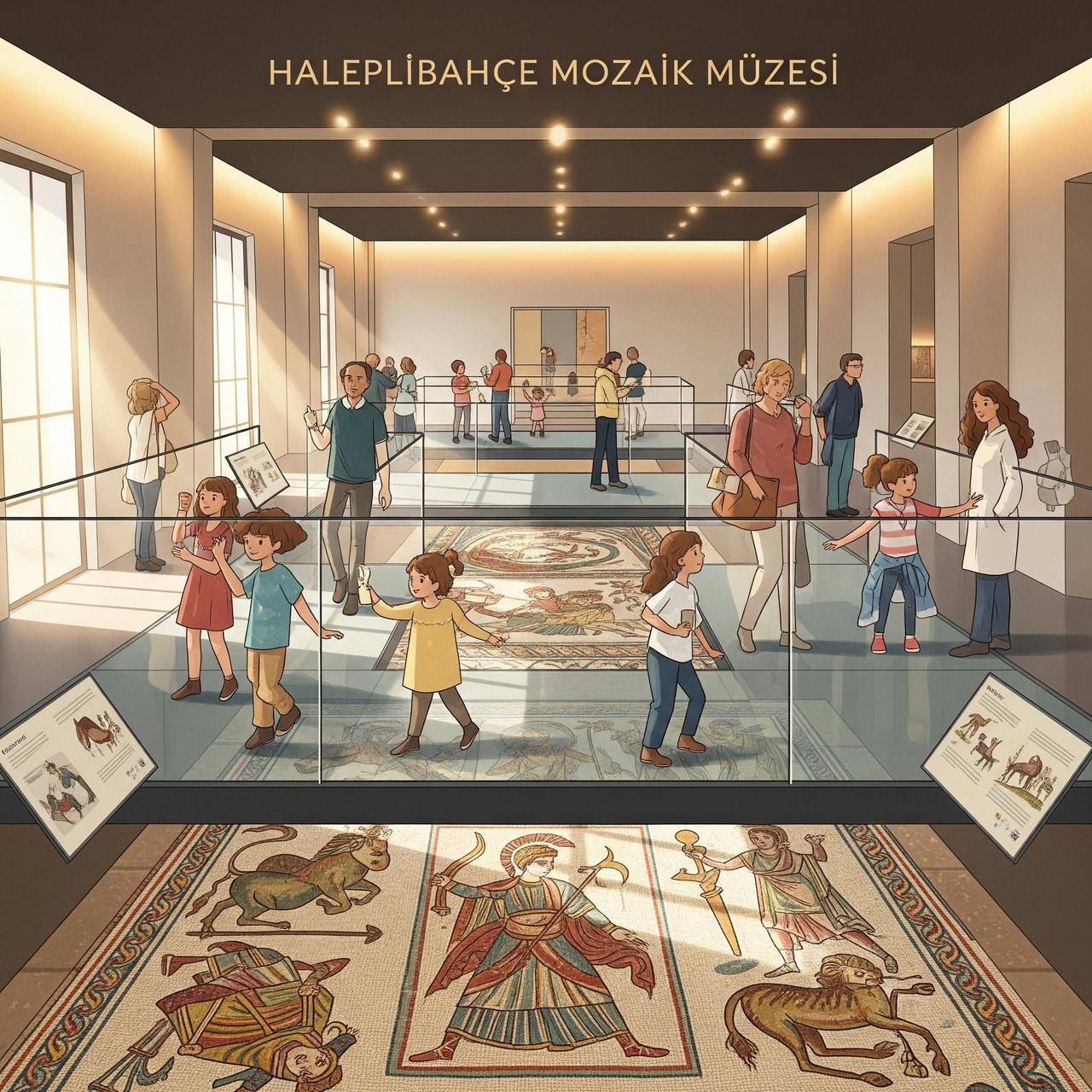




Haleplibahçe Mosaic Museum
Haleplibahçe Mosaic Museum
Have you ever imagined touching a painting thousands of years old? The Haleplibahçe Mosaic Museum in Şanlıurfa is exactly such a place! It is like a magical book filled with legends woven together by tiny colorful stones. As you walk across the massive images laid out on the floor, you can feel as if you are a time traveler.
One of the most remarkable aspects of this museum is that the mosaics have not been moved from another location. They are displayed exactly where they were found—in situ. This means you are walking directly over the artistic masterpieces that once adorned the floors of homes inhabited by people who lived thousands of years ago. Let us listen together to the stories whispered by these colorful stones!
What Do the Mosaics Tell?
Mosaics are made of tiny stone pieces carefully assembled. Like puzzle pieces, when joined together they reveal the secrets of heroes, mythical creatures, and daily life in that era. The mosaics at Haleplibahçe originally decorated the homes of wealthy individuals during the Roman Empire. These homes were called “villas.”
As you walk through the museum, the images you see on the floor are actually the floors of those villas’ salons and rooms. Each pattern depicts a story beloved by the homeowner, a hero they admired, or an animal they revered. These mosaics were crafted from natural, colorful stones collected from the Euphrates River, which is why their colors remain vivid today.
The House of the Warrior Amazons
One of the most exciting sections of the museum is the mosaic found in the area known as the “Villa of the Amazons.” According to legend, the Amazons were a courageous and skilled warrior society composed entirely of women. The myths say these women were masters of riding horses and using bows and spears.
On the large mosaic laid out on the floor, you can see four different Amazon queens engaged in a hunting scene. They are depicted riding horses while hunting powerful animals such as lions and leopards. This mosaic is unique in the world as the only surviving artwork showing four Amazon queens together. These images whisper to us from thousands of years ago about how strong and fearless women could be.
Orpheus’s Enchanted Music
Another essential mosaic in the museum is the “Orpheus Mosaic.” According to legend, Orpheus played the lyre (an ancient stringed instrument) so beautifully that not only humans and gods, but even the fiercest animals would calm down, and trees and rocks would bend toward him in awe.
In this mosaic, Orpheus is depicted playing his lyre surrounded by lions, bears, leopards, mountain goats, and birds. Each creature bears a serene expression. This masterpiece is a wonderful example of how music and art can unite and soothe all living beings.
The Story of a Hero: Achilles
The museum also contains a mosaic depicting the life of Achilles, one of history’s greatest warriors. This mosaic is unique in the world for portraying different moments of Achilles’s life—from his infancy to his participation in battle—in a single large image.
According to legend, his mother dipped him into a sacred river to make him immortal, but held him by the heel, leaving that part untouched by the water. Thus, Achilles’s only vulnerability was his heel. In this mosaic, you can follow the key events of his life as if reading a comic strip.
Time Travel
Close your eyes and travel back about 1,800 years. The area where the museum now stands was once a neighborhood in the city of Şanlıurfa, known in Roman times as Edessa, filled with luxurious homes. Wealthy merchants, commanders, and officials lived here. Their homes, or villas, featured inner courtyards, painted walls, and floors covered with the magnificent mosaics you see today.
People gathered in these rooms to entertain guests, share meals, and converse. The floors they walked on were not ordinary stones—they were works of art that told the heroic stories they cherished. In 2006, during road construction in Şanlıurfa, these villas were accidentally discovered, revealing this treasure buried beneath the earth. To prevent damage to the mosaics, instead of moving them, the museum was built directly over them.