



Halicarnassus Mausoleum
One of the Seven Wonders of the Ancient World, imagine a colossal funerary monument. So magnificent was it that all large funerary monuments built since have been named after it! Let us explore together this unique structure rising at the heart of Bodrum.
What Is the Mausoleum at Halicarnassus?
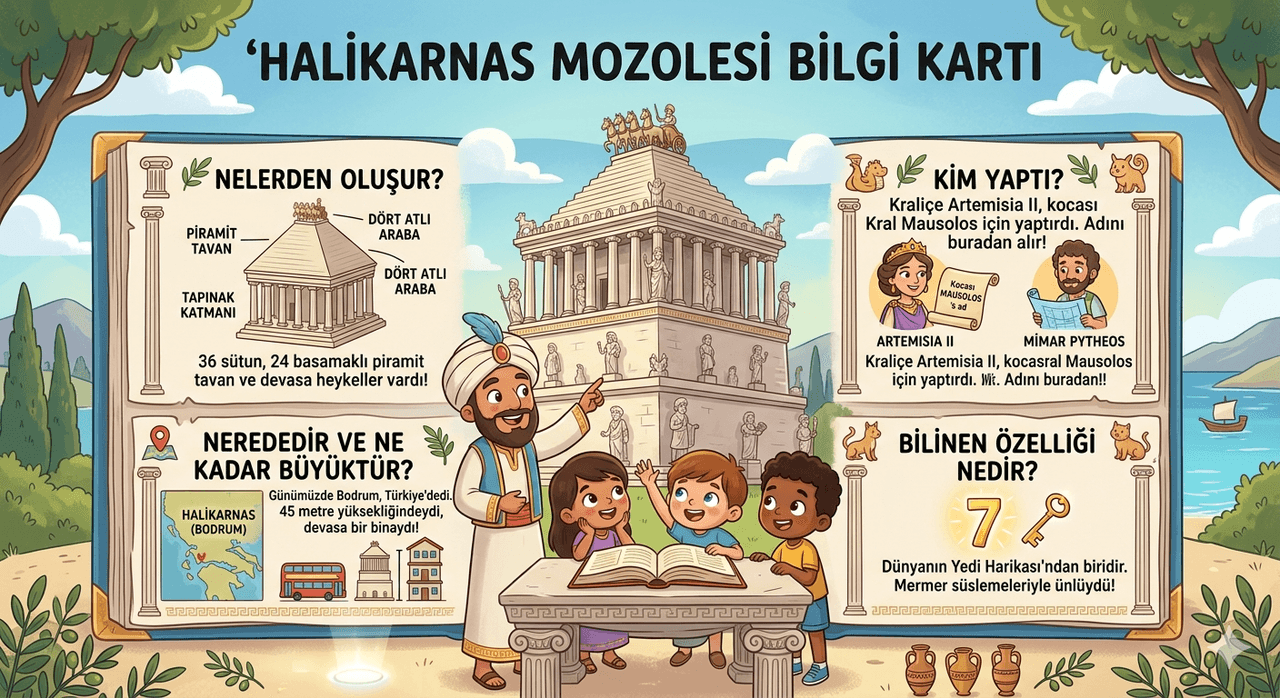
The Mausoleum at Halicarnassus is a vast tomb built around 2,400 years ago in what is today the district of Bodrum, Muğla, in honor of the Carian ruler Mausolus. The structure was so ornate and impressive that ancient writers included it among the “Seven Wonders of the Ancient World.”
Mausolus commissioned many buildings during his reign to beautify his city, but this monumental tomb was designed to showcase his power to the entire world. However, he died before its completion, and his wife Artemisia took over and continued the construction.
What Did This Grand Structure Look Like?
The Mausoleum stood approximately 50 meters tall, equivalent to a modern 15-story building. It consisted of four main sections: a high base (podium) at the bottom, topped by 36 majestic columns, and above them a 24-step pyramid-shaped roof. At the very apex of the pyramid stood a massive chariot drawn by four horses (a quadriga), with statues of Mausolus and Artemisia inside. Every surface of the structure was adorned with lion statues, relief sculptures depicting battle scenes, and decorations crafted by the most renowned artists of the era.
A Journey Through Time
Around 2,400 years ago (circa 350 BCE), this colossal monument rose in the Carian region of southwestern the ancient world. At that time, Bodrum was one of the most important and wealthiest cities in the ancient world.
Where Does the Name “Mausoleum” Come From?
Have you ever heard the word “mausoleum” used instead of “funerary monument”? The term originates from the name of King Mausolus. The Mausoleum at Halicarnassus was so awe-inspiring that the Romans and many subsequent societies began naming their own grand tombs “mausoleums” in its honor.
What Happened to the Mausoleum Today?
The Mausoleum stood upright for nearly 1,600 years. However, it was destroyed by a powerful earthquake in 1304. Later, knights who arrived in the region used the fallen stones from the Mausoleum to build the famous Bodrum Castle.
Today, the site of the Mausoleum can be visited as an open-air museum. The most important sculptural fragments and the remains of the famous chariot are now on display at the British Museum in London.