




How Do Airplanes Stay in the Air?
When we see massive airplanes with enormous metal wings and weights of hundreds of tons gliding through the sky, we are all amazed. While a stone or a metal toy drops to the ground immediately when thrown into the air, it remains a mystery how an aircraft weighing several tons can stay aloft for hours above the clouds. The ability of airplanes to remain in the sky is made possible by a remarkable harmony between the power of air and the laws of physics.
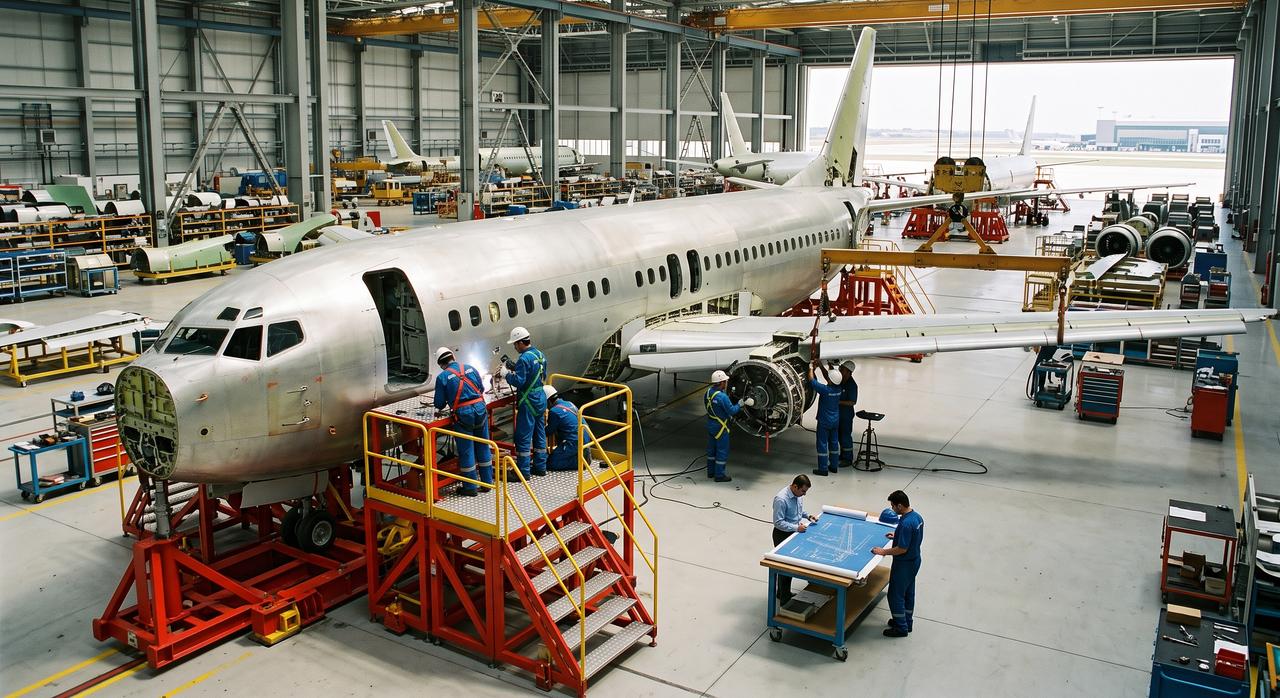
The construction of the aircraft. (Generated by artificial intelligence)
Air Is Much Stronger Than We Think
Although we cannot see it with our eyes, air is a tangible substance that surrounds us and has weight. The wind we feel on our faces when running quickly or cycling is the force exerted by air against us. Just like a kite that resists the wind, airplanes harness this pushing and lifting force of air to stay aloft.
The Mysterious Shape of Wings: Bernoulli’s Principle
The most important part of an airplane that enables it to stay in the air is its wings. The upper surface of an airplane wing is curved (bulging), while the lower surface is flat. As the airplane moves forward at high speed, the air flowing over the top of the wing moves faster than the air flowing underneath.
Fast-moving air exerts less pressure, while the slower-moving air beneath the wing pushes it upward with considerable force. This upward push is called lift, and it overcomes the weight of the aircraft to keep it airborne.
The Four Fundamental Forces That Keep an Airplane in the Sky
For an airplane to fly, four distinct forces interact with each other:
- Thrust (Engines): The airplane’s powerful engines push air backward, propelling the aircraft forward at high speed.
- Lift (Wings): The shape of the wings causes fast-moving air to generate an upward force on the aircraft.
- Weight (Gravity): The Earth’s pull that draws the aircraft downward. When lift exceeds weight, the airplane ascends.
- Drag: The resistance force exerted by air that tries to slow the aircraft. The airplane’s streamlined and aerodynamic design minimizes this drag.
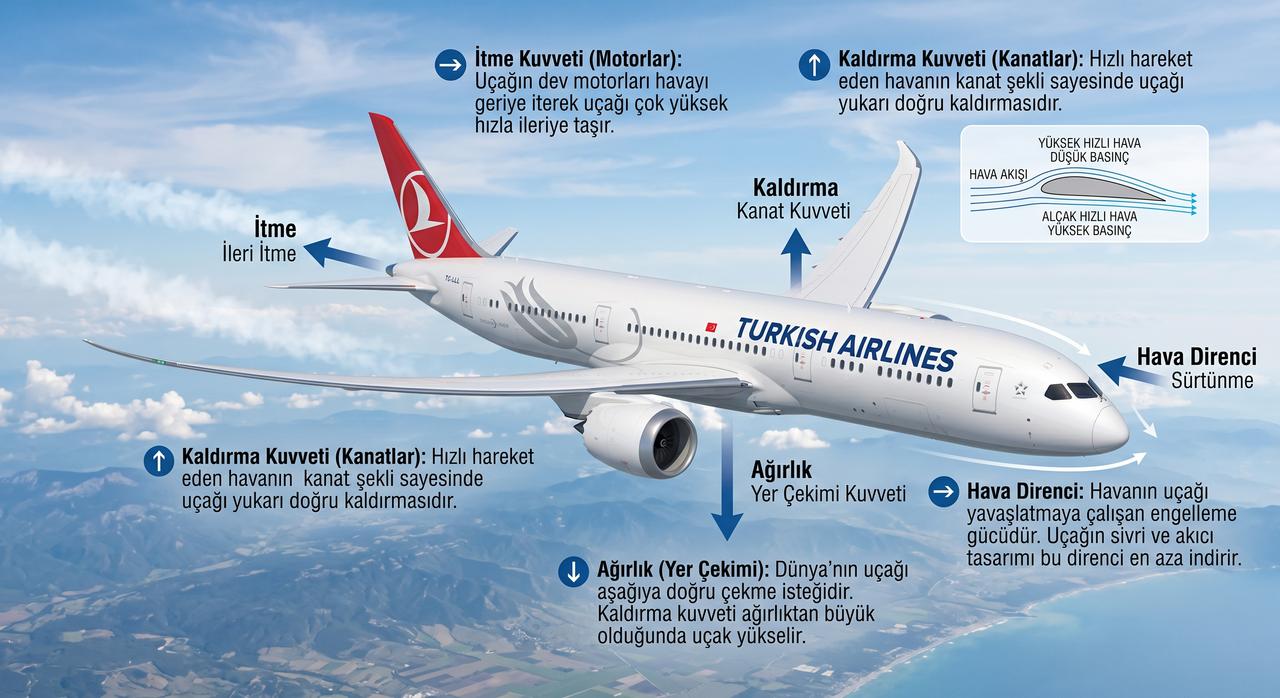
The aircraft's operating mechanism. (Generated by artificial intelligence)
Who Invented the Airplane First?
For centuries, humans watched birds and dreamed of flying. Brave individuals such as Hezarfen Ahmed Çelebi attempted to fly using wings they had built themselves. However, the foundation of modern powered aircraft was laid in 1903 by the Wright Brothers (Orville and Wilbur Wright). The Wright Brothers achieved the first successful manned flight with their self-designed powered, winged aircraft, thus launching the history of aviation.
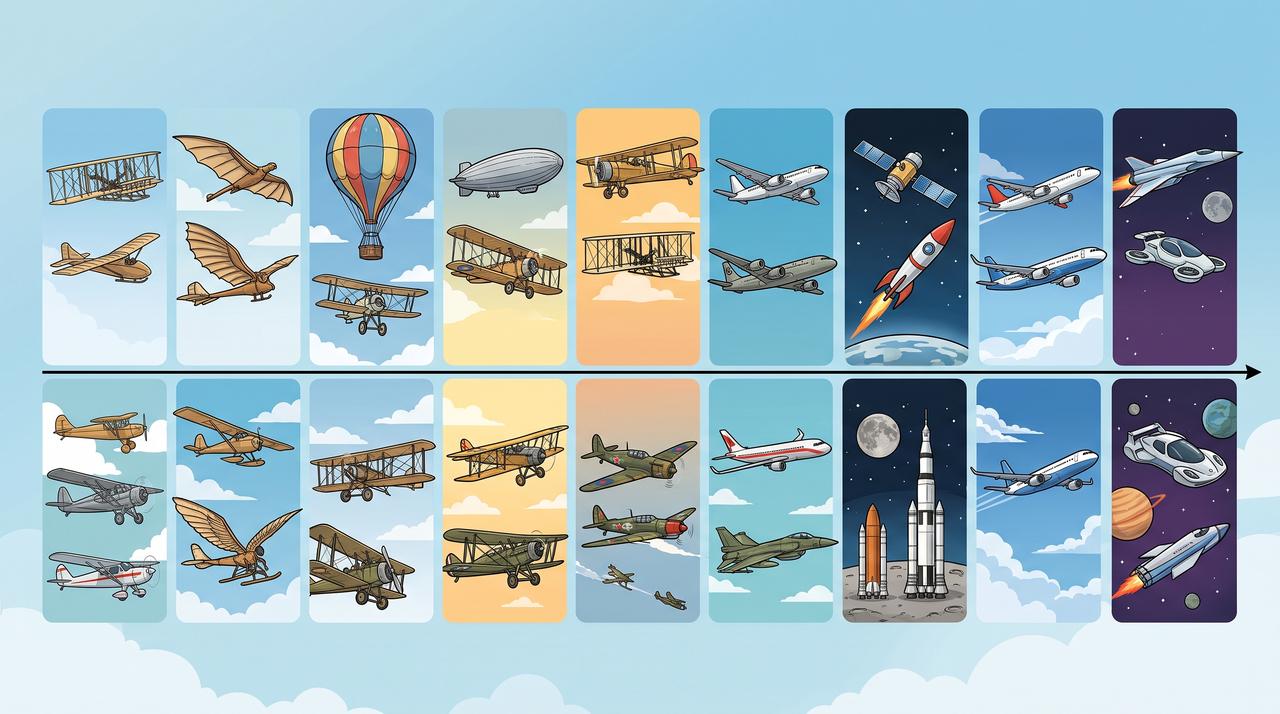
The evolution of the dream of flight over time. (Generated by artificial intelligence)
What Do Pilots Do to Control the Airplane?
Airplanes do not simply fly straight; they turn left and right, climb and descend. Pilots control the airplane’s direction by manipulating the movable flaps behind the wings and the control surfaces on the tail. These flaps alter the airflow, allowing the aircraft to maneuver through the sky like a bird.