




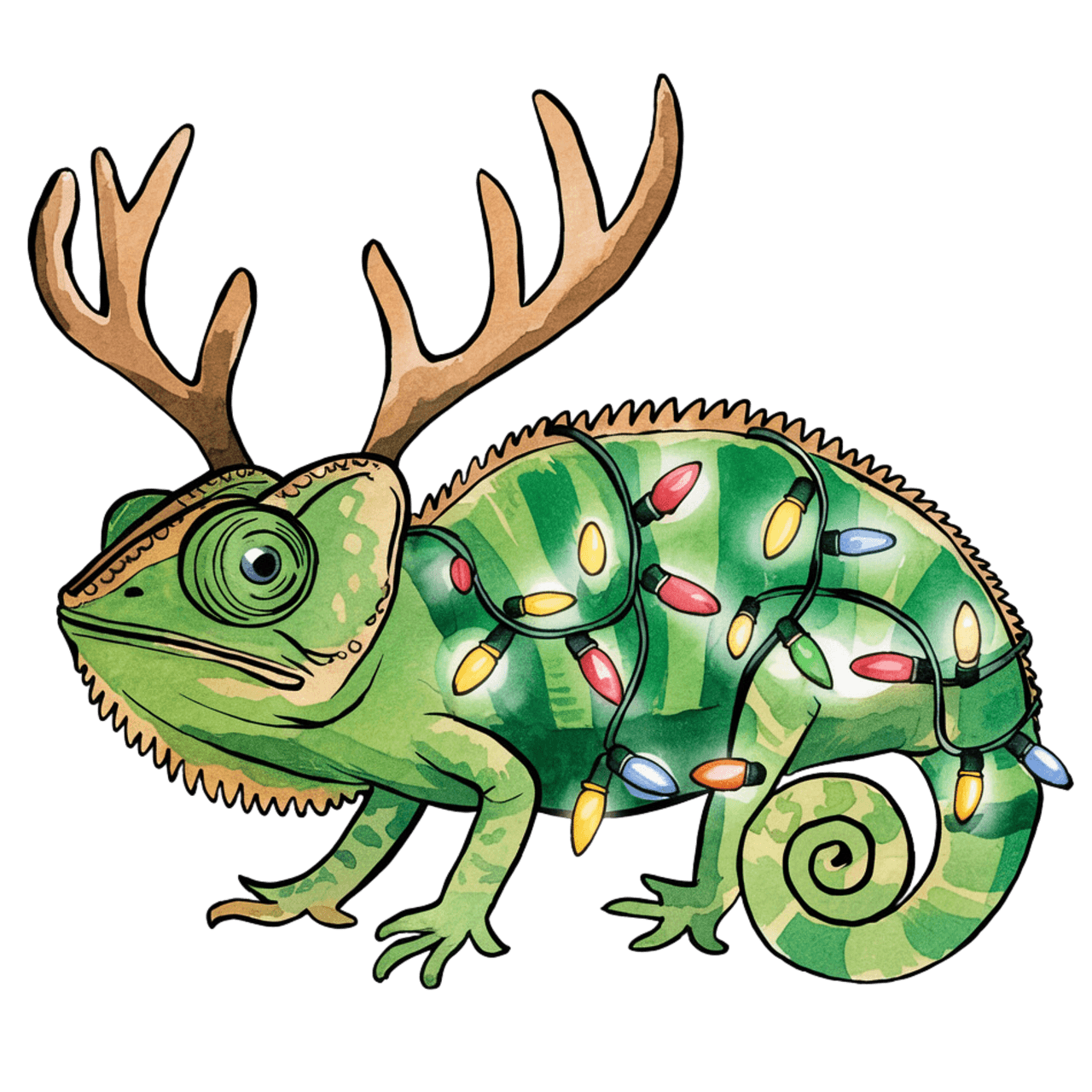
How Do Chameleons Change Their Colors?
Chameleons are lizards (lizards: long-bodied, scaly reptiles) capable of changing color according to their environment and emotions, thanks to specialized cells in their skin. This ability helps them adapt to their surroundings and regulate their body temperature.

Image of a Chameleon and Children. (Generated by Artificial Intelligence.)
General Body Characteristics
Chameleons have laterally compressed bodies, giving them a flattened appearance from the side. They possess helmet-like bony protrusions on top of their heads. This structure helps them maintain balance on tree branches.
Skin Layers
The skin of chameleons consists of multiple layers (stacked layers):
- Upper Layer: Thin and transparent, allowing light to pass through.
- Pigment Cells (color-determining cells): Contain yellow and red pigments.
- Iridophores (light-reflecting cells): Located in the lower layer; the crystals within them (hard particles that refract light) reflect blue and green tones.
Nervous System and Color Change
The chameleon’s nervous system (brain and nerve network) adjusts the spacing between crystals in the iridophores in response to stimuli. When the crystals move closer together, darker colors appear; when they move farther apart, lighter colors are visible. These reflections, combined with pigment colors, produce a range of hues.
Purposes of Color Change
- Camouflage: Adopting colors similar to the environment reduces detection by predators.
- Thermoregulation: Lighter colors in warm weather and darker colors in cool weather help maintain optimal body temperature.
- Communication: Signals to other chameleons, for example during threats or when seeking a mate.

Image of a Chameleon in Nature. (Generated by Artificial Intelligence.)
Eye Characteristics
The eyes move independently of each other. This allows chameleons to look in different directions simultaneously and perceive their surroundings in nearly a full circle (360 degrees).
Foot and Tail Structure
- Feet: Toes are grouped together. On the front feet, three toes point inward and two outward; on the hind feet, the arrangement is reversed. This structure enables a firm grip on branches.
- Tail (long extension for balance): Typically prehensile and functions as an additional gripping tool for holding onto branches.
Dietary Habits
Chameleons feed on insects (small winged or wingless invertebrates), preferring creatures such as grasshoppers, butterflies, and crickets.
Length and Use of the Tongue
Their tongues are sticky and extremely long, capable of extending up to approximately twice the length of their body. They capture prey within seconds.
Behavior and Defense
During colder seasons, their movements slow down, but they do not enter true hibernation (prolonged dormancy during cold periods). When threatened, they defend themselves by changing color or inflating their bodies.