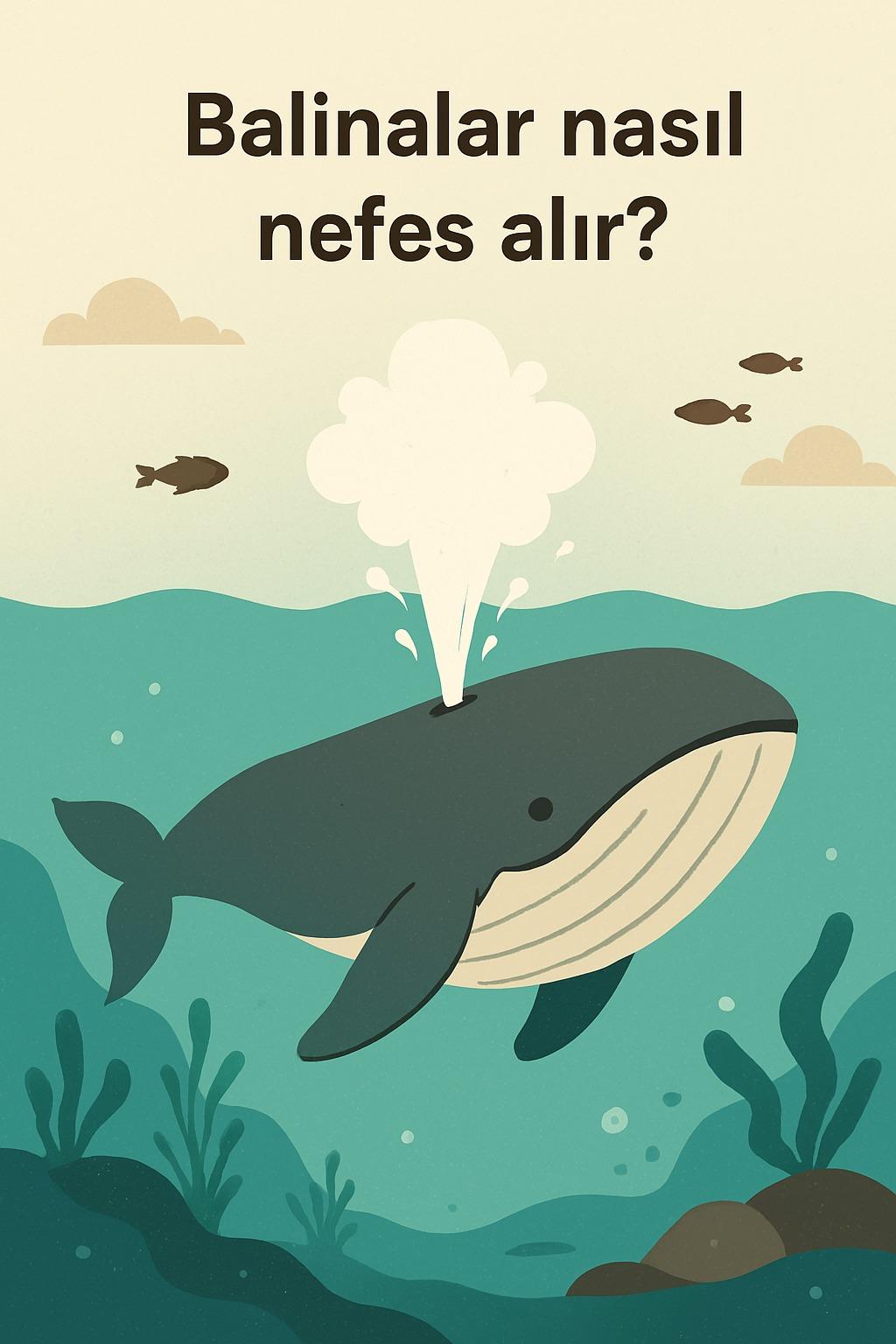




How Do Whales Breathe?
Whales are mammals that live in the oceans but breathe oxygen from the air, like humans. Despite living in water, they must surface to breathe. As a result, their respiratory systems have evolved into specialized structures adapted to marine life.
Breathing Through Their Lungs
Whales breathe through lungs, just like other land-dwelling animals. They do not have gills and rely on air to meet their oxygen needs.
Location of the Blowholes
Whales have nostrils located on the top of their heads. This unique positioning allows them to breathe by exposing only a small part of their head above the water surface.

(Generated by Artificial Intelligence.)
Structure of the Blowholes
The blowholes are controlled by muscles. During dives, these muscles close the blowhole to prevent water from entering. When they surface, the blowhole opens and allows rapid intake of oxygen.
The Breathing Process
When a whale surfaces, it first expels stale air and then draws in fresh oxygen into its lungs. This process occurs very quickly; some whales complete the breathing cycle in just a few seconds.
Preparation Before Diving
Before diving, whales fully inflate their lungs. This enables them to use oxygen efficiently during the dive.
Duration of Breath Holding
Depending on the species, whales can hold their breath for several minutes up to an hour. The blue whale and the sperm whale are among the species capable of holding their breath the longest.

(Generated by Artificial Intelligence.)
Exhalation and Spout
When exhaling, whales forcefully release air and water vapor through their blowhole. This spout becomes visible due to the collision of warm air from the lungs with cooler ambient air.
Breathing While Sleeping
Whales never forget to breathe even while sleeping. One half of their brain rests while the other half controls breathing.