


This article was automatically translated from the original Turkish version.
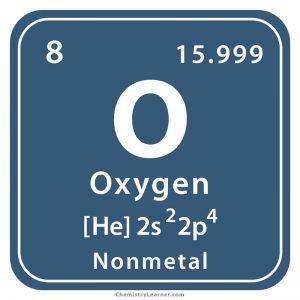
Oxygen
Density | 0.001308 g/cm³ (gas, STP) | ||||||||
|---|---|---|---|---|---|---|---|---|---|
Melting Point | -218.79°C (54.36 K) | ||||||||
Boiling Point | -182.962°C (90.188 K) | ||||||||
Phase | Gas (at room temperature) | ||||||||
Electron Configuration | 2s² 2p⁴ | ||||||||
Block | p | ||||||||
Period(s) | 2 | ||||||||
Group | 16 (chalcogens) | ||||||||
Atomic Number | 8 | ||||||||
Oxygen (O) is a chemical element with atomic number 8 and a highly reactive nonmetal in the chalcogen group of the periodic table place. Oxygen is a colorless, odorless, and tasteless gas that constitutes approximately 21% of World Earth’s atmosphere and is one of the fundamental pillars of biological life. Ranked as the third most abundant element in the universe common element, it comes after hydrogen and helium hydrogen.
The discovery of oxygen played a critical role in laying the foundations of chemistry and emerged through the contributions of multiple science individuals. The first indications of oxygen’s existence date back to the early 17th century. In 1608, Dutch inventor and engineer Cornelius Drebbel observed that heating potassium nitrate (KNO₃, saltpeter) released a gas. It was later determined that this gas was oxygen, but Drebbel did not identify it as an element, recording it only as part of his mechanical and chemical experiments. Drebbel’s observation is historically recognized as one of the earliest experimental encounters with oxygen prior to its scientific discovery.
In the late 17th century, English chemist Robert Boyle challenged the traditional understanding based on the phlogiston theory by demonstrating that air was necessary for combustion. The phlogiston theory proposed that combustion occurred through the release of an imaginary substance called “phlogiston” from a material and viewed air as merely a passive environment. Boyle’s work revealed that air was not homogeneous and contained a component that supported combustion. This insight was further developed by English chemist John Mayow. In his 1668 work “Tractatus Duo,” Mayow proposed that fire and respiration consumed a component of air he called “spiritus nitroaereus” (nitrous air spirit). Mayow observed that when a mouse or a burning candle was confined in a sealed container, water rose inside the container and approximately 1/14 of the air’s volume was consumed. This component was later identified as oxygen, but Mayow’s work remained insufficiently recognized at the time.
The official discovery of oxygen occurred in the 18th century through the work of three chemists: Joseph Priestley, Carl Wilhelm Scheele, and Antoine Lavoisier. First, Swedish chemist Carl Wilhelm Scheele obtained oxygen between 1771 and 1772 in Uppsala by heating mercury oxide (HgO) and various nitrates. Scheele named this gas “fire air” because he observed that it supported combustion difference. However, although he documented his findings in his work “Treatise on Air and Fire,” the publication was delayed until 1777, causing him to lose priority for the discovery.
English chemist Joseph Priestley, on 1 August August 1774, in Wiltshire, England, focused sunlight through a lens onto mercury oxide (HgO) and collected the resulting gas. Priestley noted that this gas made a candle burn more brightly and produced a feeling of “lightness and ease” in the chest when inhaled. He called the gas “dephlogisticated air” and published his findings in 1775 in the book “Experiments and Observations on Different Kinds of Air.” Priestley’s publication secured him priority for the discovery, but he failed to identify the gas as an element, remaining committed to the phlogiston theory and believing combustion involved the loss of phlogiston.
French chemist Antoine Lavoisier played a decisive role in the discovery and definition of oxygen. When Priestley visited Paris in 1774, he described his experiments to Lavoisier, and Scheele also sent Lavoisier a letter that same year sharing his results (though Lavoisier did not respond to it). Lavoisier began his own experiments from 1774 onward and correctly explained oxygen’s role in combustion, thereby refuting the phlogiston theory. For example, he observed that when mercury and air were heated in a sealed container, the total mass remained unchanged, but when the container was opened, air rushed in—demonstrating that a component of air had been consumed. In his 1777 publication “Sur la combustion en général,” he stated that air consisted of two gases: “vital air” (which supported combustion and respiration, now known as oxygen) and “azote” (now nitrogen). Lavoisier named oxygen “oxy-gène,” derived from the Greek words “ὀξύς” (oxús, sharp/acid) and “-γενής” (-genēs, producer), because he mistakenly believed oxygen was the essential component of all acids. It was later discovered that this view was incorrect—for example, HCl contains no oxygen—but the name endured.
The discovery of oxygen brought an end to the phlogiston theory and laid the foundation of modern chemistry by supporting Lavoisier’s principle of conservation of mass. Furthermore, the liquefaction of oxygen in the 19th century (achieved in 1883 by Zygmunt Wróblewski and Karol Olszewski) and its industrial applications increased its technological significance.
Oxygen is a colorless, odorless, and tasteless gas at standard temperature and pressure (STP: 0°C and 1 atm), with a molecular formula of O₂ (dioxygen). With an atomic mass of 15.999 g/mol, oxygen is located in group 16 (chalcogens) and period 2 of the periodic table. Its density is 0.001308 g/cm³ and it has low thermal conductivity in gaseous form (0.02658 W/(m·K)). The melting point of oxygen is -218.79°C (54.36 K) and its boiling point is -182.962°C (90.188 K). Liquid oxygen is a pale blue liquid at -182.96°C with a density of 1.141 g/cm³; this blue color arises from the absorption of red light. Solid oxygen forms below -218.79°C and exhibits a pale blue crystal building; its density varies from 21 cm³/mol in the α-phase to 23.5 cm³/mol in the γ-phase.
Oxygen gas is more soluble in water than nitrogen gas; for example, at 0°C it dissolves at 14.6 mg/L and at 20°C at 7.6 mg/L sweet. In terms of magnetic properties, triplet oxygen (O₂) is paramagnetic; this is explained by the presence of unpaired electrons in the molecule that interact with magnetic fields. Liquid oxygen can be suspended between the poles of a strong magnet due to this property.
Oxygen is highly reactive due to its high electronegativity (3.44 on the Pauling scale) and readily combines with most elements to form oxides. Its electron configuration is [He] 2s² 2p⁴ and it has six valence electrons. Oxygen typically exhibits an oxidation state of -2 (as in H₂O), but also shows rare oxidation states of -1 (peroxides, H₂O₂), +1 (O₂F₂), and +2 (OF₂) like. Oxygen forms compounds with all elements except fluorine and acts as a powerful oxidizing agent, playing a central role in processes such as combustion.
The molecular structure of oxygen consists of a double covalent bond (O=O) between two oxygen atoms; the bond energy is 498.3 kJ/mol. This structure gives rise to oxygen’s triplet ground state (³O₂), which limits its reactivity; this prevents spontaneous combustion of organic materials. However, higher-energy forms such as singlet oxygen (¹O₂) are far more reactive with organic compounds.
Allotropes are different physical forms of the same element resulting from atoms arranging into distinct molecular or crystalline structures. Oxygen exhibits several allotropes, each with unique properties:
Isotopes are variants of an element with the same number of proton but different numbers of neutron. Oxygen has several natural and stable isotopes with broad applications in scientific research:
Additionally, radioactive isotopes range from 11O to 28O. The longest-lived radioactive isotope is 15O (half-life: 122.24 seconds), while the shortest-lived is 12O (half-life: 580×10⁻²⁴ seconds). These isotopes play a role in fields such as paleoclimatology (for example, using the ¹⁸O/¹⁶O ratio for climate analysis) important.
Oxygen is the third most abundant element by mass in the universe and is widely found on Earth in biosphere, atmosphere, oceans, and land. It constitutes 20.8% by volume and 23.1% by mass of Earth’s atmosphere, equivalent to approximately 10¹⁵ tons of oxygen. Oxygen compounds, such as silicon dioxide (SiO₂), make up 49.2% of Earth’s crust, and 88.8% of the oceans are in the form of water (H₂O). The human body is composed of 65% oxygen.
The Great Oxygenation Event, approximately 2.4 billion years ago, led to a rise in oxygen levels that eliminated most anaerobic organisms and shaped the modern atmosphere. Today, photosynthesis oxygen’s main source, continuously replenishes oxygen in the atmosphere through this process.
Oxygen is essential for aerobic organisms and is a fundamental component of cellular respiration for energy production. The general equation is:
C6H12O6 + 6O2 → 6CO2 + 6H2O + 2880 kJ/mol
In this process, oxygen acts as the final electron acceptor in the mitochondrial electron transport chain, enabling ATP synthesis. Humans inhale 1.8–2.4 grams of oxygen per minute, amounting to over 6 billion tons consumed annually by humanity.
Photosynthesis is the biological production source of oxygen:
6CO2 + 6H2O + photons → C6H12O6 + 6O2
Plants, algae, and cyanobacteria produce atmospheric oxygen through this process; photoautotrophs in the oceans supply approximately 70% of global oxygen. Oxygen also plays a role in the immune system; reactive oxygen species (ROS) are used to destroy pathogens, but excessive ROS can cause damage to the cardiovascular system road.
Oxygen therapy helps treat conditions such as pneumonia, emphysema, and heart failure by increasing oxygen levels. However, at high partial pressures (>50 kPa), it carries a risk of toxicity and can induce convulsions.
Industrial oxygen production exceeds 100 million tons annually and is primarily achieved through two methods:
In the laboratory, oxygen is produced by heating potassium chlorate (KClO₃) with manganese dioxide (MnO₂) as a catalyst or by electrolysis of water (H₂O → H₂ + ½ O₂). Oxygen has a wide range of applications, including steel production (to remove sulfur and carbon), chemical synthesis (e.g., ethylene oxide production), rocket fuels, and medical applications.
Joseph Jewelry. "Oxygen." *Joseph Jewelry Guide Glossary*. Accessed March 20, 2025. https://www.josephjewelry.com/guide/glossary/oxygen?srsltid=AfmBOooP5UR_oeyMFQnMMOPGabWxpPVLklfJuY_y1lnaTiwNOILZNIOd.
Merriam-Webster. “Oxygen.” *Merriam-Webster Dictionary*. Accessed March 20, 2025. https://www.merriam-webster.com/dictionary/oxygen.
PubChem. "Oxygen: Compound Summary." National Library of Medicine. Accessed March 20, 2025. https://pubchem.ncbi.nlm.nih.gov/compound/Oxygen#section=Computed-Properties.
SciEd. "Oxygen." Scottish Sensory Centre, University of Edinburgh. Accessed March 20, 2025. https://www.ssc.education.ed.ac.uk/BSL/chemistry/oxygend.html.
UCAR Center for Science Education. "Oxygen." *SciEd: Learning Zone*. Accessed March 20, 2025. https://scied.ucar.edu/learning-zone/air-quality/oxygen.
World Health Organization. “Oxygen.” *WHO Health Topics*. Accessed March 20, 2025. https://www.who.int/health-topics/oxygen#tab=tab_1.
“Biology Online Dictionary.” *Biology Online*. Accessed March 20, 2025. https://www.biologyonline.com/dictionary/oxygen.
“Cancer Terms: Oxygen.” *National Cancer Institute*. Accessed March 20, 2025. https://www.cancer.gov/publications/dictionaries/cancer-terms/def/oxygen.
“Chemistry Learner: Oxygen.” *Chemistry Learner*. Accessed March 20, 2025. https://www.chemistrylearner.com/oxygen.html.

Oxygen
Density | 0.001308 g/cm³ (gas, STP) | ||||||||
|---|---|---|---|---|---|---|---|---|---|
Melting Point | -218.79°C (54.36 K) | ||||||||
Boiling Point | -182.962°C (90.188 K) | ||||||||
Phase | Gas (at room temperature) | ||||||||
Electron Configuration | 2s² 2p⁴ | ||||||||
Block | p | ||||||||
Period(s) | 2 | ||||||||
Group | 16 (chalcogens) | ||||||||
Atomic Number | 8 | ||||||||
History
Physical Properties
Chemical Properties
Allotropes
Isotopes
Abundance
Effects on Biological Life
Production