




How Does Our Brain Store Information?
The human brain is a fascinating and curious organ living inside our skull. It functions as our body’s supreme control center, almost like a “survival computer.”
Its most distinctive feature that sets it apart from other organs is its folded structure and the approximately 86 billion tiny “neurons,” or nerve cells, it contains. These neurons continuously transmit electrical and chemical signals that enable us to think, run, and imagine.
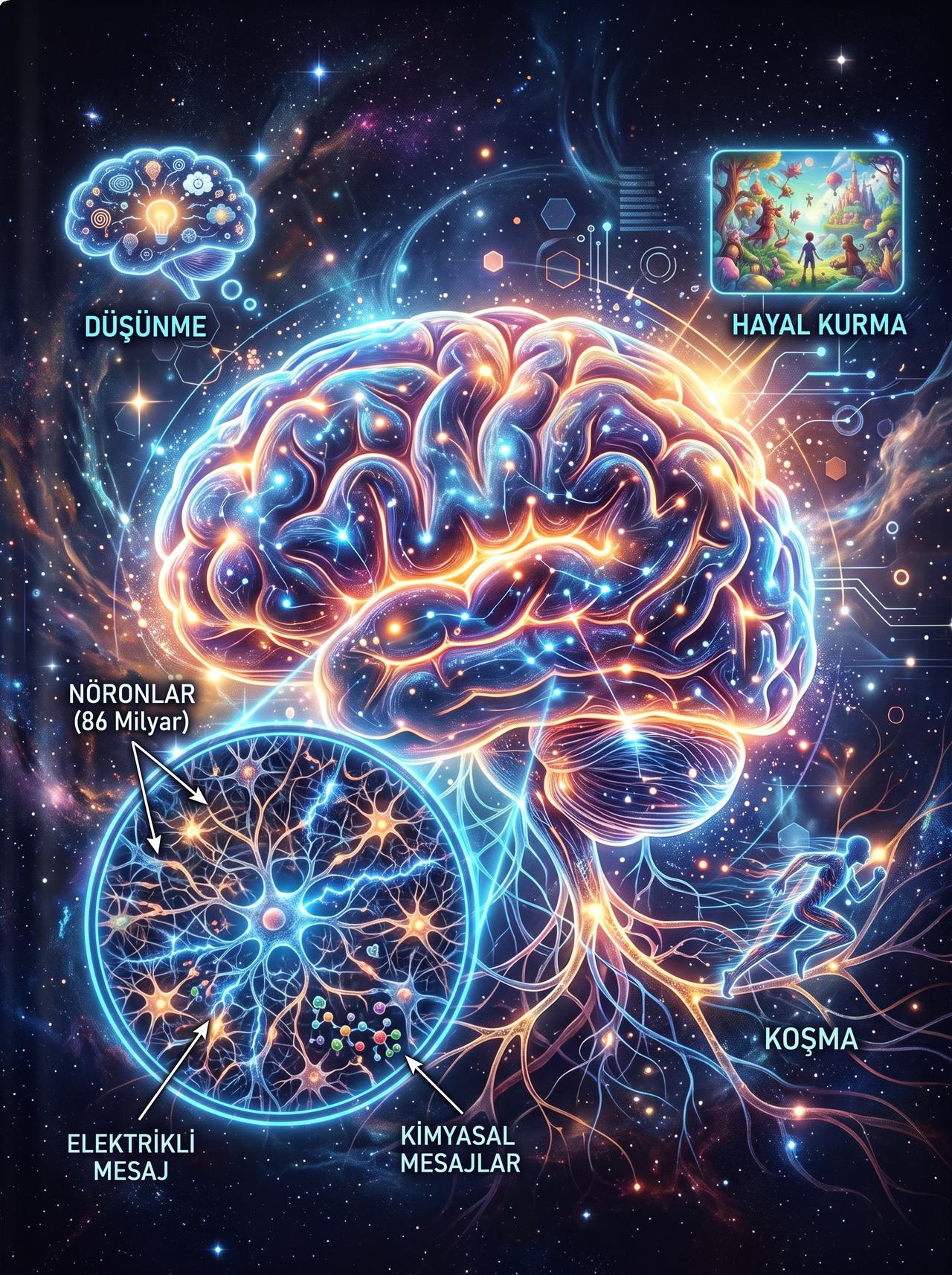
An overview of the brain system. (Generated by artificial intelligence)
Moreover, the soft, pinkish-gray structure of our brain consists largely of water. A small amount of fat and protein is also present within this structure.
How Large Is It?
The average weight of an adult human brain is about 1.4 kilograms (roughly the weight of a cantaloupe). At birth, our brain is quite small but grows and develops rapidly throughout childhood and adolescence.
How Does It Store Information?
The brain does not store information by placing it inside a box. Instead, every time we learn something new or experience a memory, nerve cells called neurons extend tiny arms to form new bridges and connections, known as synapses.
- Temporary File (Short-Term Memory): When we encounter new information—for example, the rules of a game—it is first stored in short-term memory.
- Permanent File (Long-Term Memory): If we repeatedly revisit that information or if it is tied to an emotionally significant or exciting moment, the bridges between neurons strengthen over time.
- Hippocampus and Amygdala: The small region called the hippocampus records new memories into long-term storage, while the amygdala adds emotional context to help solidify these memories.
Thus, every time we repeat information, the pathway in our brain becomes stronger, and the information becomes permanently fixed, as if moved into a sturdy library.
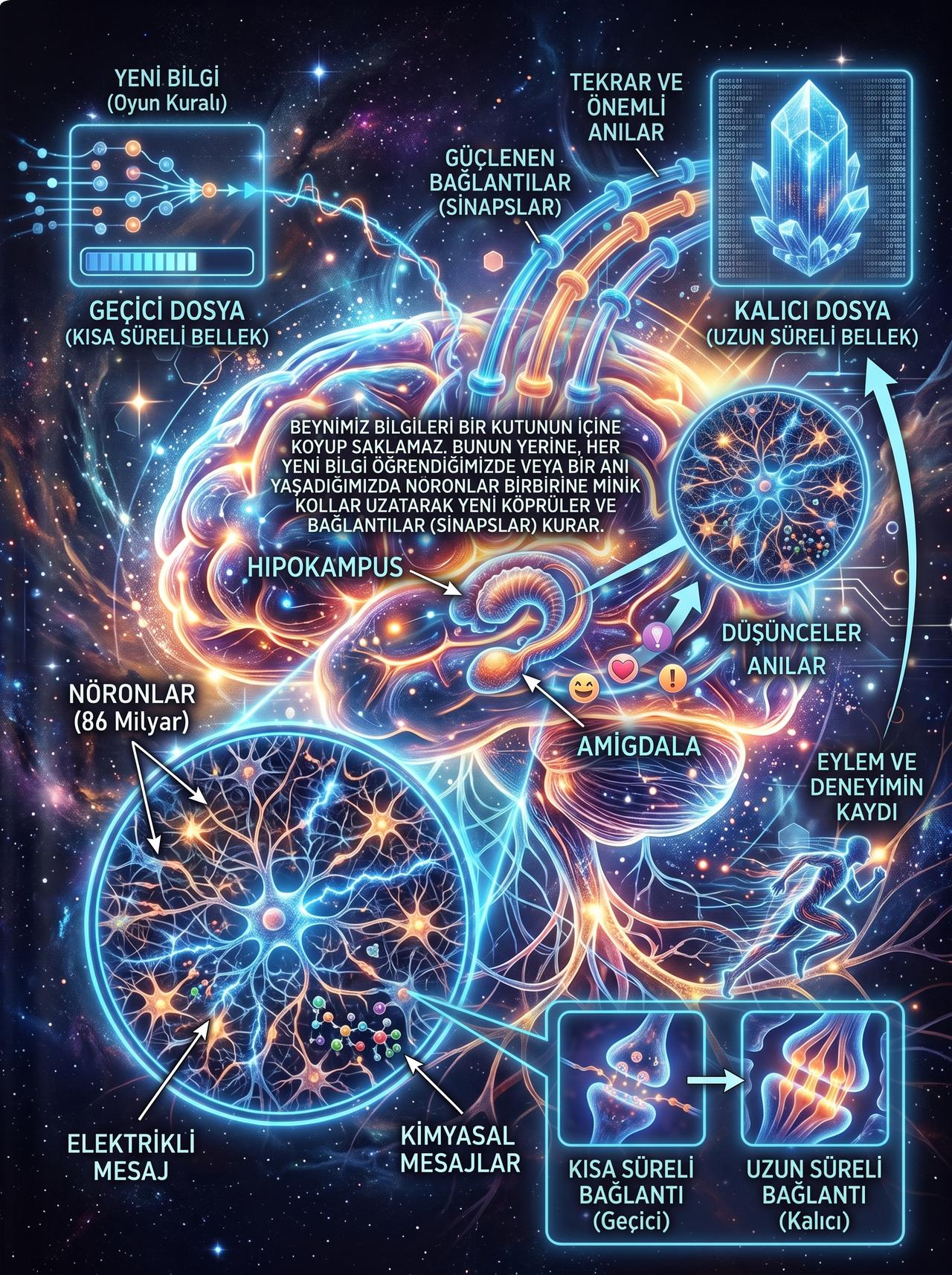
The working mechanism of the brain. (Generated by artificial intelligence)
How Much Does It Work?
The brain never sleeps or stops working! Even while we sleep, it organizes what we learned during the day, filters memories, and maintains the function of our organs. Furthermore, the idea that “we only use 10 percent of our brain” is a massive urban myth; the entire brain is actively engaged every single day.
How Is It Protected?
To maintain its development and strength, the brain requires regular sleep, healthy foods, plenty of water, and physical exercise. Additionally, learning new things, reading books, or solving puzzles keeps the neural connections in our brain fresh, ensuring it remains strong and alert at all times!