


Irony
Irony is a figure of speech in which the intended meaning is the opposite of what is literally said or done. There is a contrast between what is stated and what is actually meant. This contrast prompts the listener or reader to think critically.
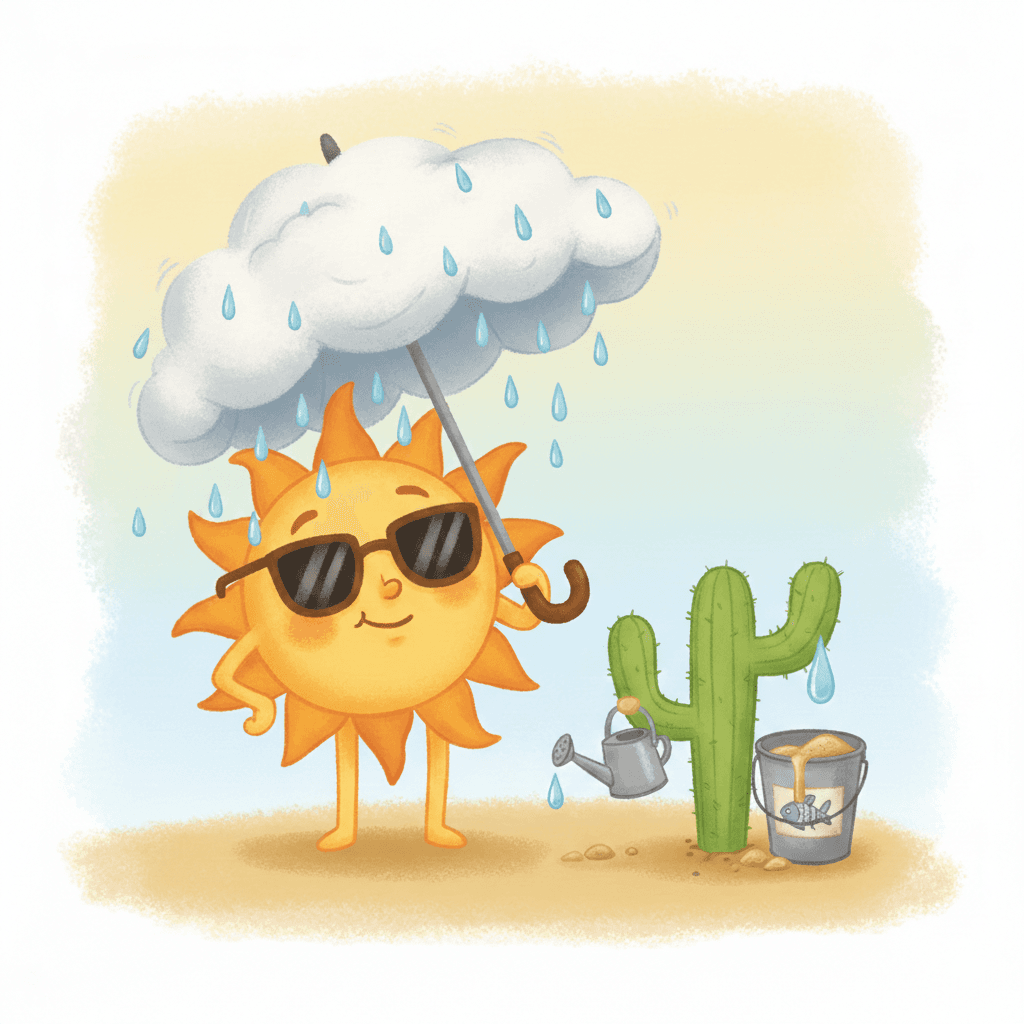
(Generated by artificial intelligence)
Irony helps children learn to use language more carefully. It teaches them to question what they hear and to recognize the difference between appearance and reality. For this reason, irony is a form of expression that develops critical thinking.
Where Does It Originate?
The word irony comes from the Greek word “eironeia”, which conveys the meanings of feigned ignorance and pretending to be other than one is.
Throughout history, irony has been used in philosophy, literature, and conversation. It has been regarded especially as a method for deepening thought.
What Is the Purpose of Irony?
Irony communicates a situation not by direct criticism but by presenting it from the opposite perspective. In this way, it encourages reflection and awareness without being confrontational.
Unlike other forms of expression such as humor, wit, and hiciv, irony critiques without aggression. Its primary aim is not to amuse but to highlight contradiction.
The Core Feature of Irony
Irony is based on the contrast between reality and appearance. What is said appears serious, but the true meaning is the opposite.
Through this method, contradictions are revealed. The goal is not to attack directly but to prompt the other person to think.
Where Is Irony Used?
Irony is used in literature, theater, philosophy, and everyday conversation. Ironical expressions can also be found in sacred texts.
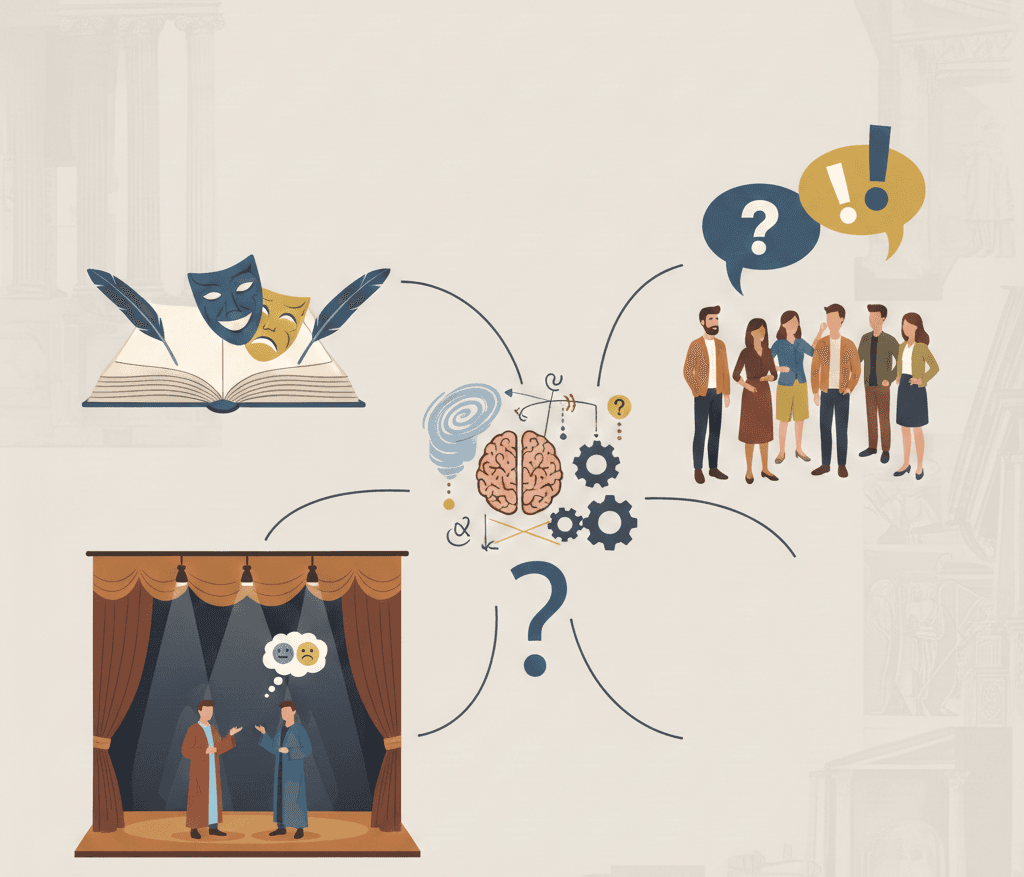
(Generated by artificial intelligence)
For example, when Prophet Ibrahim says, “Ask them,” referring to idols, despite knowing that idols cannot speak, this is an ironical expression. Through this method, he directs people toward reflection.
What Is the Difference Between Irony and Humor?
Humor is a form of mockery that produces a subtle smile. It primarily conveys a attitude and mood. Irony, however, is oriented more toward thought. Its aim is not to provoke laughter but to make people aware of contradiction. Therefore, although the two are similar, they are not the same.
How Do Children Recognize Irony?
When what is said does not match the situation, irony may be present. Tone, context, and the described event help children understand this discrepancy.
(Generated by artificial intelligence)
Irony enables children to listen more carefully to language and to better understand what they read. This makes them thinking and questioning individuals.