



Isparta Yalvaç Museum
Isparta’s Yalvaç district is home to the Yalvaç Museum, which, like a treasure chest, preserves and displays objects left behind by people who lived thousands of years ago. Have you ever wondered how people lived in ancient times? This museum is an important place where you can find answers to such questions. It houses particularly valuable artifacts from the nearby great ancient city of Pisidia Antiocheia and other sites.

Isparta Yalvaç Museum (Kültür Portal)
A Journey Through Time: How Was the Museum Established? ⏳
The history of the Yalvaç Museum dates back approximately 100 years, to the early 1900s. Artifacts uncovered during excavations at the ancient city of Antiocheia were initially stored in a high school building. As the collection grew, they were moved to a warehouse in 1947. Construction of the current museum building began in 1963 and it opened its doors to the public in 1966. The museum is known as one of the oldest and richest in the Lake District.

Isparta Yalvaç Museum (Kültür Portal)
What Can You See in the Museum? 👀
The museum displays its artifacts in two main sections: Indoor Exhibition (indoor halls) and Outdoor Exhibition (the garden). Inside, there are four distinct halls, each dedicated to a different era or theme:
- Prehistoric Artifacts Hall: Here, findings from the distant past, that is, the prehistoric era, are exhibited. Have you ever seen an animal fossil from eight million years ago? Here you can view fossils of rhinoceroses, mammoths and other ancient creatures. Additionally, there are pottery vessels, axes and small figurines of Kybele, the goddess of abundance and fertility, dating from the Early Bronze Age.
- Classical Artifacts Hall: This hall displays artifacts excavated from the ancient city of Antiocheia and the sacred area dedicated to the moon god Men. Men was a revered deity in that period, and inscriptions and votive offerings dedicated to him have been found here. Also on display are fragments of statues from the Roman Imperial period, including a colossal statue of Zeus dating to the 1st century CE. Marble copies of important inscriptions such as Res Gestae Divi Augusti are also exhibited in this section. An inscription is a type of official document.
- Ethnography Hall: This section features objects from a more recent period, after Turkish culture became established in Yalvaç. Displays include reconstructions of traditional Yalvaç house interiors, fine examples of woodwork, handicrafts, traditional clothing, weapons and women’s jewelry. These artifacts reveal the lifestyle and tastes of people from that era.
- St. Paul Hall: This hall contains artifacts related to St. Paul, a key figure in early Christianity, as well as architectural fragments and religious objects from the Eastern Roman (Byzantine) period.

Isparta Yalvaç Museum (Kültür Portal)
What Is Outside? 🌳
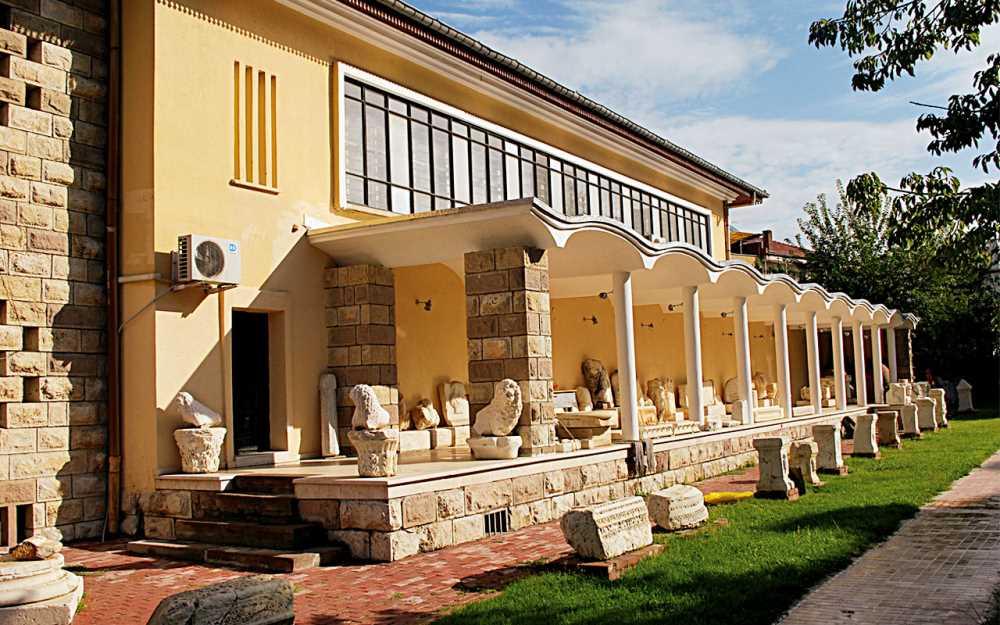
In the museum’s garden, large architectural fragments brought from the Antiocheia Ancient City are displayed. This area resembles a park of statues and architectural remains. Large artifacts such as column capitals, sarcophagi (stone or marble tombs) and gravestones are visible outdoors.