


Istanbul Turkish Foundations Calligraphy Arts Museum
In Istanbul, the Turkish Foundation Calligraphy Arts Museum, located within a historic and beautiful building, transports visitors into a unique world where writing merges with art. Calligraphy art is the art of writing Arabic letters in a beautiful and aesthetically regulated manner (hüsn-i hat). This museum houses hundreds of pieces that demonstrate how writing is not only a means of conveying information but can also become a work of art. The artifacts in the museum allow us to appreciate the extraordinary care and skill of master calligraphers of the past.
Where is the Museum and How Was It Established?
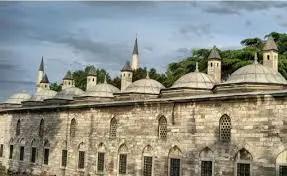
The Turkish Foundation Calligraphy Arts Museum is located in the Fatih district of Istanbul, on Beyazıt Square. The museum building is originally a historic medrese that was part of the II. Bayezid Külliyesi and completed between 1506 and 1508. A medrese is a place where education was provided in the past. This medrese was also known among the public as the “Havuzlu Medrese” due to the large pool in its courtyard. The General Directorate of Foundations restored this historic building and opened it to the public in 1984 as a calligraphy arts museum.

İstanbul Turkish Foundation Calligraphy Arts Museum (Culture Portal)
What Is Calligraphy Art?
Calligraphy art is the art of adding beauty to writing. Just as a painter uses a brush to create paintings, calligraphers use reed pens and special inks to write letters and words on paper or other materials with great care and adherence to established rules.
- Concrete Example of Abstract Concepts: The foundation of calligraphy art lies in the way letters appear on paper as if dancing in perfect harmony. Just as musical notes come together to form a beautiful melody, calligraphy letters combine within specific rules to create visually captivating forms.
There are various styles of writing in calligraphy art. For example:
- Kûfî: One of the oldest forms of calligraphy, characterized by angular and geometric shapes. It was commonly used in architectural structures and stone inscriptions.
- Sülüs: This script features fluid and rounded lines and is frequently seen in mosque decorations and large-scale works.
- Nesih: A smaller and finer script developed for legibility, traditionally used in the transcription of the Kur’an-ı Kerim.

İstanbul Turkish Foundation Calligraphy Arts Museum Anadolu Agency)
What Artifacts Are Exhibited in the Museum?
The museum’s collection contains more than 3,600 artifacts. These pieces are generally organized into sections according to writing styles, enabling visitors to easily explore the different forms of calligraphy art.
- Various Artifacts: The museum displays Kur’an-ı Kerim manuscripts written in different scripts such as kûfî, nesih, sülüs, and ta’lik, along with various handwritten books (risâleler), large inscribed panels, and tuğras (the official monograms of Ottoman sultans). Additionally, examples of writing on materials other than paper—such as stone, glass, fabric, and metal—are also exhibited.
- Calligrapher Sultans and Ladies: Alongside the works of renowned calligraphers, the Turkish Foundation Calligraphy Arts Museum also exhibits pieces created by sultans and royal ladies who practiced calligraphy. This highlights how deeply important the art was across all levels of society.