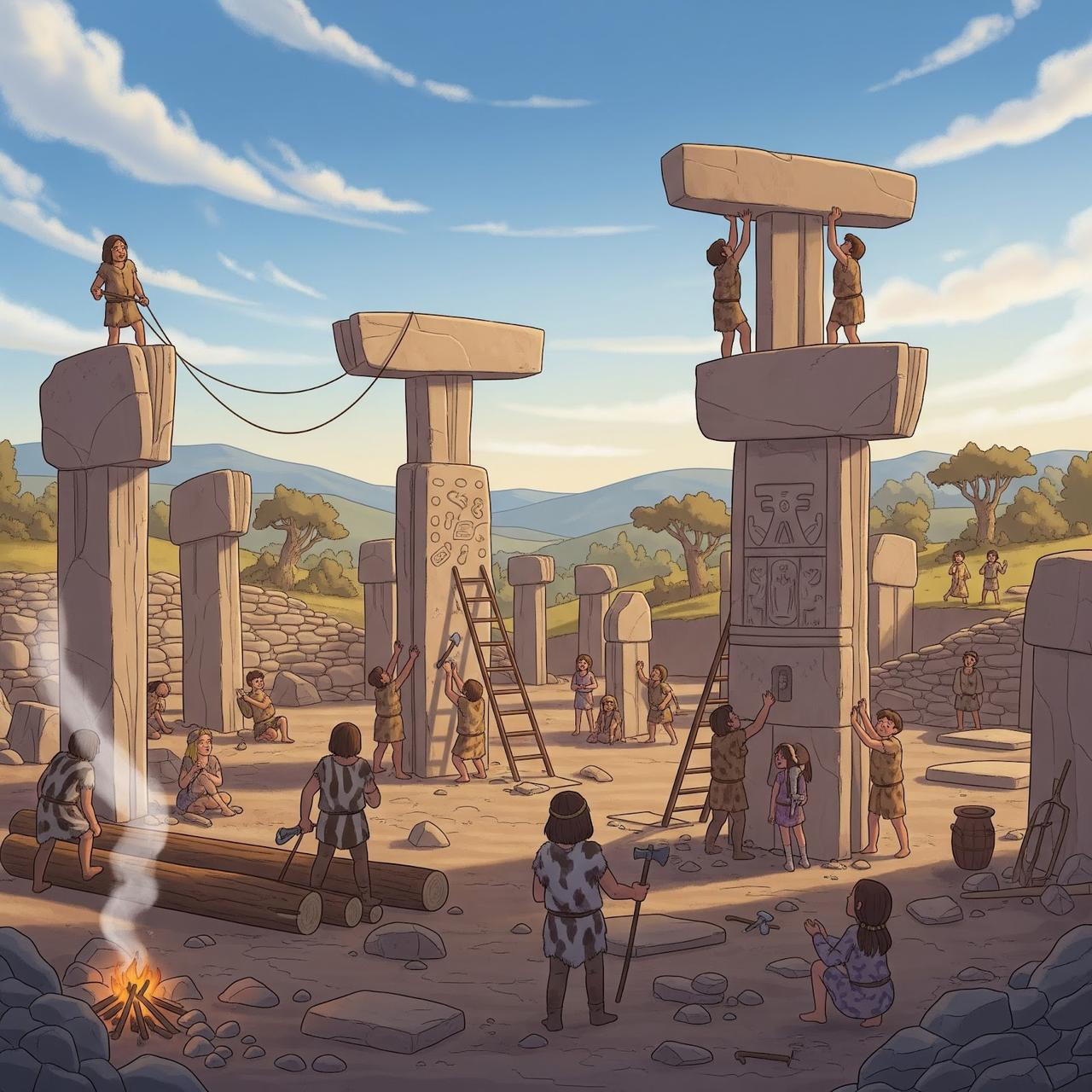




Karahan Tepe: The Mysterious Stones of History
Hello, curious explorer! Imagine thousands of years ago, long before humans began farming or built large cities. In those times, a very special place was constructed in what is now Şanlıurfa in Türkiye: Karahan Tepe. This site whispers incredible secrets about the lives of those ancient people through its massive T-shaped stones and mysterious statues.
Like its famous neighbor Göbekli Tepe, Karahan Tepe is one of the oldest known settlements in the world. The people who lived here were hunter-gatherers, meaning they collected food from nature and hunted animals. Yet they were also skilled and knowledgeable enough to come together and build enormous structures. This shows that these early humans had a far more advanced social life than previously believed.
(Generated by artificial intelligence.)
🏠What Was Life Like at Karahan Tepe?
Archaeologists, scientists who study the past, discovered both large gathering areas and smaller, hut-like dwellings during their excavations at Karahan Tepe. This suggests that Karahan Tepe was not merely a site for special rituals but also a village where people lived their daily lives.
The structures here were typically circular and carved directly into the bedrock. Among the most striking features are the large T-shaped standing stones. Researchers believe these stones may represent stylized human figures—simplified and abstracted forms that could have symbolized ancestors or important individuals of that time.
🔍What Was Found?
The discoveries unearthed from beneath the soil at Karahan Tepe are truly thrilling! Over 250 standing stones have been found here, along with numerous animal and human sculptures carved from stone. Among these figures are animals such as leopards, snakes, and foxes, as well as realistically rendered human forms.
One of the most remarkable finds is a large human statue. This sculpture is an outstanding example of how advanced these people were in art. These artifacts offer clues about the beliefs, stories, and worldview of these ancient communities—as if they are sending us a message from thousands of years ago.
⏳A Journey Through Time
Let us travel back in time! Karahan Tepe was constructed around 11,000 years ago, during a period archaeologists call the Pre-Pottery Neolithic. This was a time when humans were just beginning to cultivate crops and domesticate animals—long before the pyramids of Egypt and even before the invention of writing.
At that time, people lived not in houses as we know them today, but in simpler shelters. Yet the community that built Karahan Tepe succeeded in cutting, transporting, and shaping massive stones. This demonstrates their remarkable intelligence and organization—their ability to plan and work together toward a common goal.