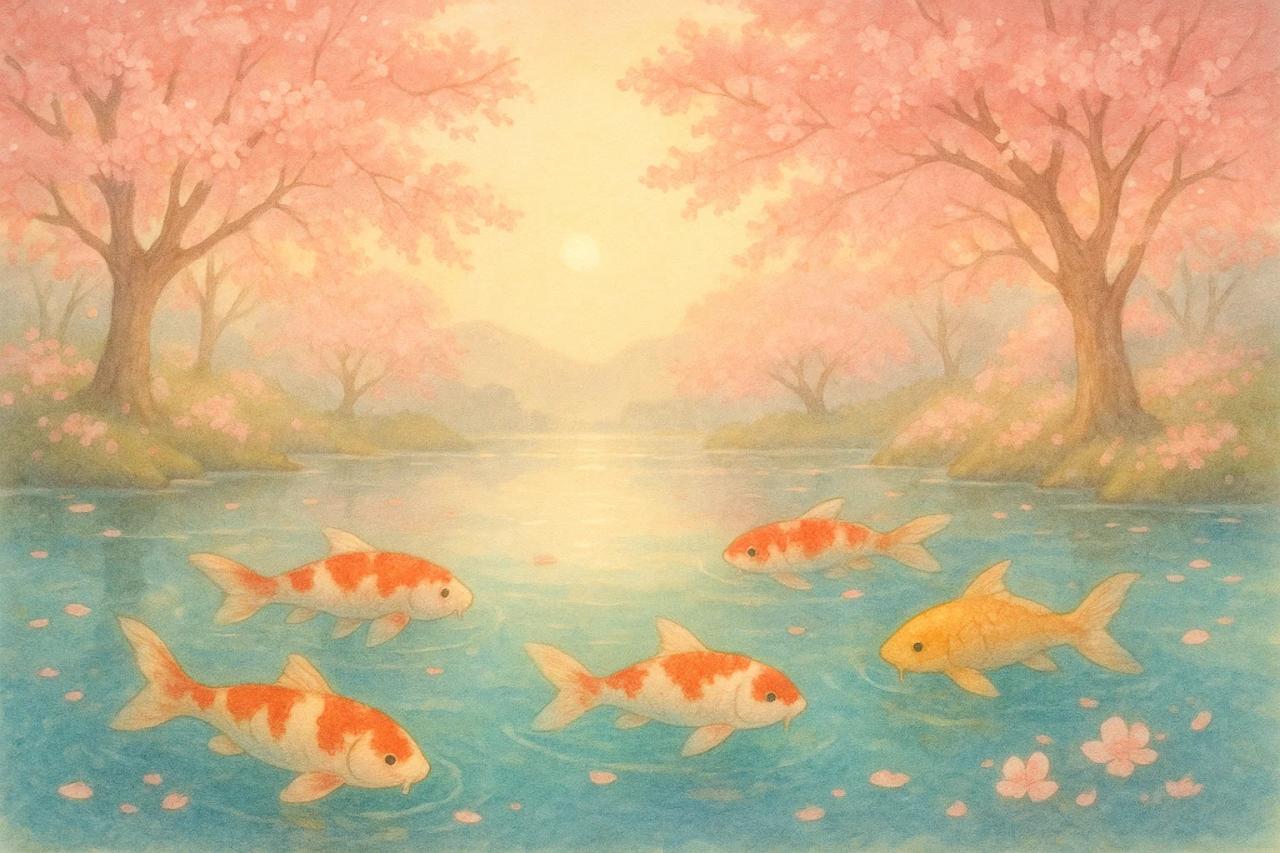




Koi Fish
Koi fish are among the most beloved ornamental fish in the world due to their colorful appearance. In fact, they are a special variety of the common carp that we all know. However, because humans have bred these fish for centuries for their unique colors and patterns, they now exhibit vastly different and beautiful appearances.

Koi Fish (Generated by Artificial Intelligence.)
🌸 Where Do They Originate From?
Koi fish first appeared in Japan in the early 1800s. At that time, Japanese farmers noticed colorful carp living in their rice paddies and began selectively breeding the most beautifully colored ones. This led to the development of the fish we now call “Japanese koi,” which come in many colors such as red, white, black, yellow, and orange.
🏞️ Where Do They Live?
Koi fish live in freshwater. In the wild, their natural habitats are the same as those of common carp: rivers, lakes, and ponds. However, we most often see them in ornamental ponds in gardens, because people greatly enjoy keeping koi in ponds for their beauty and calm swimming behavior.
🍽️ What Do They Eat?
Koi fish are omnivorous creatures. They eat small insects, plants, algae, and sometimes specially formulated feed. Koi kept in aquariums or ponds are typically fed with special floating pellets.
🐣 How Do They Reproduce?
Koi fish spawn in spring, when water temperatures rise. Female koi attach their eggs to aquatic plants or rocks in the water. The tiny fry that hatch remain for a while in warm, shallow waters. As they grow, they move to deeper areas.
A female koi becomes sexually mature around 4 to 6 years of age, while males reach maturity between 3 and 5 years of age.
⏳ How Long Do They Live?
Koi fish are long-lived. They typically live for about 40 years.
However, some koi live much longer. Scientists have found that one koi, based on scale analysis, lived to be 230 years old!
🎨 Why Do They Have So Many Different Colors?
The wide variety of colors in koi fish is the result of selective breeding by humans. Today, there are dozens of different koi varieties worldwide—some entirely white, others orange and white, and some with black spots. In Japan, koi are regarded as a symbol of beauty, patience, and strength.
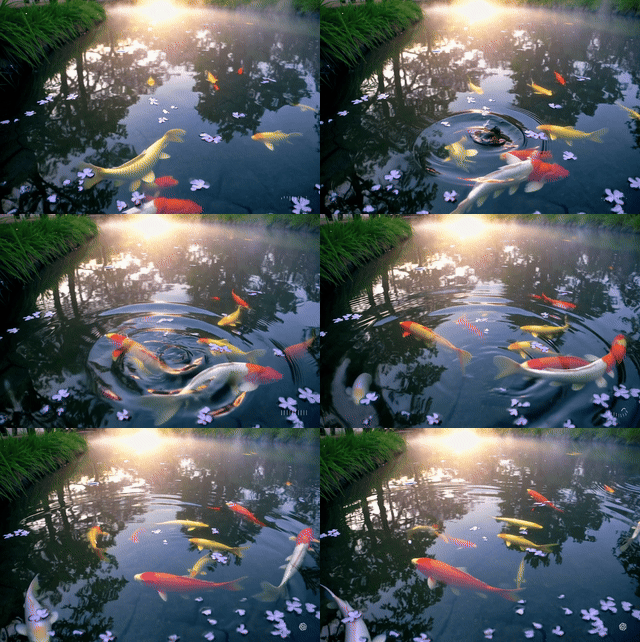
Koi Fish (Generated by Artificial Intelligence.)
💰 Why Are Koi Fish So Valuable?
Koi fish are cherished not only for their beauty but also because they are seen as symbols of good fortune and peace.
In Japan, some special koi are displayed in competitions and can even be sold for thousands of dollars!
💬 Interesting Facts
- 🐟 Koi fish are closely related to goldfish, but they are not the same species.
- 🌊 Koi fish are not warm-blooded, so their activity slows significantly when the water becomes very cold.
- 🧘 In Japan, koi represent patience and success. People find peace by watching koi in their ponds.