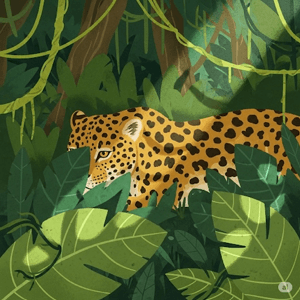




Leopard
Have you ever imagined a cat that can climb trees and carry its prey up with it? The leopard is precisely such an animal. Leopards are members of the big cat family and are known as one of the best camouflaged animals in nature. Thanks to their black spots on a brown-yellow coat, they are highly skilled at hiding among leaves and approaching their prey silently.

(Generated by Artificial Intelligence)
Physical Characteristics 🐾
Leopards have bodies designed to make them exceptional hunters. They have short legs relative to their long bodies, which allows them to be extremely agile. Their wide paws and sharp claws help them climb trees and capture prey. The spot patterns on their bodies are unique to each leopard, just like human fingerprints. These spots serve as their identity markers.
Where Do They Live? 🌍
Leopards can live across a vast range of habitats. They can be found in many different environments, from the warm savannas of Africa to the forests of Asia. Because their habitats vary so widely, the color of their fur and the length of their hair can differ depending on their location. For example, the Amur leopard, which lives in colder regions, has thicker fur and more widely spaced spots.

(Generated by Artificial Intelligence)
What Do They Eat? 🍖
Leopards are carnivorous animals. Their preferred prey includes hoofed animals such as deer and antelope. However, when they cannot find larger prey, they may hunt smaller animals like monkeys, birds, reptiles, or insects. Leopards typically prefer to hunt at night. To protect their kills from other predators such as hyenas or jackals, they drag their prey up into tree branches.
How Do They Grow? 👶
Female leopards usually give birth to two cubs after a gestation period of approximately 90 to 105 days. The cubs stay with their mother for about 18 to 22 months, during which time they learn how to hunt. Their mothers teach them how to find food, climb trees, and avoid danger. Once they are sufficiently grown, they begin life on their own.