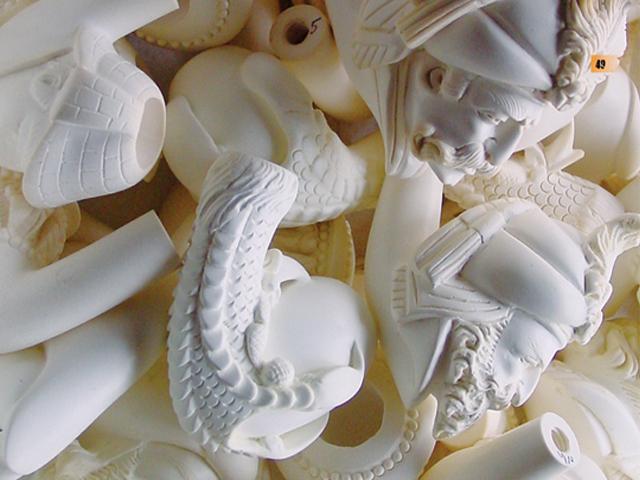




Lületaşı
Lületaşı is a special stone found in the soils of Eskişehir. It resembles soap in its white, soft, and porous structure. This stone is found underground in a wet state. Once extracted from the soil, its moisture allows it to be easily shaped. As the stone comes into contact with air, it hardens and may develop a slightly yellowish tint.
Where Is Lületaşı Found?
Lületaşı is most commonly found in certain villages of Eskişehir. These stones lie 30 to 400 meters beneath the surface. Special tunnels and shafts are dug to extract them from the earth. The people who carry out this work are called lületaşı hunters.
How Is Lületaşı Processed?
Before processing, lületaşı is extracted from the soil and washed. While still wet, artisans shape it into the desired forms because it is soft and easily cut or carved at this stage.
Each artisan can create different items. Some make necklaces or earrings, while others produce small sculptures such as chess pieces or biblos. After drying and hardening, the stone is polished to achieve a brighter and more beautiful appearance.

Lületaşı Craftsmanship (Eskişehir Provincial Directorate of Culture and Tourism)
Why Is Lületaşı Important?
Lületaşı is an important cultural symbol of Eskişehir. Products made from this stone are recognized both within Türkiye and in various parts of the world. The craft of working lületaşı is a traditional skill passed down from generation to generation, preserving the heritage of handcrafts. In 2009, Lületaşı Craftsmanship was added to UNESCO’s List of Intangible Cultural Heritage, marking the beginning of its formal protection. This recognition underscores the immense value of lületaşı.