




Mardin
📌 Mardin
About the City
Mardin is a city built on a high escarpment overlooking the Mesopotamian Plain, renowned for its stone architecture and layered history. The city’s architecture is distinguished by houses constructed from local limestone and narrow winding streets. This architectural style adapts effectively to climatic conditions while offering a cohesive aesthetic. The majority of the houses are built from carved stone, and from the balconies of some homes, the vast expanse of the Mesopotamian Plain can be seen.
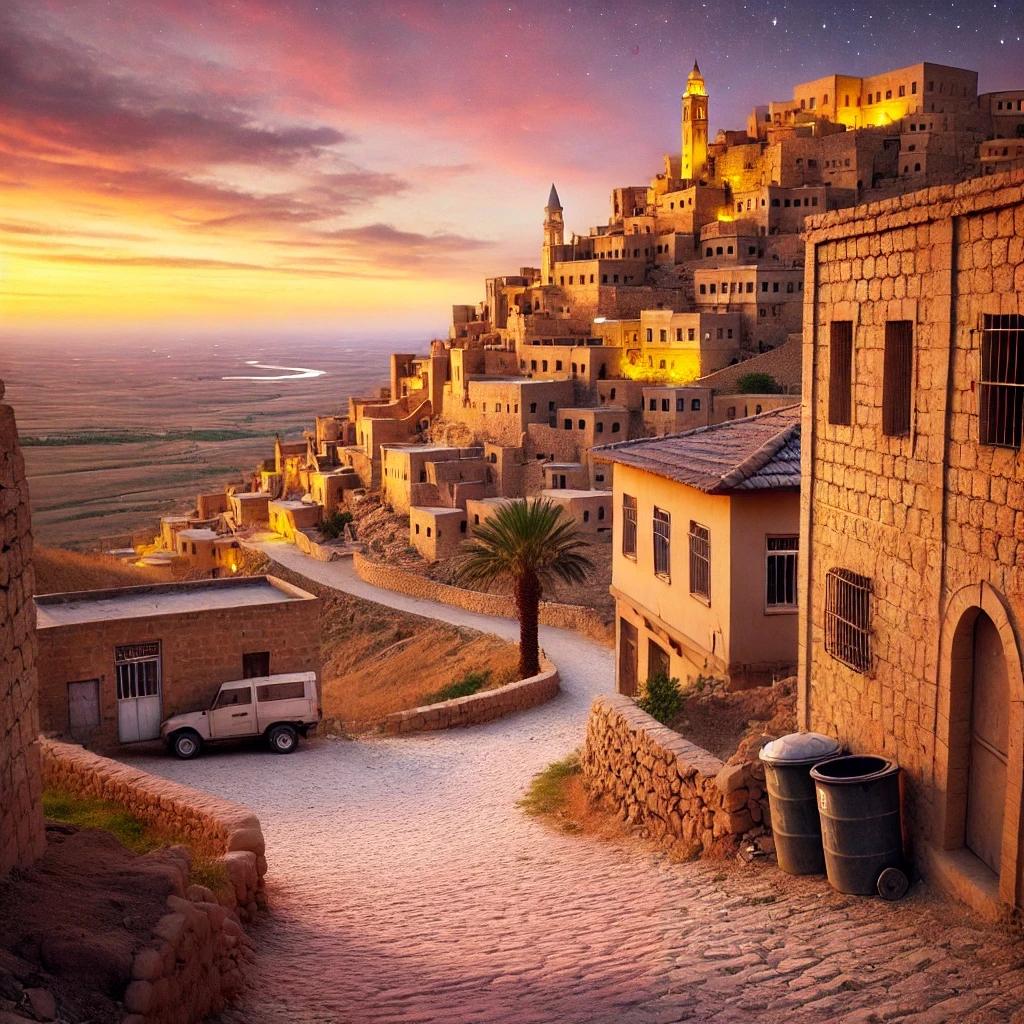
(Generated by artificial intelligence)
In the old neighborhoods, the streets are so narrow that garbage is collected in some areas using donkeys. This distinctive practice preserves traces of traditional life and offers visitors an engaging cultural detail.
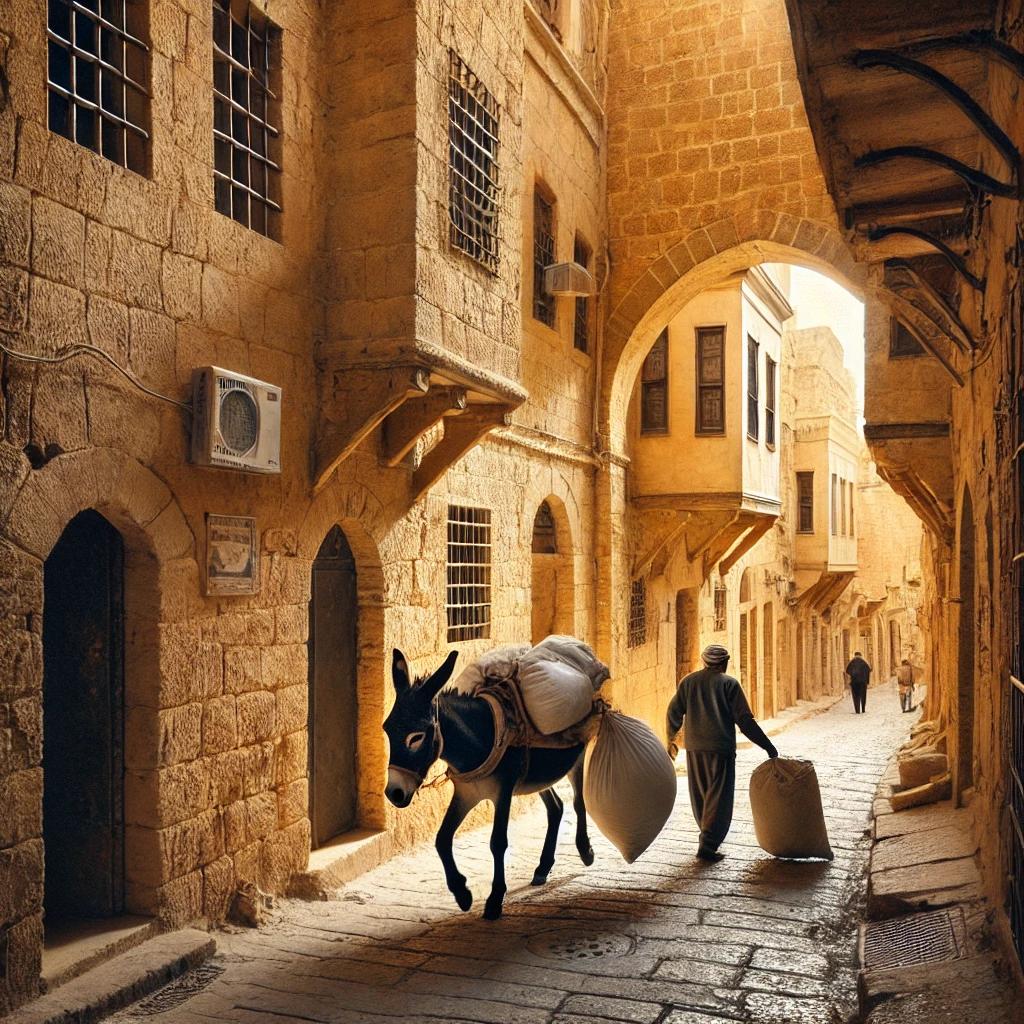
(Generated by artificial intelligence)
Throughout history, Mardin has been home to a diverse population including Syrians, Arabs, Kurds, Turks, and many other communities. It houses monuments and sites belonging to various faith groups, notably Islam and Christianity, making it unique in terms of religious and cultural tourism.
The Deyrulzafaran Monastery, the former residence of the Syriac Orthodox Patriarch, remains open for worship. The Zinciriye and Kasımiye Medreses are structures of significant importance both for their scholarly heritage and architectural value. During the Ottoman period, Mardin also functioned as an important administrative center.
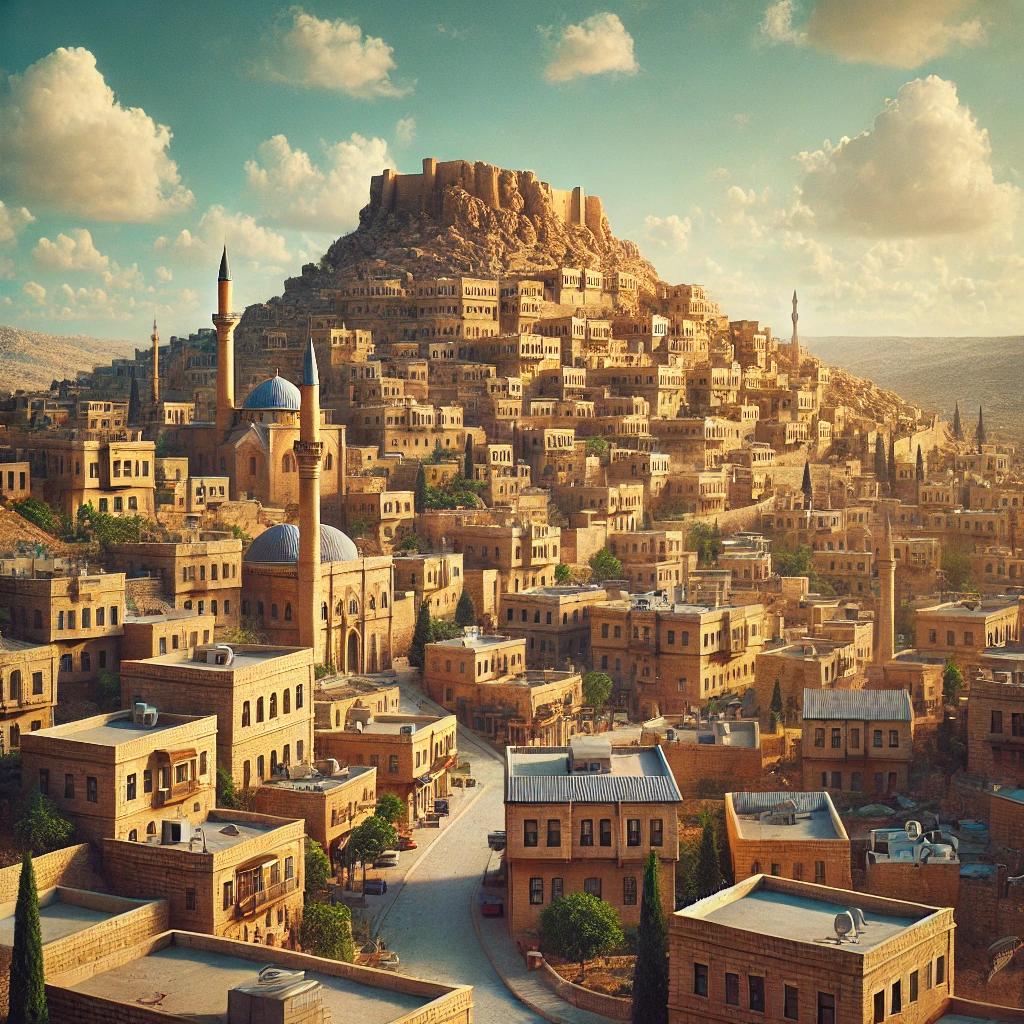
(Generated by artificial intelligence)
Daily Life in Mardin
The stone houses of Mardin attract attention for both their aesthetic and functional qualities. Their ability to remain cool during summer heat makes them ideal living spaces in the region. The houses’ wide balconies sometimes serve as sleeping areas.

(Generated by artificial intelligence)
Mardin cuisine is known for its use of diverse spices, meat dishes, and regional mezes. Zahter salad, stuffed lamb ribs, and sambusek are commonly found on traditional tables. Visitors to Mardin rarely leave without tasting these flavors firsthand.
Cultural Events
The annual Kite Festival in Mardin is a vibrant event that fills the city’s sky with colorful patterns. Held typically in spring, the festival brings together local residents and families from neighboring provinces to fly kites. The festival fosters a culture of collaborative creation, sharing, and enjoyment.
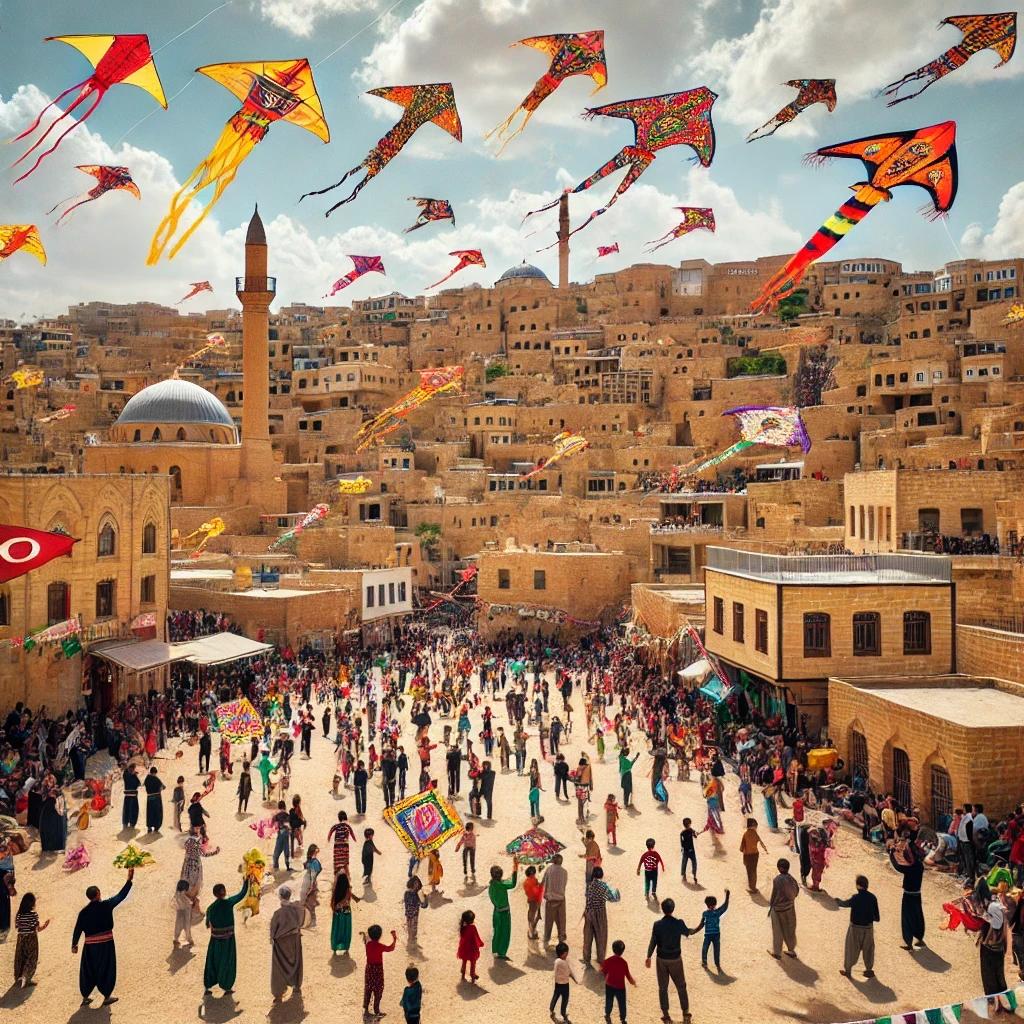
(Generated by artificial intelligence)
Some kites are decorated with traditional motifs, while others feature colorful designs born from children’s imaginations. Mardin’s elevated slopes and open plains provide an ideal setting for kite flying. During the festival, craft workshops, folk dances, and local food tastings are also organized.
Where Is It on the Map?
Mardin is located in the southern part of Southeastern Anatolia, near the border with Syria. Its strategic position overlooking the Mesopotamian Plain has made it an important center for trade and culture throughout history.
Region: Southeastern Anatolia Region
Population: Approximately 870,000 (2024)
Climate: Continental climate (long hot summers, cool and rainy winters)
Neighboring Provinces: Şanlıurfa (west), Diyarbakır (north), Batman (east), Syria (south)
Historical Significance: Located on the northern edge of Mesopotamia, it has served as a home to numerous civilizations from the Sumerians to the Ottomans
Importance to Türkiye: One of Türkiye’s cities that exemplify its historical and cultural richness through its architectural fabric, multicultural character, and religious heritage
Economic Activities: Agriculture (lentils, wheat, almonds), tourism, handicrafts, soap and copper craftsmanship
Notable Features: Mardin Stone Houses, Deyrulzafaran Monastery, Zinciriye Medrese, Kasımiye Medrese
References:
- Türkiye İstatistik Kurumu (TÜİK), 2024 data
- Mardin Provincial Directorate of Culture and Tourism
- Ministry of Culture and Tourism of the Republic of Türkiye: Mesopotamia Promotion Publications
- UNESCO Tentative List of World Heritage Sites
- MEB Publications: Civilizations of Anatolia