This article was automatically translated from the original Turkish version.
+2 More
Registration Number | 145 | ||||||||
|---|---|---|---|---|---|---|---|---|---|
Protection Date | 22.07.2009 | ||||||||
Application Number | C2009/016 | ||||||||
Type of Geographical Indication | Place of origin | ||||||||
Applicant | Mardin Governorship | ||||||||
Applicant’s Address | Government House, Yenişehir/MARDİN | ||||||||
Product Name | Stone | ||||||||
Name of Geographical Indication | Mardin Stone | ||||||||
Usage Format | Marking | ||||||||
Geographical Boundary | Mardin province boundaries | ||||||||
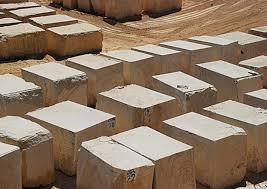
Mardin stone is a natural limestone found exclusively in the Mardin province of Türkiye, formed within the Lower Eocene–Lower Oligocene Hoya Formation. It exhibits color tones of yellow, pink, red, white, and gray and is easily workable due to its chalky structure. When extracted from the quarry, this porous and fine-grained stone is soft, but it hardens and gains durability upon exposure to sunlight and water after processing.
Mardin stone is deeply rooted in the geography and cultural heritage of Mardin province in southeastern Türkiye. Throughout history, Mardin has been home to numerous civilizations, and a significant portion of the churches, monasteries, madrasas, mosques, caravanserais, and secular architectural structures built during this period were constructed using Mardin stone. The stone has become a defining element of the city’s architectural fabric and has contributed significantly to the longevity of its buildings. It has evolved into a shared material among the diverse cultures of Mardin and, as such, has become one of the city’s cultural symbols.
Mardin stone is found within the Lower Eocene–Lower Oligocene Yağle Reefal-derived Hoya Formation. The thickness of this formation varies between 50 and 600 meters on average and consists lithologically of chalky limestones, biocalcarenites, dolomitic limestones, argillaceous limestones, and fossiliferous limestones. The colors of these rocks range from yellow, pink, red, white, dirty white to gray. The formation originated in shallow marine and shelf margin environments and exhibits reefal characteristics.
Mardin stone can be cut into specific standard dimensions and various sizes. One of the most commonly used dimensions is 19 x 20 x 30 cm. The stone’s density ranges between 85% and 90%. Technical values obtained from physical tests are as follows:
These properties determine the advantages of the stone as a construction material.
Due to its high porosity, Mardin stone is a highly workable material suitable for both coarse and fine craftsmanship in artistic works and architectural elements. Fine details are carved in shade, and once the carving is complete, the pieces are exposed to sunlight. Its chalky nature, fine grain structure, and soft texture allow the stone to be easily shaped upon extraction from the quarry. Mardin stone can be cut with saws, drilled with drills, and carved with hard cutting tools.
An important characteristic of the stone is linked to its processing: Mardin stone is soft when worked but hardens upon exposure to sunlight and water. This property contributes to its preference as a long-lasting material in the construction industry.
Mardin stone also fulfills aesthetic functions in architecture. Especially in the interior and exterior facades of stone houses, intricate decorative patterns resembling embroidery are applied; delicate stone carving techniques are used on door and window surrounds, columns, and arches. Additionally, tomb structures, balcony railings, and various other artistic stone applications are made using Mardin stone.
The extraction and processing of Mardin stone involve the following stages:
The production and processing of Mardin stone are subject to a quality control mechanism to ensure compliance with established technical and traditional specifications. The Control Board consists of representatives from public institutions and civil society organizations and receives no fees or compensation. Its duties include:
The members of the Control Board are representatives from the following institutions:
These structural and control processes contribute to preserving both the local and cultural identity of Mardin stone and ensuring the continuity of its unique properties.
Turk Patent and Trademark Office. "Mardin Taşı Coğrafi İşaret Tescil Belgesi." Accessed July 15, 2025. https://ci.turkpatent.gov.tr/Files/GeographicalSigns/145.pdf.
Turk Patent and Trademark Office. "Mardin Taşı." Accessed July 15, 2025. https://ci.turkpatent.gov.tr/cografi-isaretler/detay/38010.

Registration Number | 145 | ||||||||
|---|---|---|---|---|---|---|---|---|---|
Protection Date | 22.07.2009 | ||||||||
Application Number | C2009/016 | ||||||||
Type of Geographical Indication | Place of origin | ||||||||
Applicant | Mardin Governorship | ||||||||
Applicant’s Address | Government House, Yenişehir/MARDİN | ||||||||
Product Name | Stone | ||||||||
Name of Geographical Indication | Mardin Stone | ||||||||
Usage Format | Marking | ||||||||
Geographical Boundary | Mardin province boundaries | ||||||||
History
Geological Characteristics and Formation
Physical and Mechanical Properties
Workability and Applications
Production Process (Construction Method)
Quality Control Process