This article was automatically translated from the original Turkish version.
+2 More
Protection Status | Registered Cultural Heritage (1979) | ||||||||
|---|---|---|---|---|---|---|---|---|---|
Material(s) | Cut Stone (Local Stone Material) | ||||||||
School | Orthodox (Syriac) | ||||||||
Location | Türkiye Mardin | ||||||||
Current Use | Active Place of Worship belonging to the Syriac Orthodox Community | ||||||||
Architectural Plan | Three-nave, Three-apse, Three-section Plan | ||||||||
Historical | 5th century | ||||||||
Building Type | Church, Worship Structure within Monastic Complex | ||||||||
Belief | Christianity | ||||||||
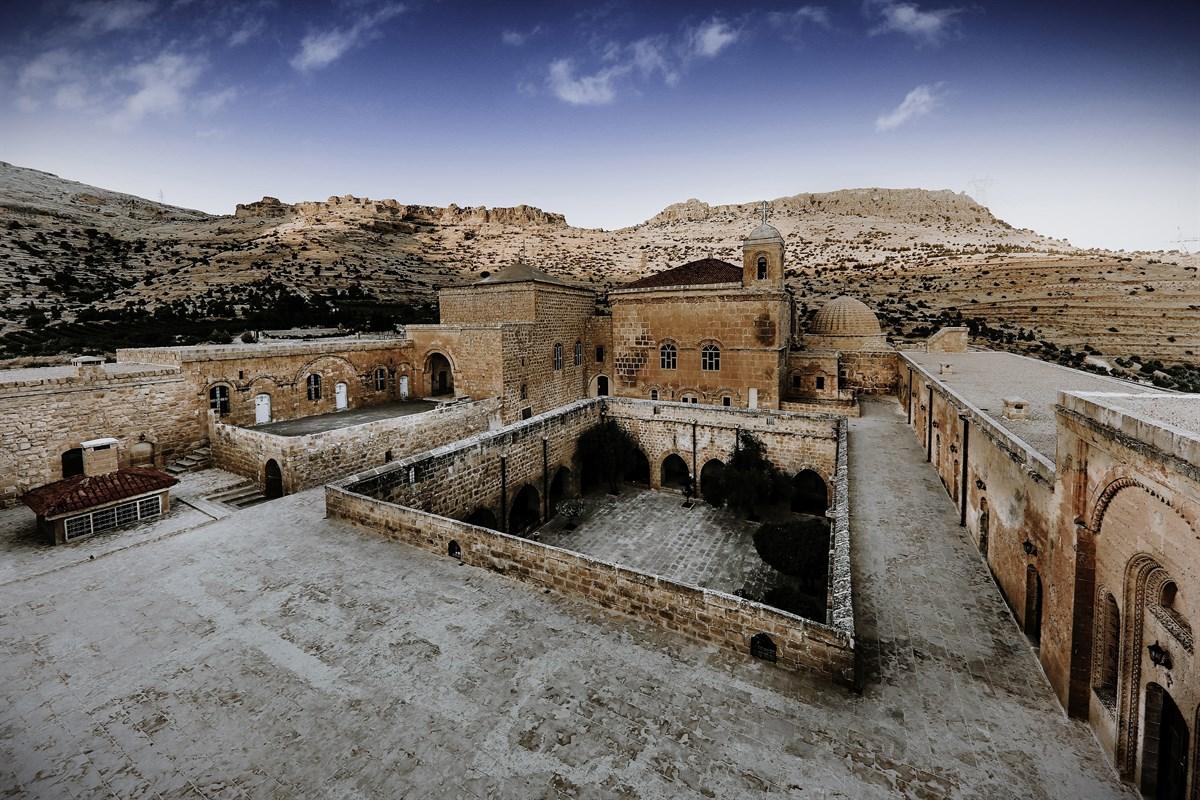
Mor Mihail Kilisesi is a historic place of worship belonging to the Syriac Orthodox community, located in the city center, at the foot of the citadel, along Yeniyol Street. The structure is primarily referred to in sources as “Mor Mihail Kilisesi”, but due to its integration within a larger architectural complex and its development alongside monastic units, it is also known as “Burç Manastırı”. Today, it continues to serve its original function as a place of worship for the Syriac Orthodox community. Its location, architectural layout, and historical continuity make it one of the significant examples of Mardin’s multi-layered cultural heritage.
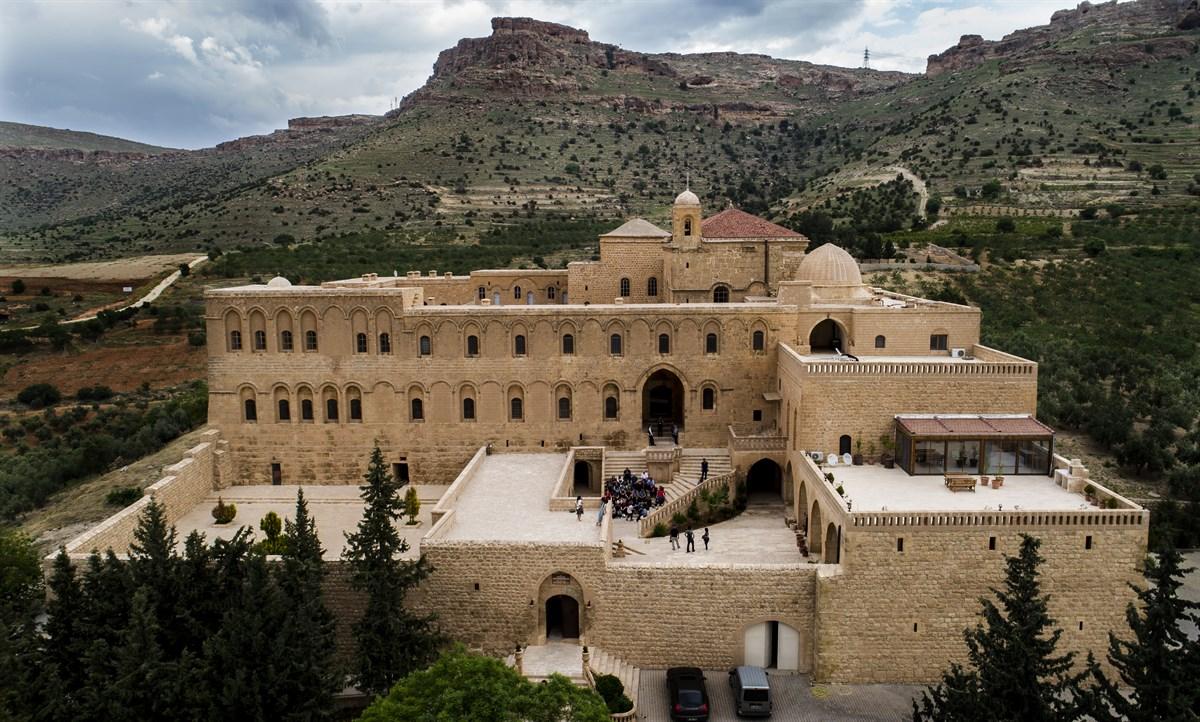
Mor Mihail Kilisesi (Burç Manastırı) (Mardin Metropolitan Municipality)
Sources present differing opinions regarding the dating of the foundation of Mor Mihail Kilisesi. While Syriac traditional narratives trace its origins back to 185 AD, architectural features and written documents reveal that the current structures were built in different periods and expanded over time. Therefore, the early dating is not regarded as a definitive construction date for the entire complex, but rather as marking the beginning of the sacred site or the initial place of worship.
Academic studies generally date the core of Mor Mihail Kilisesi to the 5th century.【1】 It is known that the structure underwent repairs and renovations during the Ottoman Empire’s post-Tanzimat period, during which certain architectural elements were reconfigured. According to inscriptions found on the building, the bell tower was constructed in 1885. This data demonstrates that the structure remained actively in use during the 19th century and was renovated to meet the liturgical needs of the Syriac Orthodox community.
The designation “Burç Manastırı” stems from the fact that the structure is not merely a church. The concept of a monastery encompasses living cells for monks, spaces for education and service, courtyards, and auxiliary buildings. Over time, Mor Mihail Kilisesi became surrounded by such units, evolving into a complex with monastic character. This explains why the terms “church” and “monastery” are used interchangeably for the same structure.
Mor Mihail Kilisesi is an important religious structure that reflects multiple historical phases through its origins in early Syriac Orthodox architecture, renovations during the post-Tanzimat Ottoman period, and the addition of 19th-century elements such as the bell tower. Its development within a monastic complex and its designation as “Burç Manastırı” highlight the Syriac Orthodox tradition of integrating church and monastery functions. Its continued use for its original liturgical purpose today makes Mor Mihail Kilisesi one of the few Syriac Orthodox structures in Mardin with an uninterrupted historical continuity.
The complex is accessed via a monumental entrance with a rounded arch and crowning detail on the northern façade, leading into the courtyard. A second pointed-arch entrance on the western side opens into the inner courtyard. The courtyard forms the center of the architectural complex, with various service and functional spaces located along its northern, southern, and eastern sides. Along the western wall of the courtyard are burial niches arranged in different sizes, some of which feature decorative elements and inscriptions.
The main church building is situated in the southeast corner of the courtyard. A corner alcove precedes the entrance, serving as a transitional space. The interior of the church follows a three-nave, three-apse, and three-section plan. The naves are separated by pointed arches resting on square piers. In the western section, an intermediate floor arrangement exists, covered by a cross vault. Rising on square piers on the northern façade is the bell tower, an element that stands out both functionally and symbolically.
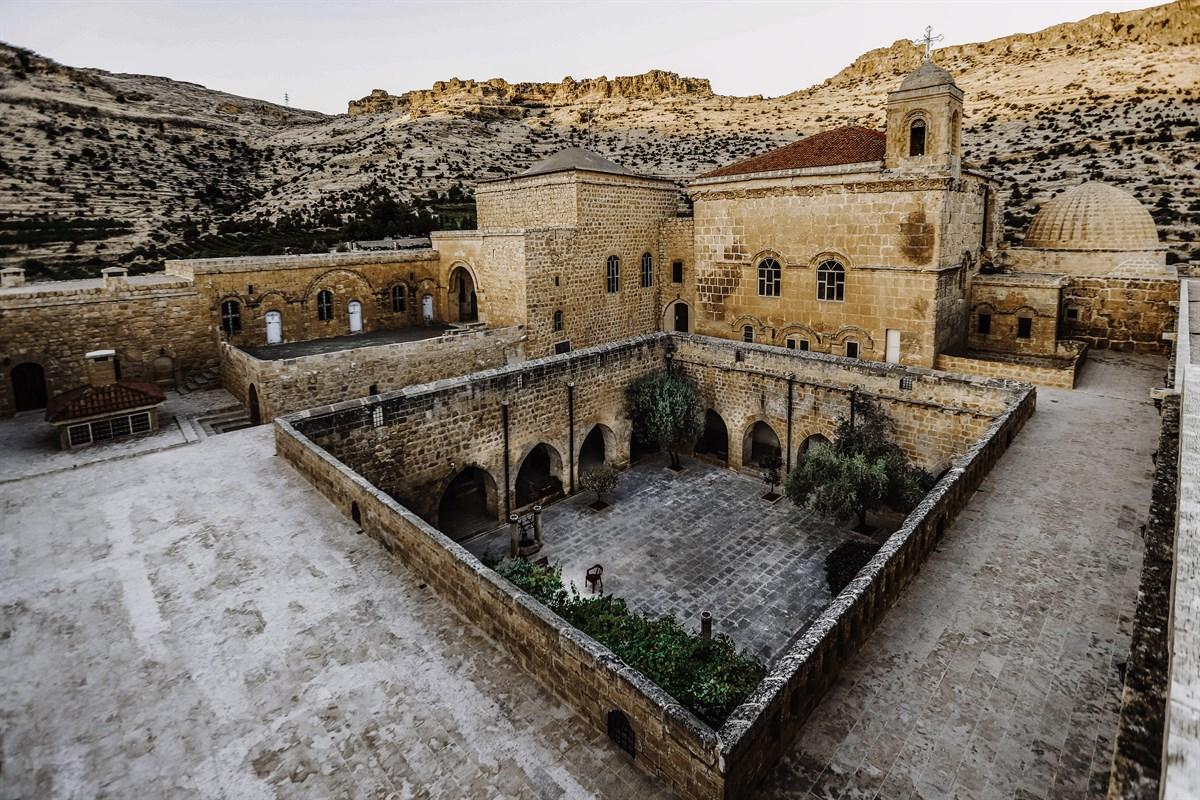
Mor Mihail Kilisesi (Burç Manastırı) (Mardin Metropolitan Municipality)
Opposite the church entrance, a dedicated space has been arranged within the complex. This space contains three tombs which, according to traditional belief, are attributed to Mor Mihail, his sister, and his teacher. This confirms that the structure served not only as a place of worship but also as a sacred site for veneration and pilgrimage.
Another distinct architectural unit is located on the eastern side of the courtyard, accessible through a three-arched pointed entrance. This space, known to have been used for church functions in the past, follows a two-nave, three-apse plan. Covered by cross vaults, this unit exhibits an independent structural integrity and is regarded as a significant element reflecting the historical evolution of the complex. These additional structures provide architectural support for why Mor Mihail Kilisesi is also referred to as a monastery.
Mor Mihail Kilisesi was officially registered and placed under protection by the High Council for Immovable Monuments and Antiquities on 21 September 1979 under decision number A-1933. Following registration and especially through recent restoration efforts, the structure has been brought into a well-maintained condition. Restoration interventions have carefully preserved the building’s original architectural identity and historical character.
Today, Mor Mihail Kilisesi is actively used as a place of worship by the Syriac Orthodox community. Electrical and plumbing systems have been added to meet current needs, but no heating system has been installed. Nevertheless, the structure continues to fulfill its historical function and retain its sacred character, occupying an important place within Mardin’s living cultural heritage.
Açıkyıldız, Birgül. “Mardin in the Post-Tanzimat Era: Heritage, Changes and Formation of an Urban Landscape.” Journal of Ethnic and Cultural Studies 5, no. 2 (2018): 159–185. Accessed December 25, 2025. https://www.researchgate.net/publication/329873964_Mardin_in_the_post-tanzimat_era_Heritage_changes_and_formation_of_an_urban_landscape
Mardin Büyükşehir Municipality. "Manastırlar." mardin.bel.tr. Accessed December 25, 2025. https://www.mardin.bel.tr/manastirlar
Mardin İl Directorate of Culture and Tourism. "Mor Mihail Kilisesi." *Republic of Turkey Ministry of Culture and Tourism*. Accessed December 25, 2025. https://mardin.ktb.gov.tr/TR-312506/mor-mihail-kilisesi.html
Türkiye Kültür Portalı. "Mor Mihail Kilisesi (Burç Manastırı)-Mardin." kulturportali.gov.tr. Accessed December 25, 2025. https://www.kulturportali.gov.tr/turkiye/mardin/kulturenvanteri/mor-mihail-kilisesi-burc-manastiri
Özmen, Mahmut. *Mardin’in Kültürel Miras Unsurlarının Korunması ve Turizm Amaçlı Kullanılmasına Yönelik Paydaş Algısı.* Master's thesis, Mardin Artuklu University, Graduate School of Education, 2023. Accessed December 25, 2025. https://gcris.artuklu.edu.tr/server/api/core/bitstreams/08ea29b2-ae1e-460d-a064-e6dbf8319599/content
[1]
Birgül Açıkyıldız, “Mardin in the Post-Tanzimat Era: Heritage, Changes and Formation of an Urban Landscape,” Journal of Ethnic and Cultural Studies 5, no. 2 (2018): 167, Erişim Tarihi: 25 Aralık 2025, https://www.researchgate.net/publication/329873964_Mardin_in_the_post-tanzimat_era_Heritage_changes_and_formation_of_an_urban_landscape

Protection Status | Registered Cultural Heritage (1979) | ||||||||
|---|---|---|---|---|---|---|---|---|---|
Material(s) | Cut Stone (Local Stone Material) | ||||||||
School | Orthodox (Syriac) | ||||||||
Location | Türkiye Mardin | ||||||||
Current Use | Active Place of Worship belonging to the Syriac Orthodox Community | ||||||||
Architectural Plan | Three-nave, Three-apse, Three-section Plan | ||||||||
Historical | 5th century | ||||||||
Building Type | Church, Worship Structure within Monastic Complex | ||||||||
Belief | Christianity | ||||||||
No Discussion Added Yet
Start discussion for "Church of Saint Michael the Archangel (Burç Monastery)" article
History
Historical Significance
Architectural Structure
Chapel and Additional Units
Conservation Status and Current Use